
A Small Act Of Independence: Kerala Bar Holds Firm On Its Right To Hoist The Tricolour
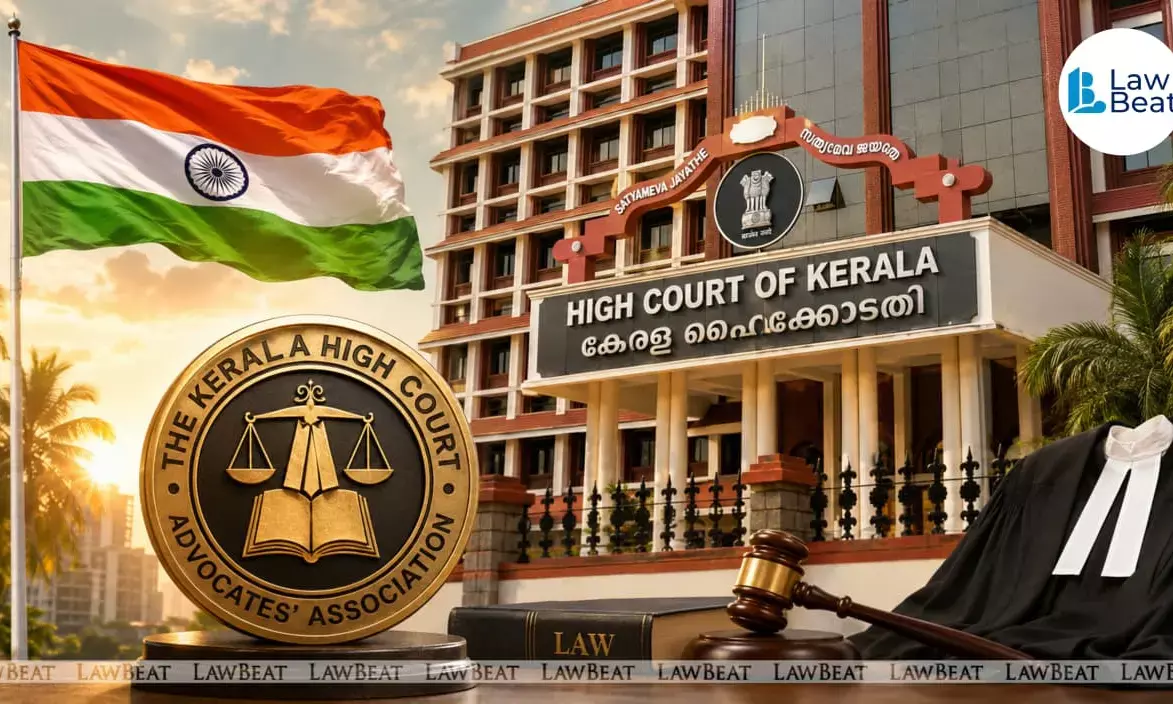
Kerala HC "Bar vs Bench" Flag-Hoisting Dispute
The structural health of an independent judiciary relies heavily on maintaining an equal partnership and mutual respect between the Bar and the Bench. The Kerala High Court Advocates’ Association’s recent decision to protect its 30-year-old Independence Day tradition against administrative requests highlights how organic, grassroots legal conventions preserve internal institutional democracy from being overwritten by top-down directives.
The Two Wheels of the Chariot: Defining the Bar-Bench Symmetry
Indian jurisprudence has long rejected the idea that the Bar exists in service of the Bench. Advocates and judges are frequently described, in bar council speeches and court pronouncements alike, as two wheels of the same chariot: distinct in function, but equal in standing, and both essential to the administration of justice moving forward at all. The Bench interprets and adjudicates; the Bar argues, represents, and, crucially, keeps the system honest through adversarial scrutiny. Neither role subordinates the other. This is not a ceremonial nicety. It is a structural safeguard. A judiciary is only as independent as the community of advocates who appear before it is willing and able to be, and that independence is difficult to sustain if the Bar's institutional identity is gradually folded into the administrative machinery of the court itself.
This is where the Independence Day connection becomes clear. Institutional autonomy is not preserved through declarations alone; it survives through the everyday respecting of internal domains. When the Bench governs its own courtroom conduct and the Bar governs its own association's conventions, and each defers to the other's sphere without needing to be asked twice, the symmetry holds. The moment one side begins dictating the internal customs of the other, even with good intentions, even citing a government circular, the symmetry is disturbed, however slightly.
The Custom of the Portico: The 30-Year-Old Independence Day Protocol
A few weeks ago, the Kerala High Court's administration opened an informal conversation with representatives of the Kerala High Court Advocates' Association (KHCAA) about a change in Independence Day protocol. The court's reasoning drew on government orders governing the observance of August 15, which direct that heads of departments hoist the national flag at their respective institutions. Since the Chief Justice heads the High Court as an institution, the logic followed that the honour of hoisting the tricolour on Independence Day should belong to him, not the Bar.
The KHCAA's general body meeting on August 11 considered the proposal and declined it. The resolution was unambiguous: the Bar President would continue to hoist the flag on August 15, exactly as association presidents have done for three decades, while the Chief Justice would continue the parallel custom of hoisting the tricolour on Republic Day. The decision was formally conveyed to the Registry soon after, closing the informal channel through which the suggestion had arrived.
What matters here is how the lawyers framed their refusal. This was not, by their own account, a gesture of disrespect toward the High Court or the Chief Justice, the two institutions still exchange the courtesy of full attendance at each other's ceremonies, judges turning out for the Bar's Independence Day function and lawyers turning out in large numbers for the Bench's Republic Day one. Rather, the custom was defended precisely because of what August 15 represents. On the day marking national liberation from external authority, the Bar's insistence on hoisting its own flag, on its own portico, reads as a small but pointed assertion of the legal community's own independent standing, a symbolism the lawyers were unwilling to trade away, even for an administratively tidy rationale.
Protecting Internal Democracy Against Administrative Standardization
The broader risk in episodes like this lies in what standardization quietly does to decentralized institutional histories. Government orders written for executive departments are, by design, generic, they assume a hierarchy of heads and subordinates that maps cleanly onto a ministry or a municipal office. A High Court campus is not that. It houses two self-governing communities, the judiciary and the Bar, whose customs evolved independently of each other over decades and were never meant to be flattened into a single administrative chain of command. Applying department-style uniformity to such a space, even inadvertently, risks treating a rich, locally-rooted convention as an anomaly to be corrected rather than a feature to be respected.
This is ultimately why the KHCAA's firmness matters beyond Kerala. A Bar that can decline an administrative suggestion politely, through due process, at a general body meeting, and have that decision formally recorded and respected, is demonstrating exactly the kind of internal democracy a healthy legal system depends on. It is a modest reminder that a genuinely independent republic needs not only judges who are independent of the executive, but also a Bar confident enough to hold on to its own history, one August 15 at a time.
FAQs
Q1: What is the flag-hoisting protocol dispute at the Kerala High Court?
A: The High Court administration suggested that the Chief Justice should hoist the national flag on Independence Day, citing departmental rules. However, the Kerala High Court Advocates’ Association (KHCAA) declined, voting to protect their 3-decade-old tradition of having the Bar President perform the honor on August 15.
Q2: Who traditionally hoists the national flag on Republic Day at the court?
A: According to established convention at the Kerala High Court, the Chief Justice hoists the tricolour on Republic Day, while the Bar President hoists it on Independence Day, keeping a balance between the Bench and the Bar.
Q3: Why is the relationship between the Bar and the Bench considered co-equal?
A: Legal jurisprudence considers the Bar and the Bench as two wheels of the same chariot. Both are crucial to public justice, meaning institutional decisions and campus traditions are typically handled through consensus rather than unilateral administrative orders.