
POCSO Age Determination: Should Reliance Be Placed On JJ Act Procedure?
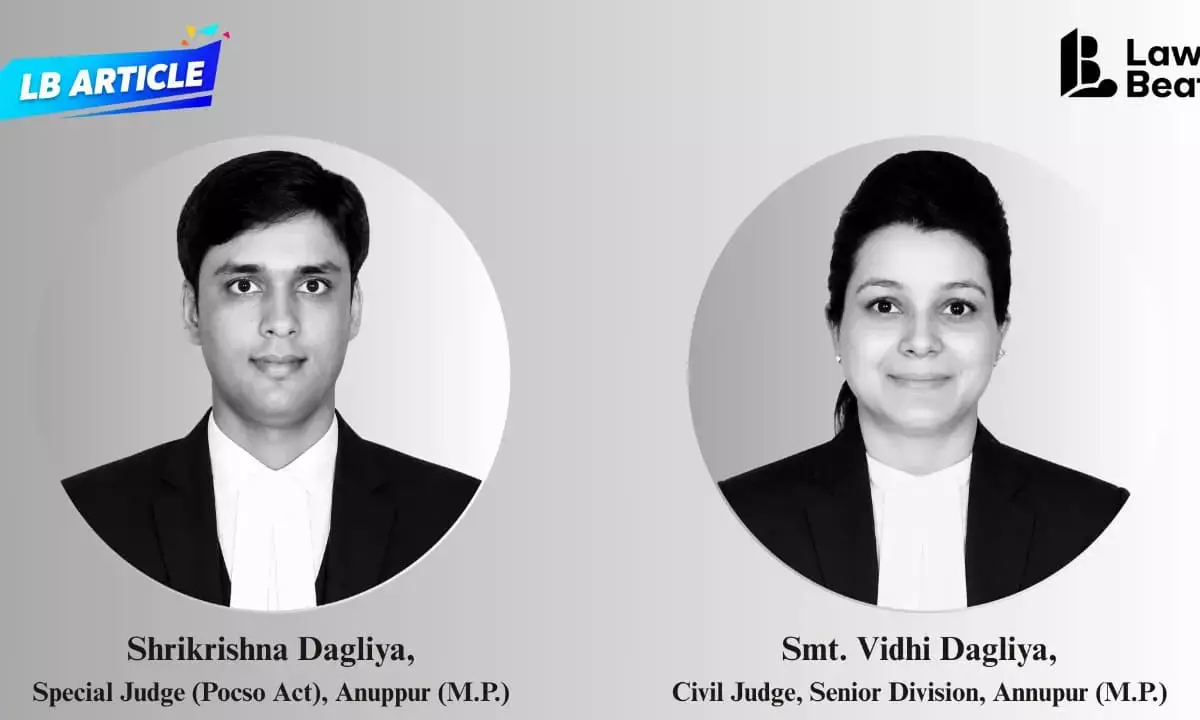
Age of POCSO Victims: Rethinking the JJ Act Framework
The Protection of Children from Sexual Offences Act, 2012 (hereinafter referred to as the POCSO Act) does not contain any provision which prescribes the specific method to be followed to determine the age of the victims for offences alleged to have been committed under the Act. The POCSO Act deals with offences committed against minor victims/children (persons below the age of 18 years, see section 2(d) of the POCSO Act), whereas the Juvenile Justice (Care and Protection of Children) Act, 2015 (hereinafter referred to as JJ Act, 2015) primarily deals with offences committed by minors.
The earlier Juvenile Justice Act of 2000 (hereinafter referred to as JJ Act, 2000) as well as the present JJ Act, 2015 along with rules framed thereunder contain provisions prescribing the specific method to be followed in order to determine the age of a child in conflict with law (minor perpetrator of the alleged crime).
JUDICIAL PRECEDENTS MANDATING USE OF JJ ACT PROCEDURE
A Division Bench of the Hon’ble Supreme Court in Jarnail Singh versus State of Haryana, in a matter pertaining to offences under section 366, 376(2)(g) and 120-B of IPC, held that the age of a child who is a victim of crime should be determined as per Rule 12 of JJ Act, 2000. Similar law was laid down by the Hon’ble Supreme Court in Mahadeo versus State of Maharashtra. The latter-mentioned case also dealt with IPC offences.
In P. YuvaPrakash versus State, the Hon’ble Supreme Court has categorically held that the age of a victim under the POCSO Act has to be determined as per the steps indicated in section 94 of the JJ Act, 2015. Similar view was expressed by the Hon’ble Supreme Court in State of U.P. versus Anurudh & Another.
The law developed by judicial precedents, as it stands today and as it stood in the earlier decade, has been unequivocal that the age of a victim under the POCSO Act has to be determined as per the mode indicated in the JJ Act, 2000 and JJ Act, 2015 and rules made thereunder.
REASONING OF THE SUPREME COURT IN THE KEY CASES
The question to be examined is whether it is appropriate and proper to rely upon the procedure prescribed under the JJ Act for age determination of a victim under the POCSO Act. For this, it is necessary to examine on what basis and in what manner the provisions of the JJ Act, 2000 or JJ Act, 2015 were applied by the Hon’ble Supreme Court for age determination of the victims of IPC offences or POCSO offences.
In Jarnail Singh case, the Hon’ble Supreme Court gave the following reasoning for applying the JJ Act 2000 yardstick for age determination of the victims:
Even though Rule 12 is strictly applicable only to determine the age of a child in conflict with law, we are of the view that the aforesaid statutory provision should be the basis for determining age, even of a child who is a victim of crime. For, in our view, there is hardly any difference insofar as the issue of minority is concerned, between a child in conflict with law, and a child who is a victim of crime.
In Mahadeo case, the Hon’ble Supreme Court gave the following reasoning for applying the JJ Act, 2000 framework for age determination of the victims:
We can also in this connection make reference to a statutory provision contained in the Juvenile Justice (Care and Protection of Children) Rules, 2007, where under Rule 12, the procedure to be followed in determining the age of a juvenile has been set out…In the light of such a statutory rule prevailing for ascertainment of the age of a juvenile, in our considered opinion, the same yardstick can be rightly followed by the courts for the purpose of ascertaining the age of a victim as well.
In P. YuvaPrakash case, the Hon’ble Supreme Court gave the following reasoning for applying the JJ Act, 2015 benchmark for age determination of the victims under the POCSO Act:
It is evident from conjoint reading of the above provisions that wherever the dispute with respect to the age of a person arises in the context of her or him being a victim under the Pocso Act, the courts have to take recourse to the steps indicated in Section 94 of the JJ Act.
In Anurudh case, the Hon’ble Supreme Court gave the following reasoning for applying the JJ Act, 2015 standard for age determination of the victims under the POCSO Act:
Having discussed thus, the two separate fields that these two legislations govern, we now turn back to the question of age determination. If the POCSO Act is examined, it can be found that the Act does not prescribe a manner for determination of the age of the victim. As we have already noticed, it is an established position in law that the procedure under Section 94 of the JJ Act is to be applied.[See: Section 34 of the Act]
CRITIQUE OF APPLYING THE JJ ACT FRAMEWORK TO THE POCSO VICTIMS
Section 3 of the Indian Evidence Act, 1872/Section 2(1)(j) of the Bharatiya Sakshya Adhiniyam, 2023 defines the term proved and as per the definition a fact is said to be proved when, after considering the matters before it, the Court either believes it to exist, or considers its existence so probable that a prudent man ought, under the circumstances of the particular case, to act upon the supposition that it exists. Under the general law, whenever a court is faced with an age determination question of a victim, the Court (if not restricted by the JJ Act yardstick) can consider not only the evidence adduced in the case but also other matters before it, to come to a conclusion whether the age of the person is proved to be of that of minority or not. The scope of consideration of various kinds of evidence and matters, in such an unrestricted case, is extremely wide.
The reasoning given by the Hon’ble Supreme Court in applying the JJ Act, 2000 yardstick to determine the age of the victims in Jarnail Singh case is that there can hardly be any difference insofar as the issue of minority is concerned, between a child in conflict with law, and a child who is a victim of crime. In so holding, the Hon’ble Supreme Court has not considered the fact that the JJ Act, 2000 is a welfare/beneficial piece of legislation; inquiry is conducted under the JJ Act, not trial; an inquiry is conducted not by a Court but by a Juvenile Justice Board; no disqualification attaches to a child in conflict with law upon conviction as per the provisions of the JJ Act, unlike other penal laws; and most importantly, the object of the JJ Act is not punitive like other penal laws but is reformative, rehabilitative, and reintegrative. The Hon’ble Supreme Court, without taking into consideration the above factors, has restricted the extremely wide power of courts of criminal jurisdiction under Section 3 of the Indian Evidence Act, 1872/Section 2(1)(j), 2(1)(c) and 2(1)(i) of the Bharatiya Sakshya Adhiniyam, 2023 to take into account a variety of evidence and other matters produced before it, to determine the age of the victims.
It is respectfully submitted that by doing so the Hon’ble Supreme Court has inadvertently created a situation in which the possibility of injustice to minor victims cannot be ruled out. This may be illustrated through examples. In a given case, a minor victim or his family may not possess the documents mentioned in the JJ Act as valid for consideration in an age determination process, but may possess other strong evidence including:
° An entry in a register made by the hospital in which the minor was born, maintained by it in the ordinary course of its business;
° A video recording of the mother giving birth to the victim along with the video recorder which captured the footage, with the recorded date embedded therein;
° Contemporary documents (prepared on or near the date of birth) stating the child’s date of birth, etc.
This evidence may have great probative value and may be unimpeachable. There may also be unchallenged oral evidence pertaining to the age of the victim in the case. Value of such evidence may be far greater than that of the medical opinion which may be sought in the matter. Medical opinion about age is not always absolutely accurate. The Hon’ble Supreme Court has held in Mukarrab and others versus State of U.P. that age determination through ossification test does not yield accurate and precise conclusion after the examinee crosses the age of 30 years. Medical opinion may vary depending upon a range of factors like nutrition, the age at which examinee is examined, etc. By unnecessarily restricting the court to consider only the evidence prescribed under the JJ Act and preventing it from considering any other evidence that may come before it, will remove from consideration several pieces of evidence which may have high probative value and which may be instrumental in accurately determining the age of the victim in question.
In the authors’ respectful view, rather than restricting the evidence to be considered to the ones prescribed under the JJ Act, it should be left to the wisdom of experienced judges manning courts of criminal jurisdiction throughout the country to consider and assess any evidence regarding age which may come before them. They will certainly take into consideration and be guided by the various guidelines issued by various superior courts on the probative value to be attached to various evidence relevant for age determination and thereafter they will decide the question of age, finally. In case they decide incorrectly, the decision can be corrected in appeal or revision; but, restricting the evidence which the court can consider in the first place will lead to more possibility of injustice than justice being done.
Here section 34 (2) of the POCSO Act is also worth consideration, which reads as follows:
(2) If any question arises in any proceeding before the Special Court whether a person is a child or not, such question shall be determined by the Special Court after satisfying itself about the age of such person and it shall record in writing its reasons for such determination.
The POCSO Act has been enacted after the JJ Act, 2000 came into force. The Legislature must have been conscious and will be presumed to be conscious of the fact that procedure for age determination had been prescribed for children in conflict with law under the JJ Act, 2000. Had the Legislature wanted to adopt the same procedure for age determination of the victims under the POCSO Act, the Legislature could have specifically said so under the POCSO Act. On the contrary, section 34(2) of the POCSO Act suggests that there are no restrictions, like the ones in the JJ Act about the evidence which is admissible, when it comes to determination of age under the POCSO Act.
The reasoning given in P. YuvaPrakash case by the Hon’ble Supreme Court for applying the JJ Act, 2015 yardstick for age determination of the victims under the POCSO Act is that a conjoint reading of section 34 (2) of the POCSO Act and section 94 of the JJ Act, 2015 make the position crystal clear. With great respect, a combined reading of the above two provisions does not make the position unambiguous, as held, and does not make JJ Act yardstick applicable to age determination of the victims under the POCSO Act.
It is respectfully submitted, for the above mentioned reasons, the reasoning given by the Hon’ble Supreme Court in Jarnail Singh case, Mahadeo case, P. YuvaPrakash case and Anurudh case require reconsideration for ends of justice.
The Legislature should intervene and make necessary amendments to the POCSO Act so as to make its intent clear as to whether the procedure under the JJ Act, 2015 should be followed or not for age determination of the victims.
CONCLUSION
From a legal perspective, in the respectful opinion of the authors, with the delivery of justice as the ultimate motive, a revisit of the aforementioned judicial precedents, or legislative intervention as aforementioned, is the need of the hour as there is no rationale for restricting the power of criminal courts in the age determination process to the evidence prescribed under the JJ Act instead of permitting them to consider the full and unrestricted range of relevant evidence available in an age determination process.