
Deendayal Upadhyaya and the Law of the Last Person
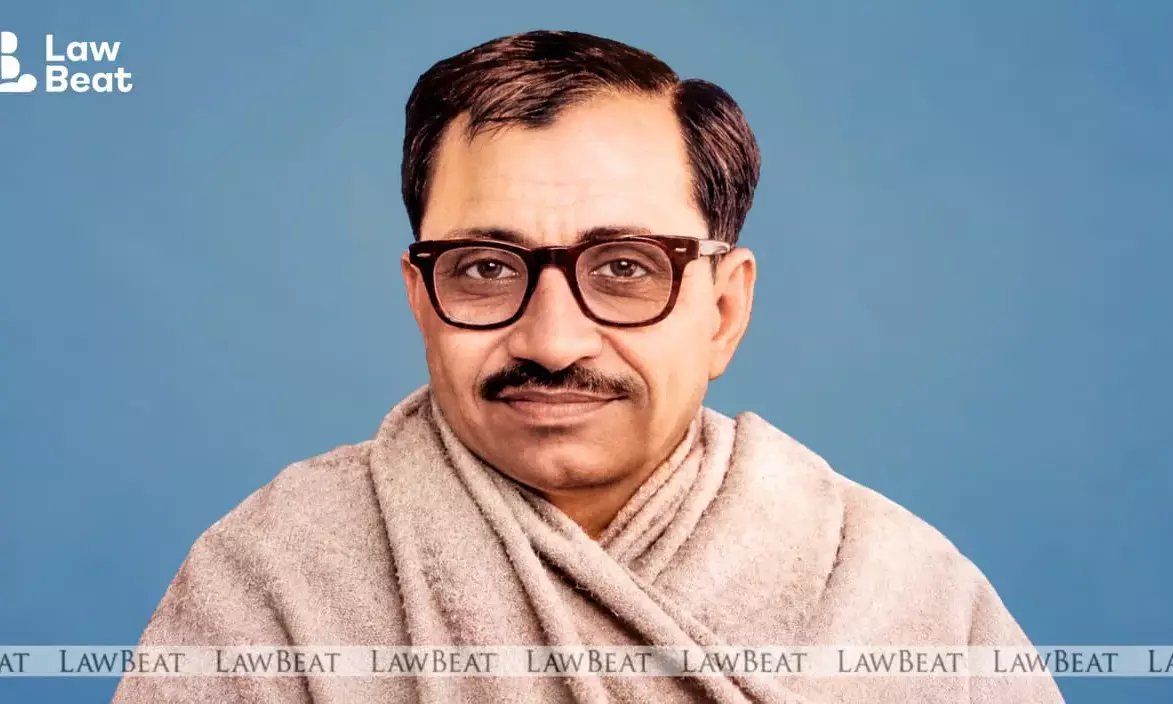
Pandit Deendayal Upadhyaya’s Antyodaya, Integral Humanism and Chiti offer lessons on Article 39A, access to justice, legal service and decolonisation.
Pandit Deendayal Upadhyaya was my neighbour for five years, in name at least. His namesake campus, the Pandit Deendayal Petroleum University (now renamed as Pandit Deendayal Energy University), stood beside the Gujarat National Law University where I read law. My initial engagement with his legacy was limited to inter-university rivalry. Despite being so familiar with the name, it was only after I entered legal practice that I began to appreciate the greatness of the thoughts of my revered neighbour.
A public policy practitioner and “jan sevak” in the truest sense, he was a leading political figure in both the Rashtriya Swayamsevak Sangh and the then Bharatiya Jana Sangh. His ideas of “Antyodaya” and “Integral Humanism”, which presented a unique Bharatiya view of the state, society and person, offer several insightful lessons for the lawyers of today. “The first characteristic of Bharatiya culture is that it looks upon life as an integrated whole". Law compartmentalises life into many legal identities. Tax law sees an assessee, labour law an employer and criminal law an accused. While this is legally necessary, this does not present the full picture of the person seeking justice. For instance, non-payment of tax by a small trader treats her as a defaulter. But a fair application of law must also consider the circumstances and whether there was actual evasion or a technical and institutional defect. “Integral humanism” strengthens justice by ensuring that any penalty remains proportional to the conduct and circumstances rather than mechanical application of the law by asking whether the law is treating this person as an “integrated whole” rather than solely through legal compartments.
In a profession which is susceptible to extreme commercialisation, the pursuit of billable hours can sometimes surpass the pursuit of justice. Upadhyaya’s emphasis on seva helps us understand our role as lawyers as officers of the court and as important stakeholders in justice, going beyond financial interests alone.
Upadhyaya’s idea of “Antyodaya”, which is the philosophical soul of Article 39A, is especially relevant to the idea of delivering justice to the last person in the social queue. Prime Minister Narendra Modi has described “Antyodaya” and “Integral Humanism” as guiding forces in good governance. This philosophical influence is visible in the Government’s efforts for last mile justice delivery. The various initiatives of the Government, such as Tele law, Common Service Centres, Nyaya Bandhu programs, are a testament to this philosophy. Recently, Union Law Minister Arjun Ram Meghwal addressed Central Government Counsels associated with the Karnataka High Court, where he apprised the audience of last mile justice delivery in providing legal services in remote villages through vans, so that assistance could reach people near their homes. This is real “Antyodaya” in action. Absence of access is denial of justice. A legal services van can turn Article 39A from just constitutional promise into real action.
His idea of Chiti, the civilisational consciousness of a nation, is a call for decolonisation of the mind and institutions. While the Government is repealing colonial laws and introducing new laws, the substratum of the old and new laws largely remains the same. There is a greater need of infusing constitutional values and societal expectations into the consciousness of laws and institutions. When the laws and institutions function in isolation from the collective civilisational consciousness of the nation, there is bound to be a serious disconnect between law, institutions and society, which is happening today. A legal system guided by Chiti would ensure simpler laws and accessible institutions that would remain faithful to the Constitution and Bharat’s intellectual traditions. It is only then that we would have genuine decolonisation.
As we mark Pandit Deendayal Upadhyaya’s 110th birth anniversary, his rich ideas deserve to take centre stage as we move towards Viksit Bharat. The law should serve the last person in the queue, treating her as an “integrated whole” so that she receives justice in the truest and fullest sense.
Nirmal Mathew is a Bengaluru based lawyer.