
Thresholds, not theatrics: The constitutional line in the CEC row
A closer look at the Chairman’s discretion, the statutory threshold, and shift from allegation to proof
The clash over the failed attempt to move removal proceedings against Chief Election Commissioner Gyanesh Kumar has steered beyond the facts of the case. What is now in contest is something more foundational, whether the constitutional threshold for removing a high office bearer can be reshaped by political assertion.
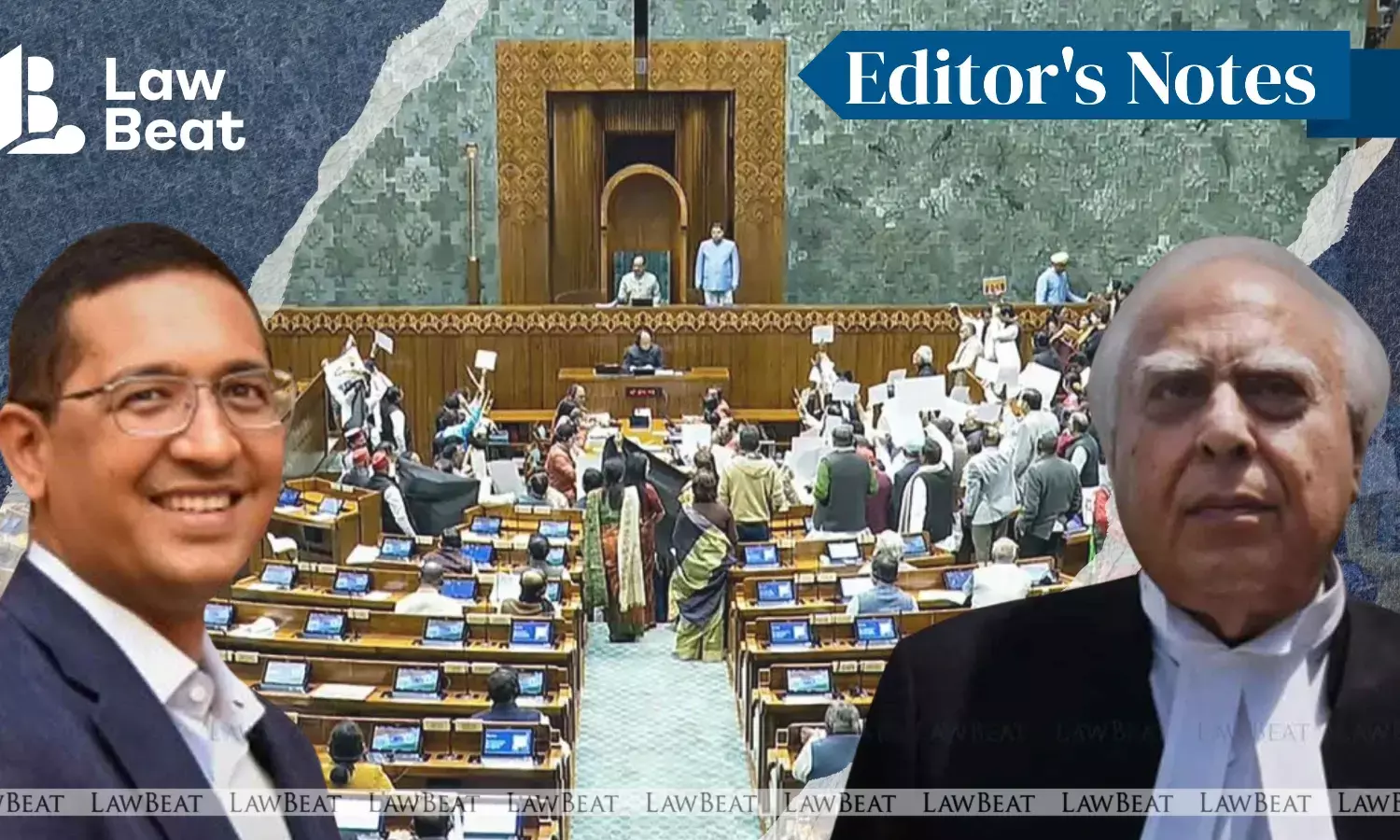
Kapil Sibal has argued that the Rajya Sabha Chairman could not have effectively shut the door on the motion without first allowing an inquiry to take place. Though premise is straightforward that proof emerges after investigation, and to reject a motion at the threshold, risks short-circuiting a constitutionally mandated process, the argument carries intuitive appeal. It would carry more weight if the constitutional text supported it. This is where it is important to reflect on the Constitution, through Article 324(5), which places the Chief Election Commissioner on the same footing as a Supreme Court judge for the purposes of removal. It signals that removal is meant to be rare, structured, and evidence-driven. The language used is proved misbehaviour and not alleged misbehaviour or a strongly worded accusation.
The statutory framework reinforces that design and that constitutional choice has consequences. It may be essential to ensure that removal is not reduced to a dramatic expression of outrage or a parliamentary version of a television allegation.
Section 3 of the Judges Inquiry Act does not treat the Speaker or Chairman as a forwarding authority. The provision allows them to admit or refuse to admit a motion after considering the material placed before them and after such consultation as they think fit. The inquiry stage comes later, and only if the motion clears this first gate.
This sequencing is deliberate. Without it, any political formation with sufficient numbers could force a formal inquiry into a constitutional office, regardless of the quality of the material placed before the presiding officer. The threshold stage exists precisely to guard against that possibility. As Hitesh Jain has pointed out, allegations are not evidence, and if allegations alone were sufficient to trigger an inquiry, the removal process would cease to be a constitutional safeguard and become a political instrument.
The Chairman’s order rests squarely on this statutory footing. The conclusion recorded is that the material submitted does not disclose a prima facie case of the kind required for removal. Some allegations were noted to fall within the realm of political disagreement, while others were tied to issues already under judicial consideration. Even where the allegations were taken at face value, the assessment was that they did not meet the constitutional standard of misbehaviour warranting removal.
One can disagree with that conclusion. However, what is harder to sustain is the claim that such a conclusion could not have been reached at the threshold at all. There is, in fairness, a narrower and more defensible argument available. One could say the Chairman misapplied the threshold in this specific case, that the material did warrant admission, that the discretion was exercised incorrectly.
However, the broader claim, that the Chairman had no business rejecting the motion without first triggering an inquiry, sits uneasily with the plain text of the statute.
The discomfort with the rejection also seems to stem from a quieter shift in how the underlying case is being framed. The argument has drifted from these allegations deserve investigation to something closer to these allegations are true. Pertinently, the constitutional scheme does not permit allegations to carry the weight of proof. The entire architecture of inquiry exists to test them, not to be assumed away.
It is important to understand that this insulates the Election Commission from scrutiny. Its decisions can be challenged in court. Its functioning can be debated in Parliament and political criticism is part of democratic accountability and none of that is foreclosed.
At the same time, removal occupies a different constitutional space. It is not an extension of political disagreement. It is a calibrated mechanism reserved for situations where misconduct is established to a high standard, and the process for establishing it is itself carefully designed to prevent abuse in either direction.
Blur that line, and the removal process deviates from the discipline that the Constitution demands.