
Ambiguity In Laws Creates Litigation: Meghwal Urges Focus On Legislative Precision
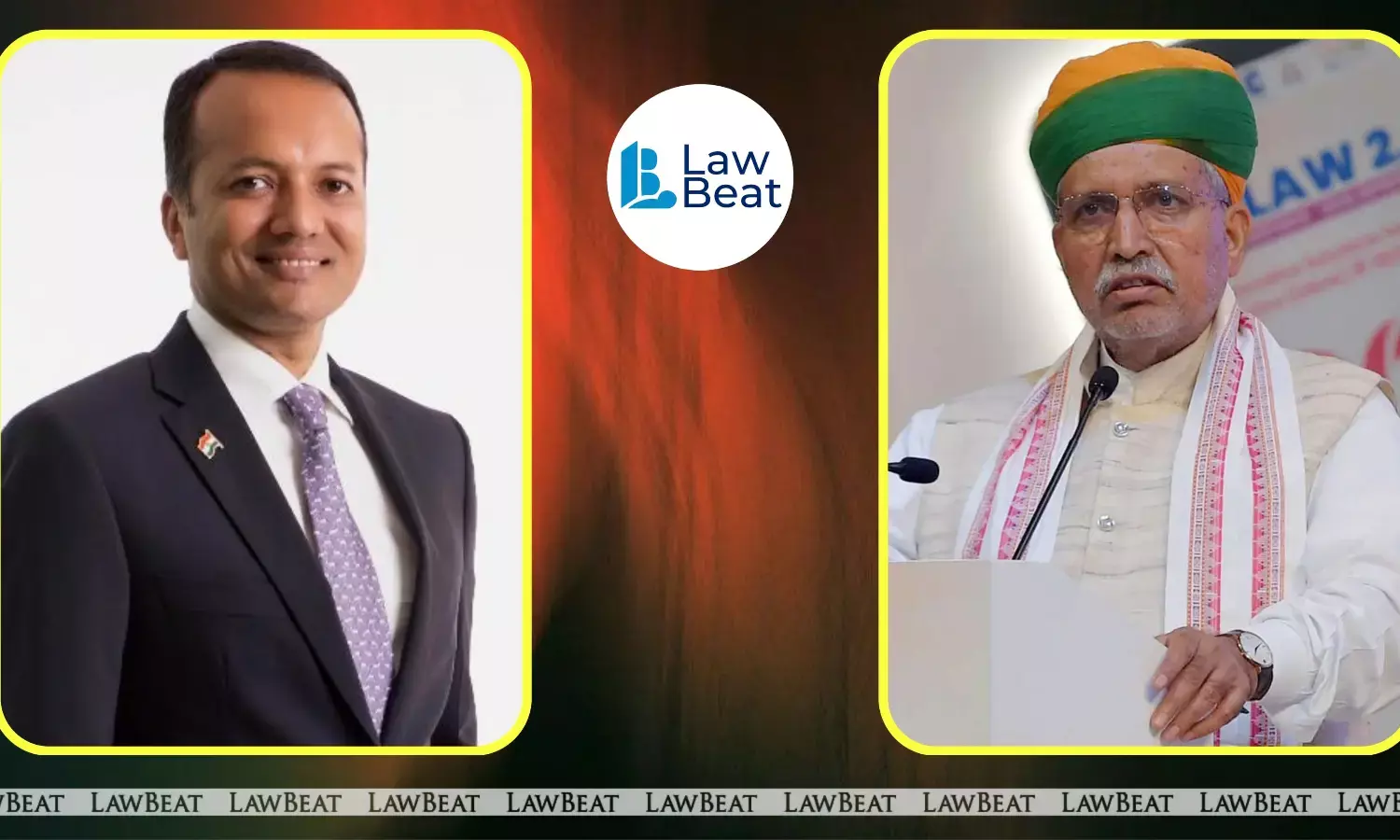
Naveen Jindal, O.P. Jindal University, Arjun Ram Meghwal
Calling legislative precision the backbone of good governance, Union Minister for Law and Justice Arjun Ram Meghwal on Friday said that clear and unambiguous drafting of laws can significantly reduce litigation and ease the burden on courts.
Addressing the inauguration and launch ceremony of the Free Major Academic Initiative at O.P. Jindal Global University, Meghwal described the introduction of advanced degree programmes in Legislative Practice, Electoral Analysis and Management, and Political Communication as a “milestone moment” in India’s educational history.
Welcoming the dignitaries, including Lok Sabha Speaker Om Birla, members of the legal fraternity, faculty and students, the Minister congratulated the university’s leadership, including Chancellor Naveen Jindal and the Vice-Chancellor, for what he termed a visionary academic step.
Highlighting the importance of legislative drafting, Meghwal emphasised that even a single word in a statute can alter its interpretation and impact. Referring to commonly used expressions in legislation, he explained how the distinction between “may” and “shall” carries critical legal consequences, one indicating discretion, the other imposing a mandatory obligation.
“In legislative language, every word has meaning,” he said, adding that precision is not ornamental but foundational to effective governance.
Drawing a parallel with constitutional philosophy, the Minister turned to the Preamble of the Constitution and its core ideals—Equality, Liberty and Fraternity. He noted that while some scholars trace these values to the French Revolution of 1789, the Indian Constitution adopts a distinct ordering.
“In our Constitution, Equality comes first,” he observed, referring to Articles 14 to 18, which enshrine the right to equality. Addressing a common question; why Equality precedes Liberty, Meghwal cited Dr B.R. Ambedkar’s reasoning that in the Indian social context, once equality is ensured, liberty would naturally be safeguarded.
Every word in the Constitution, he said, has been carefully chosen and carries layered meaning.
Meghwal also highlighted that while fraternity may not be elaborated upon in specific Articles, it is explicitly embedded in the Preamble. The responsibility of promoting fraternity, he noted, extends beyond the text of the Constitution and into the fabric of society.
“Society must determine how to strengthen bonds of brotherhood and harmony,” he said, framing fraternity not merely as a constitutional aspiration but as a shared civic duty.
Turning to the practical mechanics of law-making, Meghwal outlined the institutional process within the Ministry of Law and Justice. When a Ministry prepares a Bill, he explained, it is sent for legal vetting and meticulous drafting to ensure clarity, coherence and constitutional compliance.
“There is a full institutional mechanism in place,” he said, underscoring the central role of the drafting department in shaping legislation before it is introduced in Parliament.
He illustrated this with the example of the Income Tax Act, noting that even a single proviso in the statute had sparked prolonged committee deliberations. Terms such as “proviso” and “explanation,” he said, are not merely stylistic devices but technical components that carry specific interpretative implications.
“If there is ambiguity, it creates grey areas,” Meghwal observed. Lawyers, he acknowledged, argue effectively in such grey zones. However, he stressed that if laws are drafted with clarity and leave minimal scope for interpretative doubt, disputes would diminish.
Fewer ambiguities, he argued, would mean fewer legal battles, fewer cases and reduced pendency in courts. In that sense, legislative drafting has a direct bearing on the efficiency of the justice delivery system.
The Minister expressed optimism that structured academic programmes in legislative drafting and governance would equip students with a deeper understanding of how laws are conceptualised, framed and implemented.
“Through these courses, students will gain a better understanding of legislative drafting and governance,” he said, adding that the benefits would extend beyond the classroom. Those entering public life or politics, he suggested, would carry with them a nuanced appreciation of the legislative process, thereby strengthening parliamentary debate and law-making.
He described the university’s initiative as not only academically innovative but institutionally significant, potentially shaping a generation of professionals who understand both the theory and practice of legislation.
Addressing contemporary concerns about technological disruption, Meghwal also touched upon the impact of Artificial Intelligence on employment. Contrary to fears that AI would reduce job opportunities, he asserted that technological advancement transforms rather than eliminates work.
“As discussed in AI forums and summits, technology does not eliminate jobs; it transforms them,” he said. While the nature of employment may evolve, new opportunities will continue to emerge, he added.
Congratulating the university once again, the Minister concluded by expressing hope that the newly launched programmes would produce skilled professionals capable of strengthening both the legislative framework and the democratic process.