
Fundamental Rights in a Time of Transition: VK 4.0 Examines Duties, Property and the Limits of Freedom
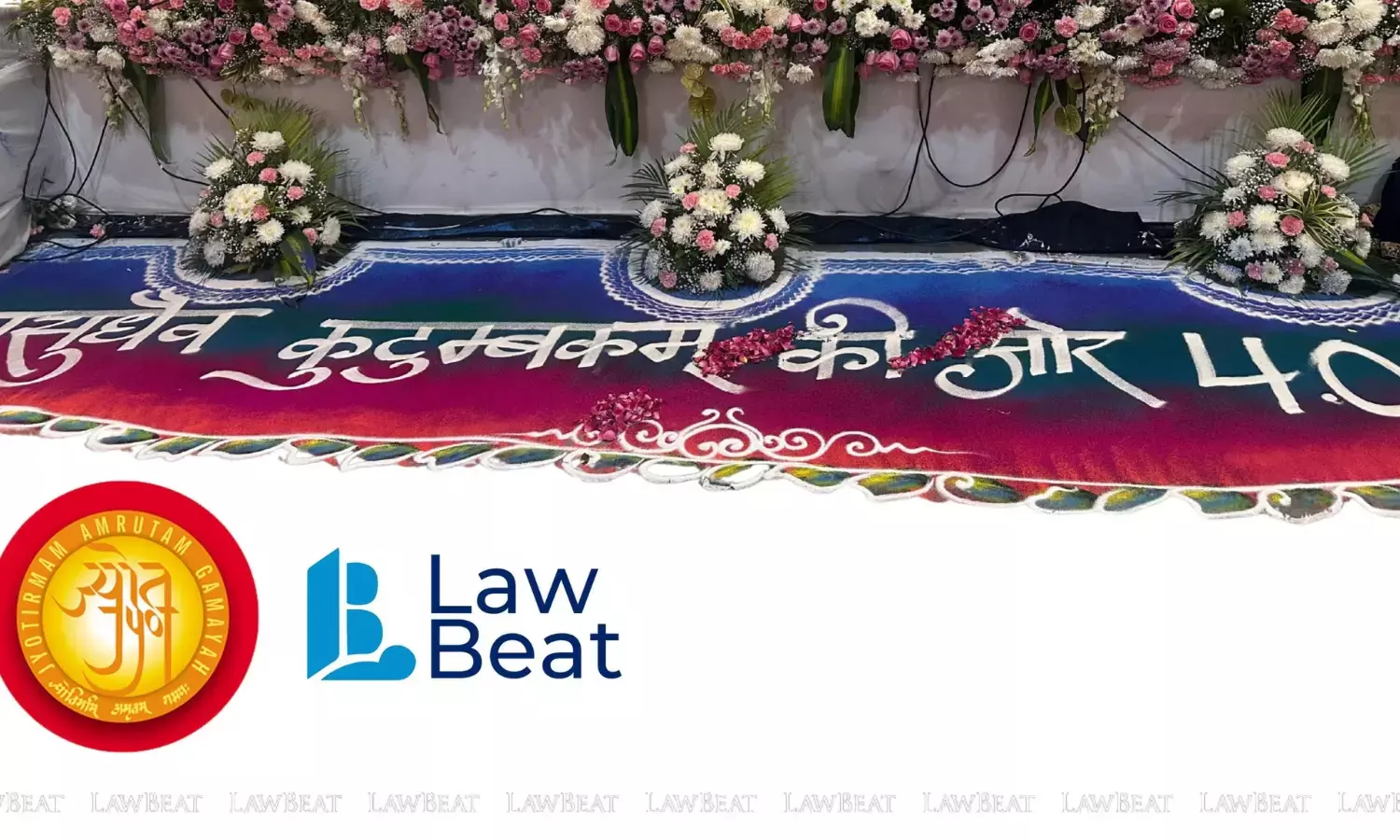
Fundamental Rights Under the Lens at VK 4.0 Amid India’s Constitutional Transition
The fourth edition of Vasudhaiva Kutumbakam Ki Oar 4.0 (VK 4.0), themed “Sankraman Kaal”, continued its constitutional engagement with Legal Session 3: Fundamental Rights, a discussion that turned attention to the changing balance between individual liberties, civic responsibility and the expanding role of the State.
Held as part of the conclave’s legal sessions, the discussion situated Fundamental Rights within a broader institutional context, questioning whether a rights-centric constitutional framework can remain effective without a corresponding emphasis on duties.
The panel examined how constitutional guarantees operate in a society facing environmental stress, economic regulation, developmental pressures and growing State intervention.
A central thread running through the session was the relationship between Fundamental Rights and Fundamental Duties.
While Part III of the Constitution provides enforceable rights largely against the State, the discussion considered whether the full realisation of these rights also depends on the conduct and consciousness of citizens themselves.
The evolution of equality, liberty and dignity through judicial interpretation, particularly under Article 21, was acknowledged as a defining feature of Indian constitutional jurisprudence. At the same time, concerns were raised about whether excessive reliance on rights enforcement, without civic responsibility, has contributed to institutional fatigue.
The conversation then moved to the constitutional status of property rights and their link to livelihood. Panelists examined the consequences of removing the right to property from Part III and its present location under Article 300A.
Questions were raised about whether compensation alone can adequately address the loss of land, shelter and generational livelihoods when property is acquired for development.
The discussion highlighted the need to assess public purpose not merely from the State’s perspective, but also through its impact on affected communities.
Modern conceptions of property further complicated the debate. Intellectual property, access to medicines, agricultural patents and traditional knowledge were discussed as areas where property intersects with public welfare, raising questions about equity, innovation and distributive justice in a globalised economy.
The freedom to trade and practice a profession under Article 19(1)(g) also came under scrutiny, particularly in light of the State’s power to impose restrictions under Article 19(6).
The panel examined whether the State’s increasing role in regulation and trade risks undermining individual economic freedom, or whether such intervention remains justified within a welfare-oriented constitutional framework.
Throughout the session, the idea of Sankraman Kaal served as a conceptual anchor, framing the Constitution as a living system undergoing constant recalibration. The discussion suggested that constitutional stability in times of transition may depend not only on judicial protection of rights, but also on ethical restraint, civic responsibility and institutional balance.
Drawing from civilisational values underlying the idea of Vasudhaiva Kutumbakam, the session reflected on whether India’s constitutional framework can integrate indigenous ethical thought while responding to contemporary legal and governance challenges.
In the session held yesterday, the panel examined whether a codified Constitution can endure without an express amendment mechanism, and why such a provision is essential to constitutional longevity. At the same time, the discussion acknowledged the risks of excessive amendment, emphasising the role of judicial doctrines particularly the Basic Structure doctrine in preserving the Constitution’s core identity.
At its core, Vasudhaiva Kutumbakam Ki Oar 4.0 attempts to bridge ancient Indian value systems with contemporary constitutional and legal frameworks. Drawing from ideas rooted in Indian Rajneeti, philosophy, jurisprudence, and civilisational ethics, the conclave explores whether India’s modern legal system is sufficiently equipped, both structurally and institutionally, to integrate indigenous constitutional thought while responding to present-day legal, political and governance challenges.
The forum, in the past also revisited critical constitutional questions surrounding the nature of citizens’ rights, the limits of State power, and the Basic Structure Doctrine. Offering a unique perspective on the nature of rights, N. Venkataraman, Additional Solicitor General of India, remarked, “We are mistakenly identifying human rights as akin to individual rights. This is the first mistake, and it is my humble submission that courts across the world have started to make it. It directly interferes with the fabric of Indian society in three ways; it affects the institution of marriage, the institution of family, and therefore, society at large.”