
Is India Facing a Crisis of Constitutional Literacy? Jayant Jaibhave on Constitutional Jurisprudence
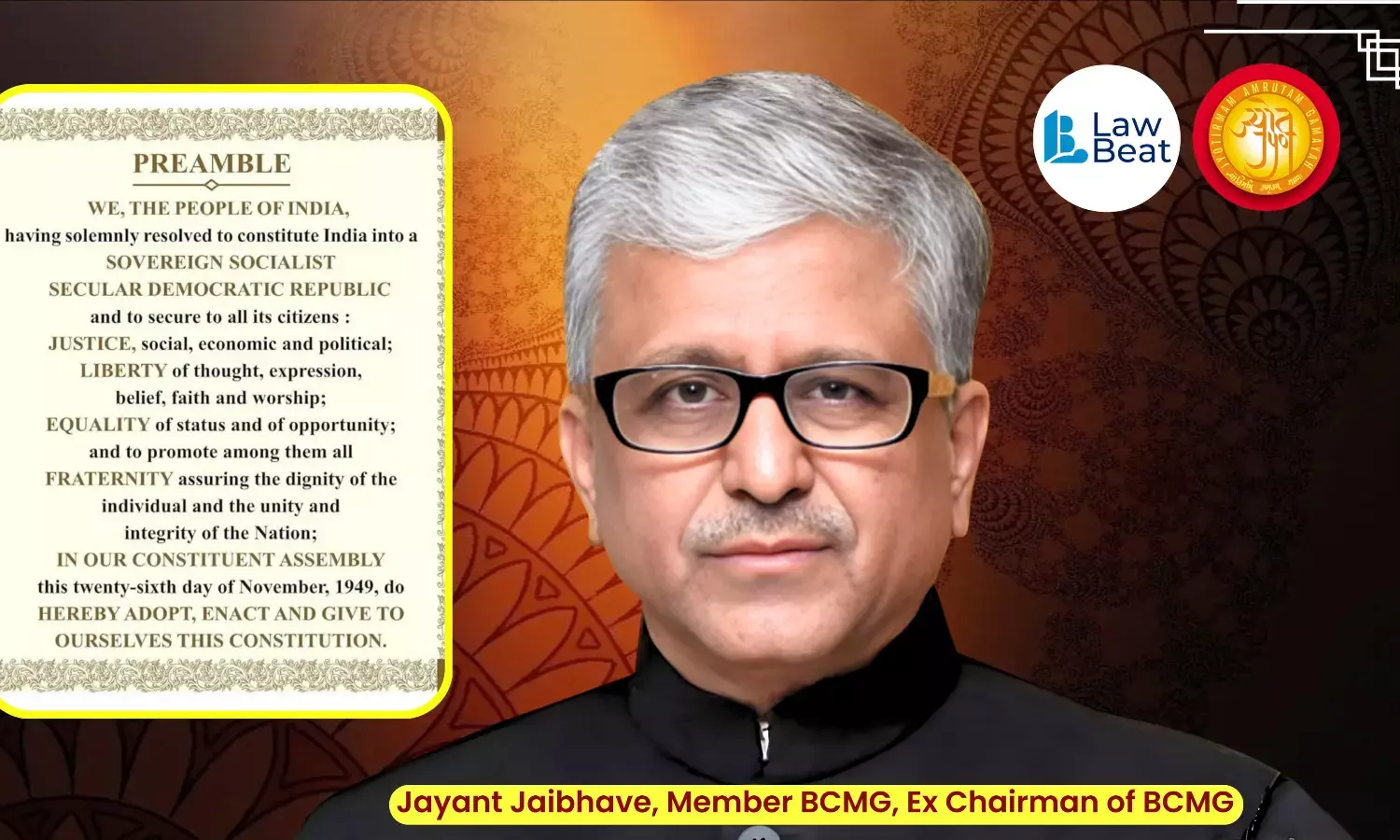
Democracy Depends on Constitutional Understanding, Jayant Jaibhave at VK 4.0 Conclave
Speaking at a legal session on Constitutional Jurisprudence at the Vasudhaiva Kutumbakam Ki Oar 4.0, Jayant Jaibhave, Member and Former Chairman of the Bar Council of Maharashtra and Goa delivered a thought-provoking intervention that questioned the very foundations of democratic functioning in the country. He set the tone for a deeply reflective discussion on the nature of India’s constitutional democracy, its evolving interpretation, and the responsibilities of institutions and citizens alike.
Jaibhave began by identifying what he described as a failure of democracy in India, attributing it not merely to political disagreement or institutional inefficiency, but to a deeper problem: constitutional illiteracy among the citizens of the country.
Anchoring his argument in the text of the Constitution, Jaibhave drew attention to its opening words: “We the People of India.”
He emphasized that the Constitution is not a document imposed by the State, but one that has been resolved and adopted by the people themselves. This foundational idea, he argued, reinforces the democratic nature of the Constitution and reminds us that sovereignty ultimately lies with the people, not with institutions of power.
However, Jaibhave cautioned that merely invoking these words is not enough. As common citizens, he said, there is a pressing need to understand what “We the People” truly signifies. He urged citizens to actively engage with the Constitution by interacting with its principles, interpreting its provisions, and participating in discussions on whether its spirit is genuinely reflected in governance.
Constitutional democracy, in his view, cannot survive without an informed and questioning citizenry.
A significant portion of Jaibhave’s remarks focused on the often-misunderstood concept of secularism. He clarified that secularism does not mean the prohibition of religious practices.
On the contrary, the Constitution guarantees freedom of religion under Articles 25, 26, 27, and 28. Every individual, he noted, enjoys a fundamental right to practice and profess their religion.
The true meaning of secularism, Jaibhave explained, lies elsewhere. It signifies that there can be no religion of the State or of the government. While citizens may follow their respective faiths, the government must not operate on religious principles. The State, he stressed, must remain neutral and must not align itself with or be guided by any religious doctrine in the exercise of its powers.
Concluding his intervention, Jaibhave underscored that constitutional jurisprudence is not merely about judicial interpretation, but about sustaining the ethical foundations of governance. His reflections served as a reminder that democracy depends not only on constitutional text, but on constitutional understanding among lawmakers, institutions, and citizens alike.
The fourth edition of Vasudhaiva Kutumbakam Ki Oar (VK4.0), themed “Sankraman Kaal”, brought together leading voices from law, geopolitics, and public policy to reflect on India’s institutional frameworks at a moment of profound transition. The event features a series of legal and geopolitical sessions from 17th-22nd January, 2026, each engaging with questions of power, legitimacy, and governance in a rapidly changing national and global order.
While the geopolitical sessions are set to examine India’s evolving role on the world stage, the legal sessions turned inward towards the Constitution as the cornerstone of democratic stability.
The opening ceremony held yesterday witnessed the presence of eminent figures from India’s judicial and legal fraternity, underscoring the constitutional gravitas of the conclave. The legal segment featured B. N. Srikrishna, former Judge of the Supreme Court of India; B. R. Gavai, former Chief Justice of India; Chandrashekhar, Chief Justice of the Bombay High Court; and Nitin Thakker, Senior Advocate and President of the Bombay Bar Association, setting the tone for the constitutional and institutional deliberations that followed.
Earlier, the forum revisited critical constitutional questions, focusing on the nature of citizens rights, the limits of the State, and the Basic Structure Doctrine. Speaking on the insertion of Article 31B in the Constitution by the then unelected Parliament, His Holiness Yugbhushansuriji Maharaj stated, “Article 31B has never been tested on the touchstone of the Basic Structure Doctrine. Astonishingly, Article 31B is causing the gravest injustice, which has never been faced by any community in the world. In regard to the Jains, this draconian Article stands upright, protecting the acquisition of their topmost place of worship, Parasnath Hills.”