
‘May’ vs ‘Shall’, A Single Comma: SG Tushar Mehta Explains Why Legislative Drafting Shapes Justice
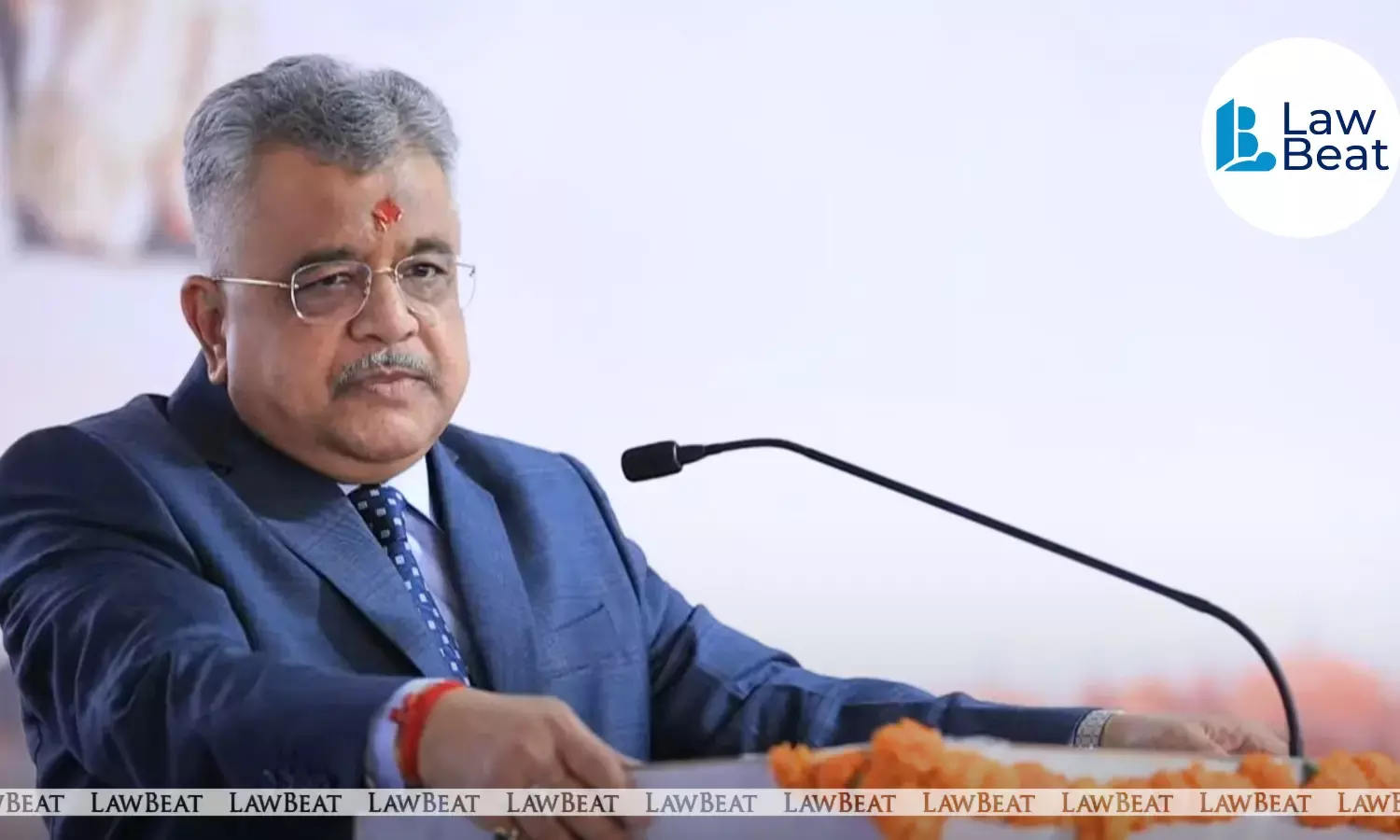
Solicitor General Tushar Mehta
Describing legislative drafting as “a science, mathematics and an art,” Solicitor General of India (SGI) Tushar Mehta on Friday underscored the centrality of precision in law-making, stating that even a single punctuation mark can alter the meaning and impact of a statute.
Delivering an address at O.P. Jindal Global University, in the presence of Lok Sabha Speaker Om Birla and Union Law Minister Arjun Ram Meghwal, Mehta reflected on the evolving relationship between academia, legislation and governance, while commending the university for introducing specialised postgraduate programmes in electoral analysis and legislative drafting.
Opening his remarks, the Solicitor General described it as a privilege to be part of a gathering that sought to academically engage with electoral analysis and management. While acknowledging the value of electoral analysis as a discipline, he candidly remarked that electoral management, in his personal view, “cannot be taught in classrooms” alone.
“It has to be taught in the streets and on the ground,” he observed, suggesting that political training is rooted in lived experience, grassroots engagement and mentorship under seasoned leaders. Referring to the presence of Birla and Meghwal, he noted that future Members of Parliament and ministers might benefit from structured academic exposure, but political leadership ultimately takes shape through practical immersion.
However, Mehta pivoted quickly to what he termed one of the most neglected areas of legal education: legislative drafting.
“One of the most ignored subjects in law is legislative drafting,” he said, adding that the discipline is often treated as peripheral, despite being foundational to the entire legal system. Courts interpret laws, executives implement them, and citizens are governed by them; but the intellectual architecture of legislation itself, he suggested, rarely receives the academic focus it deserves.
Calling legislative drafting “a science by itself,” Mehta emphasised that it requires foresight, structural clarity and the ability to anticipate future contingencies. It is not merely about language, he said, but about designing norms that can endure constitutional scrutiny and social transformation.
To illustrate his point, he referred to the drafting of the Indian Penal Code by Thomas Babington Macaulay in the 19th century. Enacted in the 1800s, the IPC was, in Mehta’s words, drafted with such precision that it required virtually no structural amendment even after Independence.
He observed that Macaulay had contemplated “each and every possible eventuality or contingency” that could arise in penal law at the time. Amendments that followed were largely in respect of offences that could not have been foreseen in the 19th century, such as those relating to electronic devices, evolving forms of electoral malpractice and developments in family law.
“There was no concept of family law there,” he remarked, adding that certain modern legal complexities were beyond the horizon of 19th-century lawmakers. Yet the structural robustness of the Code, he implied, reflected the depth of drafting that went into its creation.
Mehta stressed that legislative drafting determines how laws function in practice. The difference between “may” and “shall,” he explained, can decide whether a provision is mandatory or merely directory. A statute that says an authority “shall” perform an act leaves no discretion; one that uses “may” introduces flexibility.
“That is the beauty of legislative drafting,” he said, underscoring that such linguistic choices are not accidental but deliberate. The draftsman decides whether a particular obligation is compulsory or discretionary, thereby shaping administrative conduct and judicial interpretation.
In a striking anecdote from his own career, Mehta said that after nearly 25 years of practice, he was confronted with a case before a Constitution Bench where the outcome hinged on the placement of a comma in a provision of the new land acquisition law.
“We argued the position of a comma,” he recounted, noting that there were judgments from British courts examining how punctuation can alter statutory meaning. The experience, he said, was a reminder that legislative drafting is not a matter of ornamental prose but of exactitude.
“Legislative drafting is not a subject of mere academics,” he asserted. “It is a science. It is mathematics. It is an art.”
Mehta welcomed the university’s initiative in offering what he described, subject to correction; as possibly the first full-time postgraduate programme in legislative drafting in India. Such an initiative, he said, could address a systemic gap in the country’s law-making process.
“What we are lacking as a nation is good legislative drafting,” he observed candidly. Poorly drafted statutes, he implied, often lead to protracted litigation, conflicting interpretations and policy uncertainty. Conversely, well-crafted laws can reduce ambiguity, enhance compliance and strengthen institutional trust.
By training professionals specifically in the art and discipline of drafting legislation, he suggested, India could cultivate a cadre of experts capable of producing clear, precise and constitutionally sound laws.
Concluding on an optimistic note, Mehta expressed hope that the programme would produce “able and committed professionals” trained in the craft of drafting legislation. In doing so, he framed legislative drafting not as a technical afterthought but as the foundation of governance itself, where the choice of a single word, or even the placement of a comma, can shape rights, obligations and the course of justice.