
Nation State, Rights and Constitutional Restraint: Highlights from VK 4.0 Legal Session
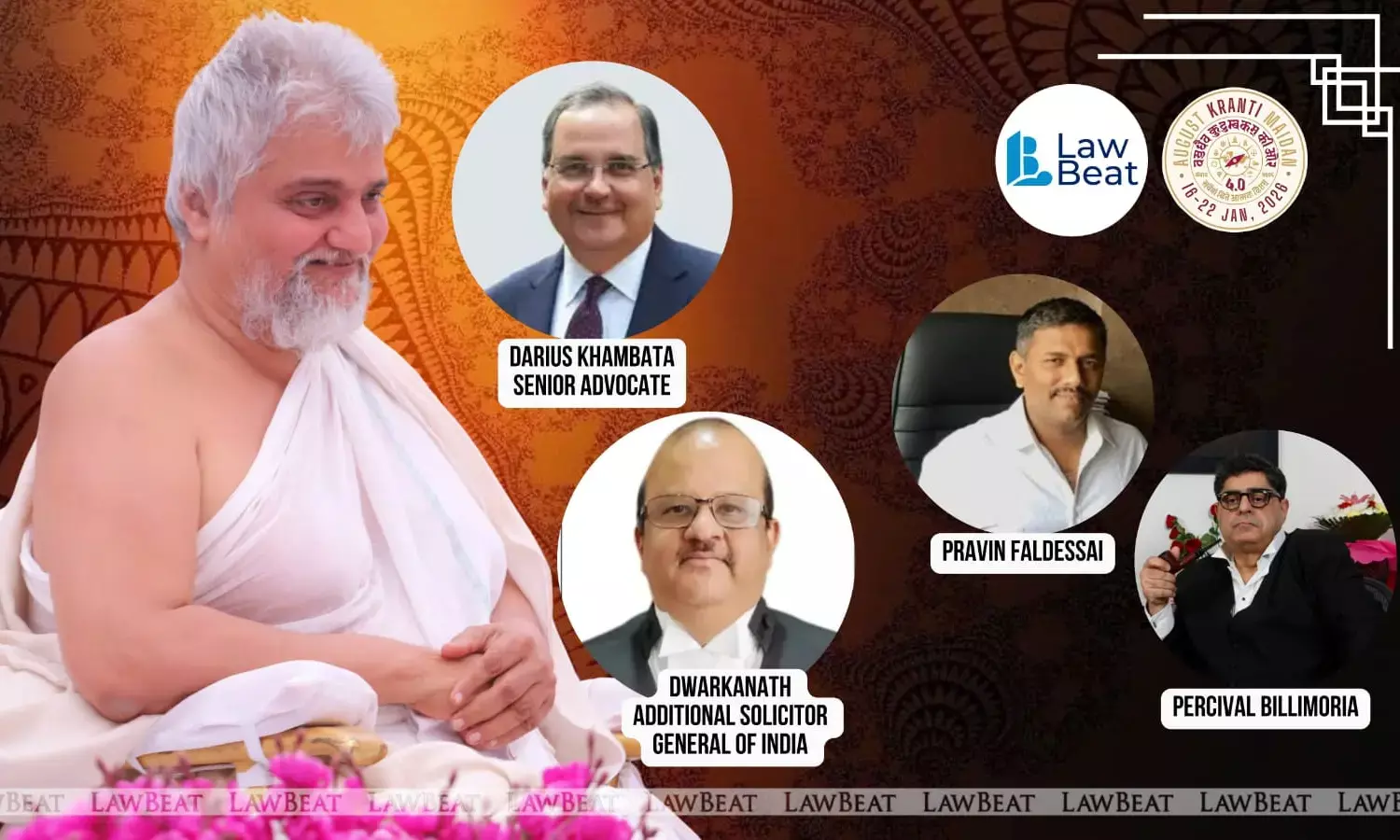
When constitutional power expands, who guards the guardrails? VK 4.0’s Legal Session 2 revisited the limits of State authority under India’s Constitution
The second legal session of Vasudhaiva Kutumbakam Ki Oar 4.0 - Sankraman Kaal, titled “Nation State Under the Constitution”, turned attention to some of the most enduring and contested questions in Indian constitutional law, particularly the limits of constitutional amendment, the continued operation of Articles 31A, 31B and 31C, and the role of the Basic Structure doctrine in preserving constitutional supremacy.
The session was anchored around three core questions circulated to the panel: first, whether Article 31C, upheld in Kesavananda Bharati on the premise of Parliament’s unlimited amending power, could legitimately coexist with the same judgment’s majority holding that such power is constrained by the Basic Structure doctrine; second, if the Basic Structure doctrine applies only to constitutional amendments, what safeguards exist for ordinary legislation that falls outside its direct reach; and third, whether Article 31B continues to serve its original purpose as a temporary constitutional device addressing historical exigencies, or whether it has now become a permanent assertion of State supremacy over Fundamental Rights.
The panel comprised Deputy Solicitor General Pravin Faldessai, Additional Solicitor General S. Dwarkanath, Senior Advocate Percival Billimoria, and Senior Advocate Darius Khambata, each offering distinct perspectives on how these questions have shaped India’s constitutional journey.
Senior Advocate Percival Billimoria traced the origins of Articles 31A, 31B and 31C, observing that these provisions were not envisaged by the Constitution’s framers. He noted that within the first year of the Constitution’s operation, the First Amendment introduced these clauses, reflecting political imperatives rather than constitutional foresight. According to Billimoria, politics and prevailing political ideas played a decisive role in embedding these provisions into the constitutional framework.
Addressing Article 31B specifically, Mr. Billimoria expressed strong reservations about the Ninth Schedule, pointing out that it places laws beyond the purview of judicial review. He described this insulation as “highly objectionable,” noting that what began as a limited exception has expanded to nearly 300 laws. Referring to Prime Minister Jawaharlal Nehru’s role in piloting the First Amendment, Billimoria remarked that although Nehru had stated that only a few laws would be included, the unchecked expansion of the Ninth Schedule has fundamentally altered the balance between State power and constitutional rights.
Additional Solicitor General S. Dwarkanath characterised Articles 31A, 31B and 31C as provisions intended to dilute Fundamental Rights, particularly in the context of land reform and redistributive policies. However, he emphasised that constitutional jurisprudence has evolved beyond a singular reliance on the Basic Structure doctrine. Dwarkanath pointed to the development of judicial review tools such as the manifest arbitrariness test, articulated in Shayara Bano, and the proportionality doctrine, arguing that courts possess sufficient constitutional mechanisms to scrutinise and strike down legislation that violates constitutional guarantees, even outside the Basic Structure framework.
Responding to the perceived paradox between constitutional rigidity and flexibility, Deputy Solicitor General Pravin Faldessai argued that the Constitution was deliberately designed to embody both permanence and adaptability. He emphasised that Article 368 itself provides an internal structure for constitutional change, enabling amendments when required while preserving rigidity where foundational principles are concerned. Faldessai described the decision in Kesavananda Bharati as absolutely fundamental, stating that it reconciled the need for constitutional evolution with the imperative of preserving constitutional identity.
Senior Advocate Darius Khambata situated the discussion within a broader constitutional philosophy, underscoring that the Constitution is far more than an ordinary law. He described it as a document that encapsulates the dreams, hopes and aspirations of the people, while simultaneously safeguarding individual rights. Recalling Dr. B.R. Ambedkar’s caution against easy amendability, Khambata noted that Ambedkar had warned that excessive flexibility could lead to constitutional chaos.
Mr. Khambata framed the Basic Structure doctrine as the judicial response to the fundamental question of whether the power to amend includes the power to destroy. Referring to Article 31C, he pointed out that while Kesavananda Bharati addressed only the latter part of the provision, its first part was struck down years later in Minerva Mills, restoring constitutional balance. He described himself as a firm believer in the Basic Structure doctrine, clarifying that its value lies not in freezing the Constitution but in protecting a set of core principles that cannot be compromised under any circumstances.
Emphasising the Constitution’s character as a living document, Khambata observed that the Constitution was never intended to function as a detailed code of law. As long as its basic fundamentals remain secure, he argued, constitutional amendments are not only permissible but necessary. He also suggested that the deletion of Article 19(1)(f) warrants reconsideration, noting that problems arise when rights are entirely removed from the Fundamental Rights framework, thereby weakening constitutional protection.
Throughout the session, the panel returned to the central tension between the authority of the nation-state and the restraints imposed by constitutional supremacy.
By revisiting the historical context of Articles 31A, 31B and 31C and examining their contemporary consequences, the discussion underscored that the resilience of India’s constitutional democracy lies in ensuring that the exercise of power remains continuously accountable to constitutional limits.
The exhibition accompanying the conclave is principled on the idea of Vasudhaiva Kutumbakam and presents twelve timeless principles that underscore the foundations of strong families, ethical governance and social harmony, while situating today’s geopolitical and legal challenges within a broader civilizational framework rooted in responsibility, compassion and coexistence.
Session I on "Constitutional Jurisprudence" held today saw the presence and deliberations by an eminent panel comprising Jamshed Cama, Senior Advocate, Supreme Court of India; Jayant Jaibhave, Member and Former Chairman of the Bar Council of Maharashtra and Goa and Krishnan Venugopal, Senior Advocate, Supreme Court of India. The discussion opened with a foundational question on the difference between written and unwritten constitutions, and whether codification necessarily leads to better governance. The panel reflected on how a written Constitution like India’s provides certainty, accessibility, and normative clarity in a diverse democracy, while also raising concerns about rigidity in times of social and political change.
Earlier, the forum revisited critical constitutional questions, focusing on the nature of citizens rights, the limits of the State, and the Basic Structure Doctrine. Speaking on the insertion of Article 31B in the Constitution by the then unelected Parliament, His Holiness Yugbhushansuriji Maharaj stated, “Article 31B has never been tested on the touchstone of the Basic Structure Doctrine. Astonishingly, Article 31B is causing the gravest injustice, which has never been faced by any community in the world. In regard to the Jains, this draconian Article stands upright, protecting the acquisition of their topmost place of worship, Parasnath Hills.”