
Opening Indian Legal Sector Needs Stronger Legal Education Backbone: Dr Lalit Bhasin at VidhiUtsav
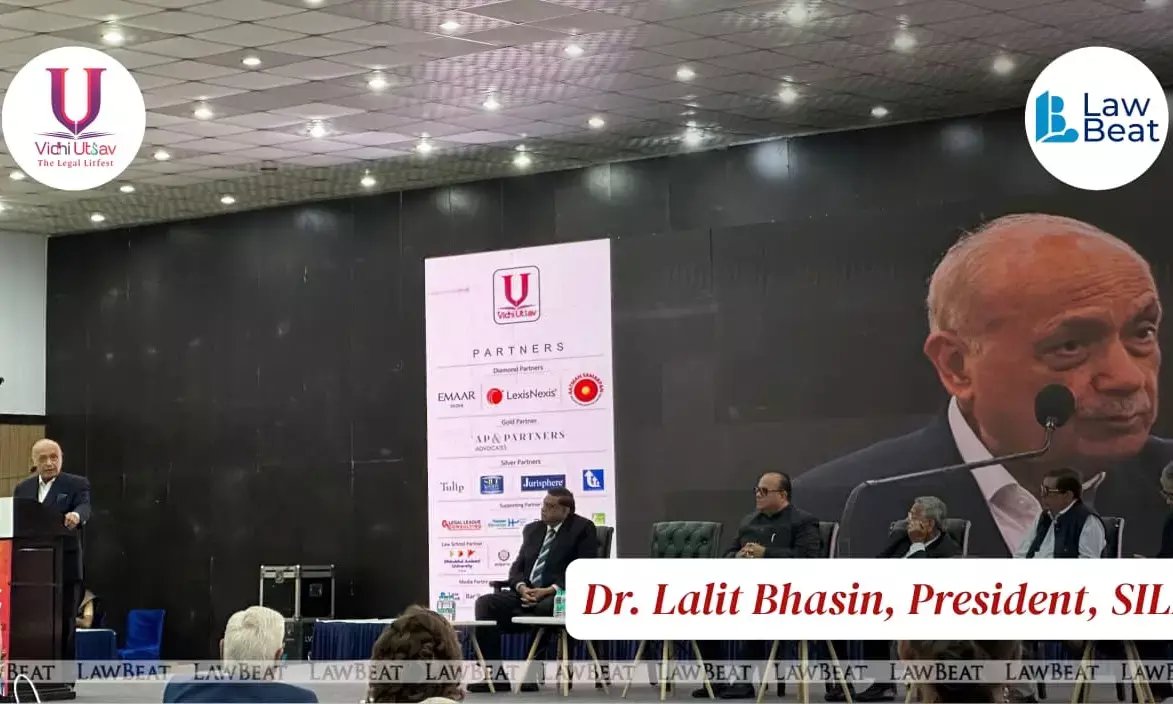
Legal Sector Liberalisation Must Begin in Law Schools, Says SILF President Dr Lalit Bhasin
In a wide-ranging address at VidhiUtsav, The festival of Law, Justice, Legal Literature, Knowledge and Thought Leadership, Dr. Lalit Bhasin, President of the Society of Indian Law Firms (SILF), made a compelling case for the calibrated opening of India’s legal sector, underlining that any meaningful liberalisation must begin with strengthening the foundations of legal education in the country.
Framing the discussion within the broader theme of attracting global investments and expertise, Bhasin acknowledged the growing momentum around liberalisation of the Indian legal profession but cautioned that readiness remains the central question. According to him, the debate is no longer about whether the sector should open up, but whether Indian legal institutions and professionals are adequately prepared to compete with global counterparts.
Bhasin placed particular emphasis on the role of law schools, describing them as the starting point of any meaningful reform. He observed that the responsibility of shaping competent lawyers, general counsel, and legal academics lies squarely with these institutions, and candidly noted that the current standards of legal education in India do not yet match those in several other jurisdictions.
Without directly attributing responsibility to regulatory bodies, he called for introspection at both institutional and regulatory levels, stressing that the inculcation of skills such as analytical thinking, expression, confidence, and professional ethics must begin early and go beyond conventional methods like moot courts and essay competitions.
In this context, he highlighted the potential role of R Venkataramani, who serves as the ex-officio Chairman of the Bar Council of India, in steering reforms aimed at elevating the quality of legal education and professional standards. Bhasin suggested that leadership at this level could catalyse necessary changes to ensure that India’s legal workforce is globally competitive.
Despite his concerns regarding preparedness, Bhasin expressed strong confidence in the inherent strength of the Indian legal profession. He asserted that Indian lawyers and law firms are “second to none,” pointing to their demonstrated competence, efficiency, and growing presence in international legal practice. He noted that Indian litigators are increasingly appearing in foreign jurisdictions, while domestic law firms are handling complex, high-value transactions with speed and expertise comparable to global firms.
He further underscored the pivotal role played by law firms in facilitating investments into India. According to Bhasin, the structuring of joint ventures, mergers and acquisitions, and cross-border transactions depends heavily on the institutional capacity and credibility of law firms. In this sense, he suggested that a form of liberalisation is already underway, driven not by formal regulatory changes but by evolving professional relationships and collaborations between Indian and foreign legal practitioners.
Citing examples of international engagement, Bhasin referred to the strong ties Indian legal bodies share with organisations such as the American Bar Association and the International Bar Association. He also highlighted leadership roles assumed by Indian lawyers on global platforms, as evidence of India’s growing influence in the international legal community.
Importantly, Bhasin clarified that India is not opposed to the entry of foreign lawyers. Instead, he articulated a model of “coopetition”, a blend of cooperation and competition as the guiding principle for engagement. Under this approach, he envisaged a framework where Indian and foreign lawyers collaborate, exchange ideas, and learn from each other, while simultaneously competing on merit. He described this balance as essential to fostering both growth and resilience within the sector.
Bhasin also pointed to the transformative role of technology in accelerating the opening of legal services. In his view, digital tools have effectively erased geographical boundaries, enabling lawyers in India to access legal information and developments from jurisdictions across the world in real time. This technological integration, he argued, has already created a de facto global legal marketplace, further reinforcing the case for structured liberalisation.
Concluding his address, he linked the discussion to broader economic trends and expressed optimism about India’s investment climate, attributing it in part to policy initiatives under the leadership of Narendra Modi. Despite global uncertainties, including geopolitical conflicts and economic disruptions, he maintained that India remains on a growth trajectory, with increasing inflows and outflows of investment likely to continue.
Event Name: VidhiUtsav, The festival of Law, Justice, Legal Literature, Knowledge and Thought Leadership
Event Date: March 28, 2026