
Student Delegates Call for UN Reforms at Model United Nations During Vasudhaiva Kutumbakam Ki Oar 4.0
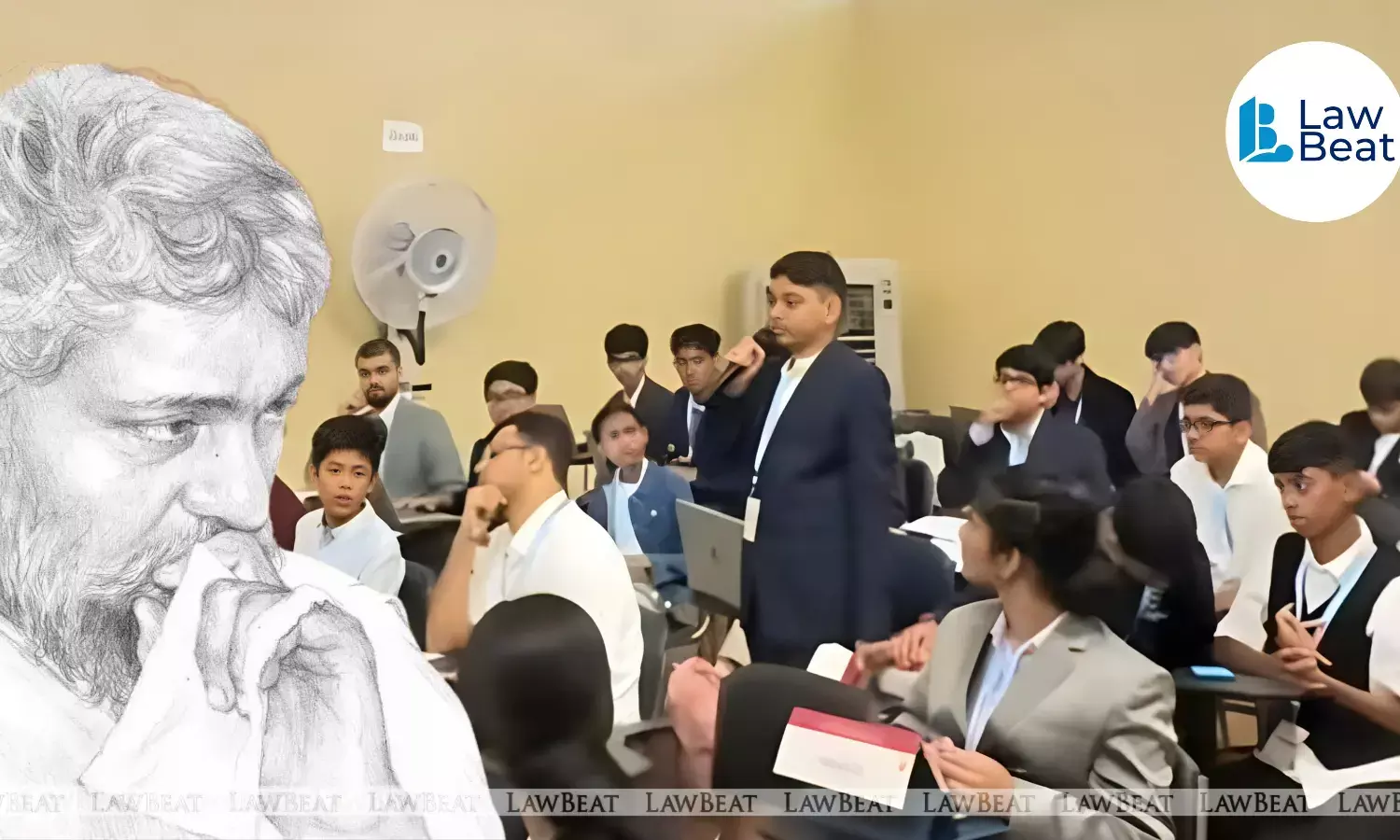
Vasudhaiva Kutumbakam Ki Oar 4.0 Hosts Student-Led MUN on Global Justice
A Model United Nations organised by Jyot on the sidelines of the seven-day Vasudhaiva Kutumbakam Ki Oar 4.0 Conclave brought together over 160 students from across the country to deliberate on pressing issues of global governance, disarmament, human dignity and institutional reform.
Held on January 19 and 20, 2026 at August Kranti Maidan, Mumbai, the MUN marked a focused attempt to extend the conclave’s public policy engagement to structured youth participation.
The Vasudhaiva Kutumbakam Ki Oar Conclave has emerged as a platform for dialogue on contemporary governance and policy questions, convening voices from government, the judiciary, academia and allied institutions. In keeping with this broader objective, the student-led Model United Nations sought to familiarise young participants with the processes of international diplomacy, negotiation and consensus-building.
The event was supported by the Ministry of External Affairs, reinforcing its institutional and educational orientation.
Delegates participated in four committees, the Disarmament and International Security Committee, the Social, Humanitarian and Cultural Committee, the United Nations Environment Programme, and the United Nations Security Council.
Across committees, students engaged in moderated debates, caucuses and resolution-drafting exercises that mirrored real-world United Nations procedures.
The deliberations addressed a wide range of international concerns, including global security, environmental sustainability, humanitarian access and reform of multilateral institutions.
A recurring theme across discussions was the issue of disarmament, particularly the continued existence of weapons of mass destruction. Several delegates argued that genuine global security could not be achieved without the complete elimination of such weapons, emphasising that deterrence-based frameworks had failed to prevent conflict and humanitarian crises.
Participants across committees echoed the view that disarmament was integral to building a stable and secure international order.
Delegates also focused on questions of human dignity and equitable access to basic necessities. Students stressed that international governance structures must prioritise the guarantee of food, water, shelter and access to shared global resources, framing these as foundational to peace and development.
These arguments were frequently linked to the idea of collective responsibility, with participants asserting that global challenges required cooperative rather than competitive responses.
In line with the guiding philosophy of Vasudhaiva Kutumbakam, the belief that the world constitutes a single family, delegates repeatedly underlined the need for inclusive global frameworks. Several students argued that distinctions between member and non-member states, or between powerful and developing nations, undermined the principle of sovereign equality.
This perspective informed calls for reform of existing international institutions, particularly the United Nations Security Council.
Following closed-door sessions addressed by senior speakers, including former Indian Permanent Representative to the United Nations Ruchira Kumbhoj and S. Gurumurthy, Chairman of the Vivekananda International Foundation, a number of delegates argued strongly for the abolition of veto power within the Security Council. The veto was described as inherently unequal and inconsistent with democratic decision-making, with students contending that it allowed a small group of states to override the collective will of the international community.
Another notable feature of the deliberations was the endorsement by students of the twelve guarantees of a family contained in Aryadharmanusari Paramarsh – A Blueprint for a Stable World Order. Delegates discussed the applicability of these guarantees to contemporary global challenges, suggesting that values rooted in familial responsibility and mutual care could inform diplomatic conduct and international cooperation. The resolutions adopted reflected an attempt to translate these ideas into actionable principles for global engagement.
Beyond policy debates, the Model United Nations served as a practical training platform for students. Participants engaged in public speaking, negotiation, drafting and alliance-building, gaining exposure to the complexities of multilateral diplomacy. Organisers noted that the emphasis was not only on simulation, but on encouraging critical engagement with the ethical and structural dimensions of international governance.
Overall, the Jyot-organised Model United Nations functioned as a youth-centric extension of the Vasudhaiva Kutumbakam Ki Oar 4.0 Conclave, reinforcing its core message of shared global responsibility. By encouraging students to view themselves as stakeholders in a common world order rather than representatives of isolated national interests, the exercise sought to cultivate a deeper understanding of justice, cooperation and global citizenship.