
“Real Legal Transformation Has Not Arrived Yet”: CAM’s Komal Gupta Calls for Deep Mindset Change in the Legal Sector

upta pointed out that this new reality requires a new architecture for legal service delivery
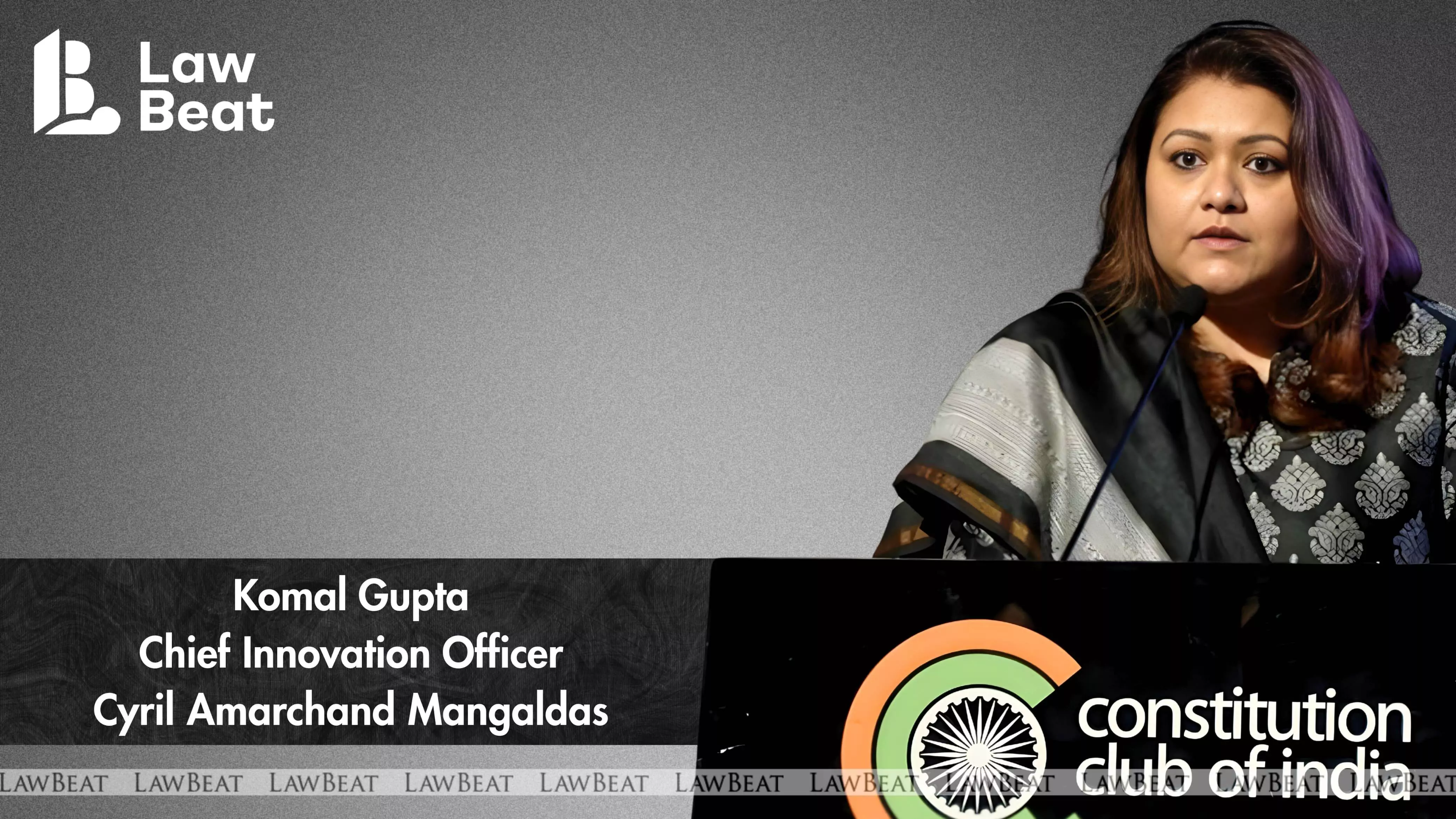
At the India Law, AI and Tech Summit 2025 held on 29 November, Komal Gupta, Chief Innovation Officer at Cyril Amarchand Mangaldas, delivered one of the clearest and most unfiltered assessments of where the legal industry really stands. Speaking on Architecting Technology Led Innovation in Legal Systems and Processes, Gupta said that despite the excitement around new tools, genuine transformation has not begun.
“Real legal transformation has not arrived yet,” she told the audience. Her session did not focus on the future of technology in isolation. Instead, it examined why the legal profession continues to struggle with change even after adopting advanced tools.
Gupta explained that the problem is not the absence of technology. The problem is that lawyers are using modern tools inside deeply outdated processes. She pointed to several examples that the room immediately recognised. “We use e discovery technology but we still rely on email driven workflows. We use AI research tools but we continue to draft memos the same old way. We automate documents but we hold on to old templates,” she said. According to her, this results in progress that looks modern on the surface but remains traditional at its core.
Gupta emphasised that real transformation begins when legal processes themselves are rebuilt around technology. “The future is not about using technology within old processes. The future is about redesigning processes around technology,” she said. In her view, once this shift takes place, the legal sector will naturally evolve toward a more efficient and strategic model of work.
She outlined three major changes that become possible when workflows are redesigned. First, lawyers will move from repetitive tasks to analytical work. Second, legal teams will shift from reactive support functions to proactive strategic roles. Third, billing will change from effort based hours to outcome based value.
Gupta also confronted the widespread concern that AI might replace lawyers. According to her, this fear misunderstands the role of technology. “Technology does not replace lawyers. It elevates lawyers to strategic advisors. Lawyers understand risk, judgment, ethics, negotiation and empathy. Machines handle the repetition. Lawyers handle the reasoning,” she said. Her argument was that AI should be seen as a partner, not a threat.
She added that the expectations of clients have changed significantly in recent years. In her words, general counsels, law firm partners, clients and young lawyers are all dealing with the same reality. Legal work has become far more complex, far more time sensitive and far more data driven. This shift in complexity has created an environment where clients look for speed, accuracy, actionable insights and measurable value. Billable hours no longer define the quality of legal work.
Gupta said that this new reality requires a new architecture for legal service delivery. Simply adding more tools to existing workflows is no longer enough. What is needed is thoughtful transformation and an honest assessment of what slows legal work down.
She also underscored a serious risk that many organisations overlook. AI adoption without AI literacy can be dangerous. “We cannot expect lawyers to use AI responsibly if we do not educate them on its quality, risk, confidentiality, bias and security implications,” she said. Gupta recommended structured learning within organisations. This can be through certifications, onboarding programmes or regular awareness sessions. According to her, education is essential for building responsible and informed AI adoption within legal teams.
Gupta closed her address by urging the profession to shift its mindset. Technology cannot be treated as an optional add on. It must be built into the architecture of legal processes. Only then can the legal sector meet the expectations of modern clients and the demands of a rapidly changing environment.