
Delhi High Court In Raghav Chadha Defamation Suit: Political Satire Isn't Defamation, Politicians Must Tolerate Humour
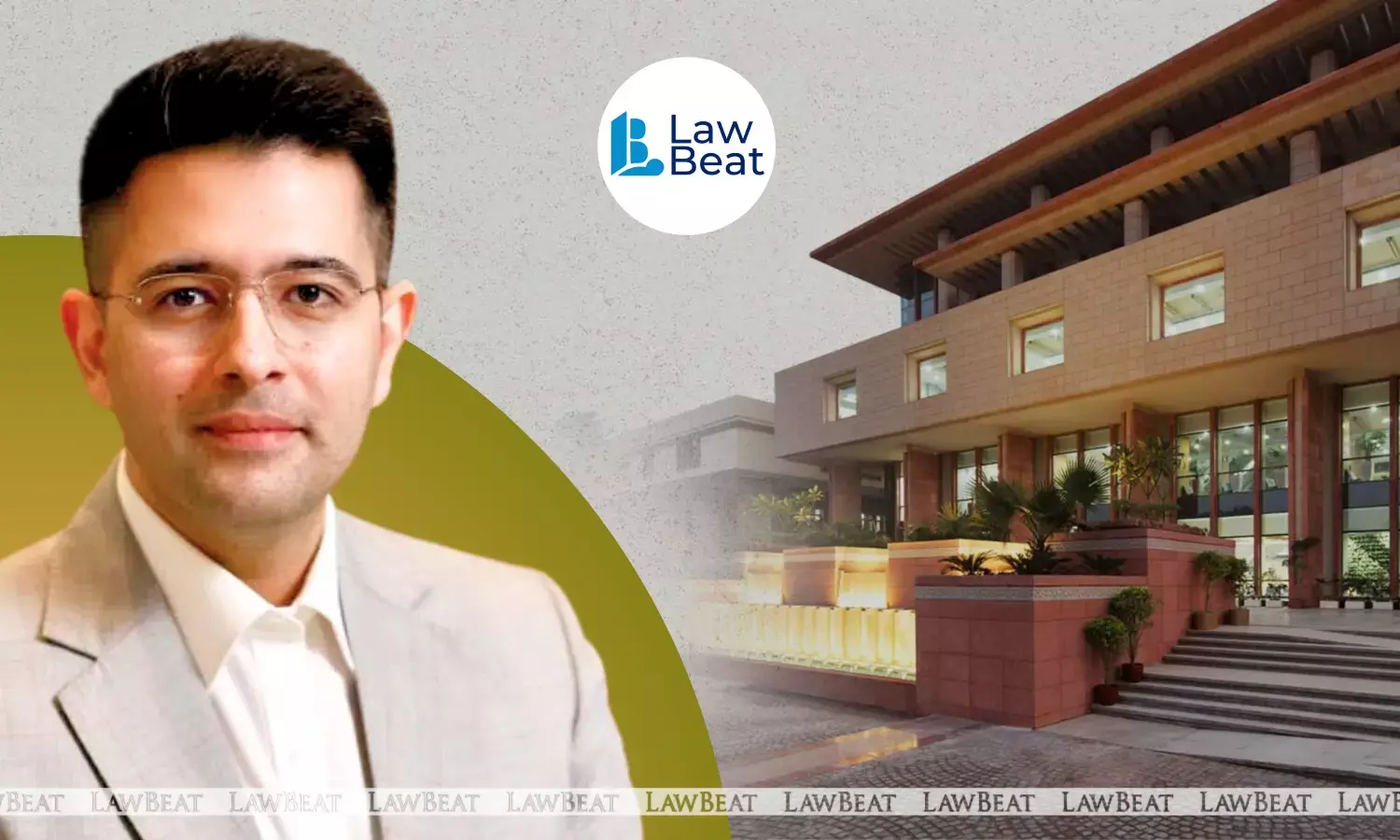
Delhi High Court ruled in the Raghav Chadha case that political satire is not necessarily defamatory while ordering the takedown of obscene social media content.
X

Delhi High Court held that politicians must tolerate political humour and satirical criticism while directing the removal of obscene social media posts targeting BJP MP Raghav Chadha

The Delhi High Court held that politicians had to tolerate political humour and satirical criticism, while directing the removal of five obscene social media posts targeting BJP MP Raghav Chadha

The Delhi High Court has held that politicians and public figures must tolerate political humour and satire, observing that criticism expressed through satirical content does not automatically amount to defamation. While directing the removal of five "obscene and explicit" social media posts targeting BJP MP Raghav Chadha, the Court clarified that most of the impugned content constituted protected political satire and did not warrant judicial interference.

Justice Subramonium Prasad made the observations while deciding Chadha's interim application in a suit seeking removal of allegedly defamatory content portraying him as having "sold himself for money" after his political decisions. The Court also rejected the contention that the case involved personality rights, holding that the dispute primarily concerned allegedly defamatory content.

"There is no personality right involved. However, I have ordered take down of only five documents. Rest is not defamatory prima facie," Justice Prasad said while pronouncing the order.


Political Satire Is An Inevitable Part Of Public Life

In a significant judgment on the balance between free speech and reputation, the Court observed that humour surrounding political alliances, governance and policy decisions forms an integral part of democratic discourse.

"Humor about change in political party alliances, governance or policies are a part and parcel of politics," the Court observed.

Justice Prasad noted that every action of a politician is likely to attract praise as well as criticism from citizens and rival political parties, and such criticism may often take the form of satire.

"However, that does not automatically make such content offensive or defamatory. Public figures assuming such positions of power must accept being at the receiving end of the satirical humor as a necessary and inevitable aspect of their profession, though unpleasant," the Court held.

The Court added that public representatives should not be "thin-skinned" and must receive criticism of their political decisions with humility.

Only Explicit And Vulgar Posts Ordered To Be Removed

Although the Court refused to interfere with most of the content challenged by Chadha, it directed the removal of five specific posts after finding them to be obscene, profane and beyond the scope of legitimate political satire.

According to the Court, those posts crossed the constitutional limits of free speech by attacking the dignity of the individual through vulgar and explicit content rather than expressing political criticism.

AI-Generated Content Must Respect Human Dignity

The Court also addressed the growing use of artificial intelligence in creating political content online.

Justice Prasad clarified that the Court does not endorse the use of AI to generate deepfakes, morphed images or manipulated videos that undermine an individual's dignity and fundamental rights.

At the same time, the Court acknowledged that AI has increasingly become a tool for political expression on social media and observed that, until a comprehensive statutory framework is enacted, courts have a duty to examine whether AI-generated content crosses the threshold of violating an individual's right to dignity.

"It becomes a judicial duty...to examine whether the use of AI has reached the threshold of infringing upon an individual's fundamental right to dignity or not. Needless to state, a fair balance is to be struck with an individual's freedom of speech and expression," the Court observed.

No Personality Rights Violation Found

Chadha had filed the suit seeking a John Doe injunction against unknown persons as well as identified defendants, requesting restraint on the use of his photographs and personal attributes without consent.

However, the Court held that the present dispute did not involve personality rights. During the earlier hearing, Justice Prasad had also orally observed that the impugned posts appeared, prima facie, to be criticism of Chadha's political decisions and that the distinction between criticism and defamation is often a narrow one.

The Court's order leaves intact the bulk of the challenged content while drawing a constitutional distinction between protected political satire and speech that descends into obscenity and attacks an individual's dignity.

The matter has been listed for further hearing on August 18.

Case Title: Raghav Chadha v. Ashok Kumar John Doe and Ors.

Bench: Justice Subramonium Prasad

Judgment Date: July 1, 2026

Click here to download judgment

Tags

Next Story