
16 Years On Contract? Madhya Pradesh High Court Says You Deserve Fair Pay And Permanent Status
State Can’t Deny Dignity: Madhya Pradesh High Court on Rights of Contract Employees
The Madhya Pradesh High Court has held that long-serving contractual workers cannot be denied the benefits of classification and minimum pay merely on the technical ground of their employment status, observing that the State cannot continue to engage workers for years while withholding conditions necessary for a dignified life.
The decision came in a writ petition filed by Radheshyam Verma and others, who approached the Court seeking directions to the State authorities to grant them permanent status and extend the benefits of a 2016 policy aimed at classifying workers and ensuring minimum pay scales.
Represented by Advocate Om Prakash Dwivedi, the petitioners argued that although they were initially appointed on a contractual basis in July 2009, their services had been continuously extended over the years and they continued to work with the department even after more than a decade. Despite this, they were denied classification and corresponding benefits available to similarly placed workers, which, they contended, violated Articles 14 and 16 of the Constitution.
Opposing the plea, Government Advocate Kamal Singh Baghel submitted that the State’s policy dated October 7, 2016, was specifically designed for daily wage workers who could not be regularised due to lack of sanctioned posts. The policy, he argued, did not extend to contractual, outsourced, or temporary employees. It was further submitted that the authorities had passed a reasoned order in denying the benefit to the petitioners, and therefore, no interference was warranted.
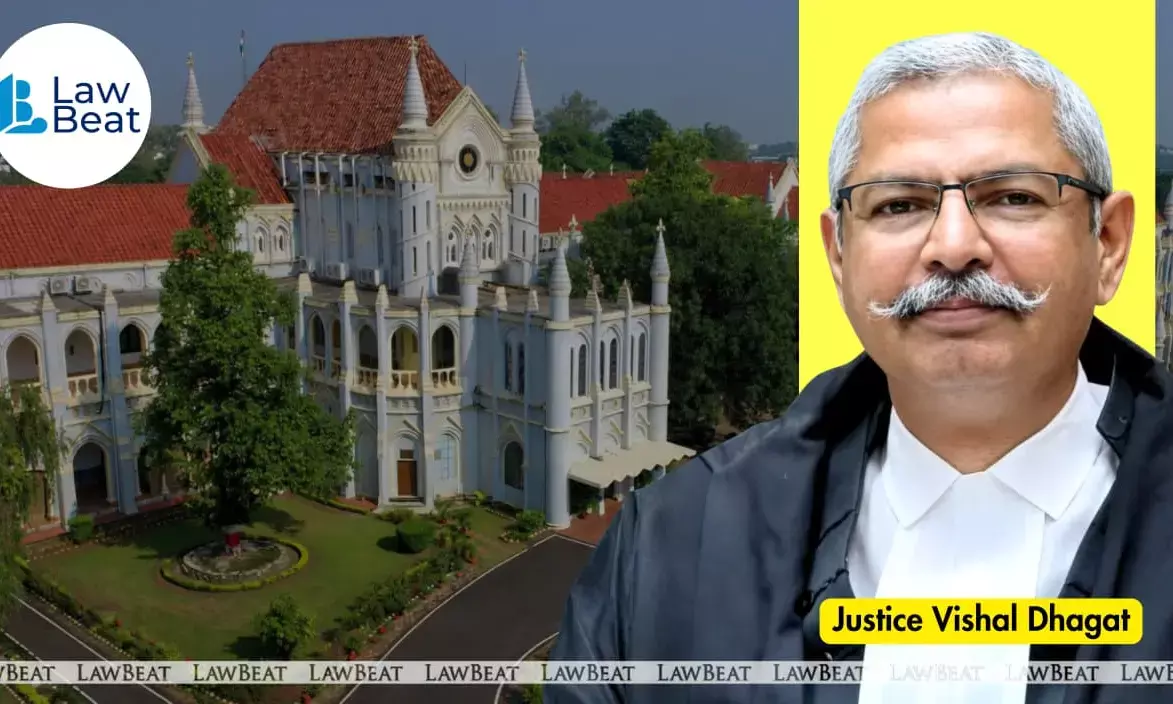
After hearing the parties, Justice Vishal Dhagat examined the factual matrix and noted that although the petitioners were initially engaged on a contractual basis for a limited period, their contracts had been repeatedly extended by the State, and they had continued in service for over 16 years.
The Court found that such prolonged engagement demonstrated a consistent and ongoing requirement of their services, undermining the State’s argument that they were merely temporary or contractual workers.
In a significant observation, the Court described the 2016 policy as a “master stroke” aligned with the Directive Principles of State Policy, particularly Articles 38, 39(a), and 43, which emphasise social and economic justice, the right to livelihood, and a decent standard of life for workers.
Quoting from the constitutional provisions, the Court reiterated the State’s obligation to minimise inequalities and ensure that workers are not deprived of fair wages and humane working conditions.
The Court reasoned that denying the benefit of classification solely on the basis of contractual status, despite continuous service exceeding a decade, lacked rational justification. It held that “there is no rational in not giving benefit of circular dated 07.10.2016 to ‘contract’, ‘outsourced’ and ‘part time’ workers” when they are consistently engaged for more than ten years.
The Court further observed that such workers “cannot be given less wages from other persons and denied adequate means of livelihood, economic justice and decent standard of life.”
Importantly, the Court emphasised that the essence of the policy was to provide relief to workers who could not be formally regularised but continued to serve the State for long durations. Excluding contractual workers from its ambit, despite identical working conditions and duration of service, would defeat the very purpose of the policy and perpetuate inequality.
Accordingly, the Court allowed the writ petition and directed the respondent authorities to classify the petitioners in accordance with the 2016 circular and extend all consequential benefits.
Case Title: Radheshyam Verma and Others v. The State of Madhya Pradesh and Others
Date of Order: April 9, 2026
Bench: Justice Vishal Dhagat