
2020 Bengaluru Riots: Karnataka HC Grants Bail To UAPA Accused After 5 Years In Jail, Cites Parity
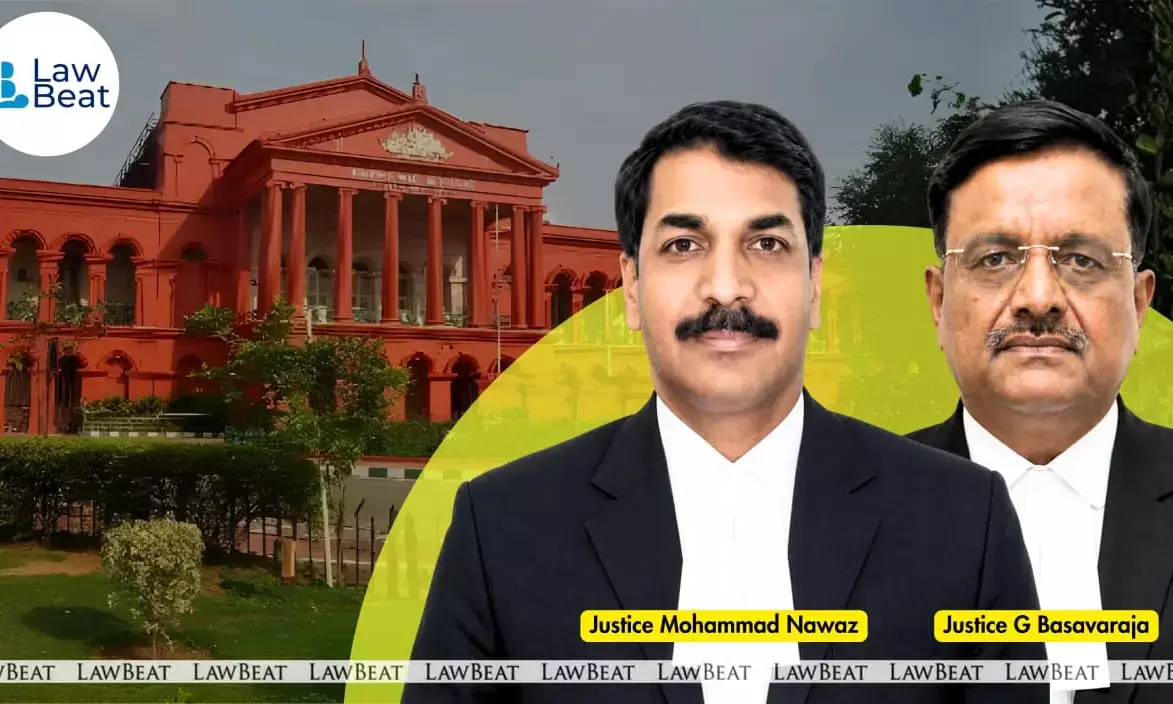
Karnataka HC Releases Bengaluru Riots Accused on Bail, Says Co-Accused Already Granted Relief
The Karnataka High Court recently granted bail to Fairoz Pasha, an accused in the 2020 Bengaluru riots case, noting his incarceration for more than five and a half years and citing parity with similarly placed co-accused who have already been granted relief.
A Division Bench comprising Justice Mohammad Nawaz and Justice G Basavaraja allowed the appeal filed by Pasha under Section 21(4) of the National Investigation Agency (NIA) Act, setting aside the Special Court's order rejecting his bail plea.
DJ Halli and KG Halli Violence
The case against the appellant, Fairoz Pasha, pertains to the large-scale violence that erupted on the night of August 11, 2020, within the limits of the DJ Halli and KG Halli police stations in Bengaluru.
NIA chargesheet claims Pasha was a central figure in a premeditated conspiracy hatched by local SDPI leaders to trigger communal unrest. Pasha allegedly posted inflammatory audio and video clips on his Facebook account, insulting Hindu deities.
He then allegedly tagged Naveen, the nephew of Congress MLA Akhanda Srinivas Murthy, in the derogatory post, prompting Naveen to make a retaliatory, blasphemous comment against Prophet Mohammed.
Thereafter, Pasha allegedly weaponised Naveen’s reply by circulating it widely on WhatsApp and using it to incite local outrage.
NIA claims Pasha then actively rallied SDPI cadres and the local community, directing them to attack the residences of Naveen and, as well as the DJ Halli and KG Halli police stations.
Following this mobilisation, a mob of more than 1,000 people allegedly gathered and went on a rampage, first attacking the MLA's residence at Kavalbyrasandra.
Subsequently, an armed mob of approximately 200-300 people gathered near the DJ Halli Police Station, shouting unparliamentary language. They attacked the police stations with dangerous weapons, vandalised property, and set fire to police and private vehicles parked on the premises.
The ensuing violence resulted in four deaths and widespread arson.
NIA also claimed in the chargesheet that SDPI State Secretary Muzamil Pasha had also convened a meeting and directed members of the PFI and SDPI to instigate the mob and incite the violence.
NIA took over the investigation on September 21, 2020, re-registering the cases and invoking the Unlawful Activities (Prevention) Act (UAPA), along with various provisions of the IPC and acts prohibiting damage to public property.
Following the probe, a charge sheet was filed against 109 accused individuals, with UAPA provisions specifically invoked against Accused Nos. 1 to 24.
Why did the Trial Court reject Pasha’s bail plea?
Previously, in February 2026, the Special Court for NIA Cases rejected Pasha's bail application, observing that in pursuance of a conspiracy and the posting of derogatory content, the appellant committed a terrorist act resulting in the large-scale destruction of a police station and vehicles.
The Special Court concluded there were reasonable grounds to believe the allegations were prima facie true, thereby triggering the statutory bar against bail under Section 43D(5) of the UAPA.
Why did the High Court grant him bail?
Before the High Court, the appellant's counsel argued that several similarly placed co-accused charged under the UAPA had already been granted bail by both the High Court and the Supreme Court, entitling Pasha to relief on the ground of parity.
While noting that the allegations against the appellant must be proved in due course, the High Court found merit in the parity argument.
The Bench observed that the Supreme Court had granted bail to several co-accused (including Accused Nos. 4, 9, 13, 14, 15, 20, and 21), and the High Court had similarly enlarged others (including Accused Nos. 6, 12, 16, 17, 18, 22, 23, and 24).
The Court also considered the prolonged incarceration and the sheer volume of evidence to be examined in this Court. Additionally, it noted the following admitted facts:
• The appellant was arrested on August 12, 2020, and has been in judicial custody for over five and a half years.
• The charge sheet cites a massive 267 witnesses.
• The conclusion of the trial is expected to take considerable time.
Consequently, the High Court set aside the Special Court's order and directed Pasha's release on bail, subject to strict conditions.
These conditions include executing a personal bond of ₹1,00,000 with two sureties, refraining from tampering with prosecution witnesses, and not leaving the court's jurisdiction without prior permission.
Case Title: Fairoz Pasha v. National Investigation Agency
Date of Judgment: June 3, 2026
Bench: Justice Mohammad Nawaz and Justice G Basavaraja