
Delhi Court Refuses Bail To Al-Falah University Chairman Jawad Ahmad Siddiqui In ₹415 Crore Money Laundering Case
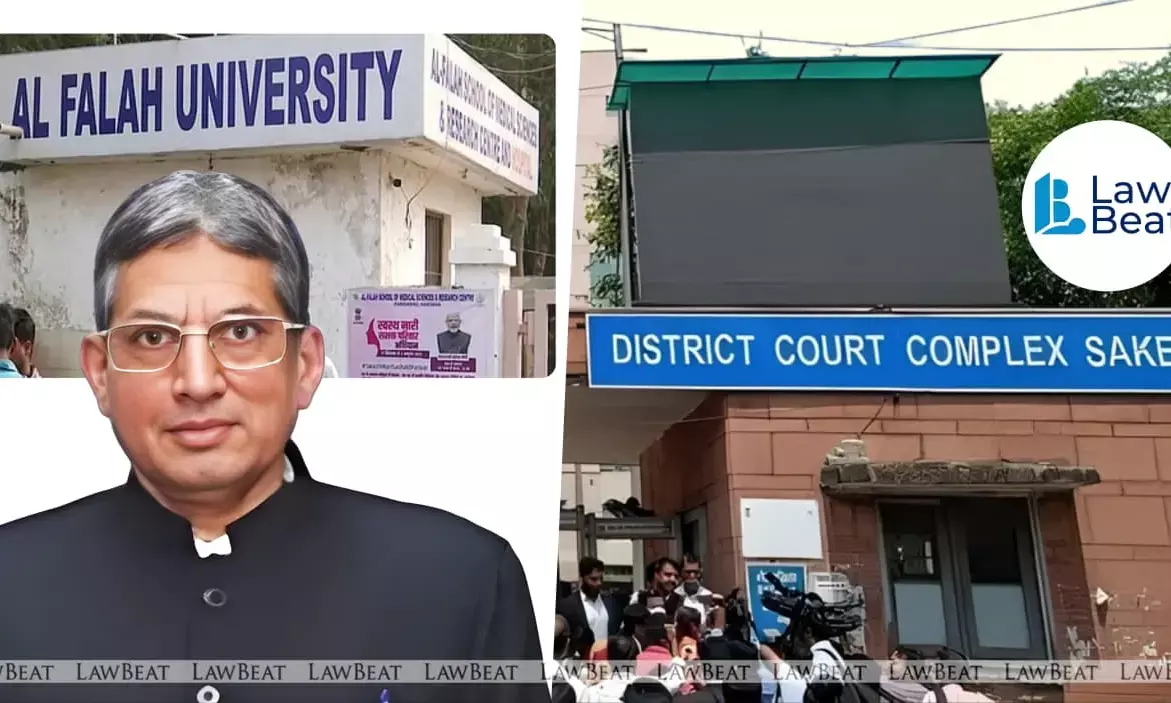
Saket Court denies bail to Al-Falah University chairman Jawad Siddiqui in ₹415 crore money laundering case
A Delhi court on Saturday refused regular bail to Jawad Ahmad Siddiqui, chairman of Al-Falah University, in a money laundering case linked to alleged large-scale fraud involving false claims of accreditation and recognition.
Additional Sessions Judge (ASJ) Sheetal Chaudhary Pradhan of the Saket Court held that the allegations against Siddiqui were “grave and serious” and that no case for bail was made out at this stage.
“It is prima facie made out that the accused had generated proceeds of crime and laundered the same,” the Court observed, noting that the funds were allegedly routed through multiple entities controlled by Siddiqui’s family members and associates.
According to the prosecution, the case stems from two FIRs registered by the Delhi Police Crime Branch, alleging that the university falsely projected that it had accreditation from the National Assessment and Accreditation Council and recognition from the University Grants Commission to mislead students into enrolling.
The Enforcement Directorate has alleged that the university generated proceeds of crime worth approximately ₹415 crore by “dishonestly” inducing students through such misrepresentations. It further stated that the funds were laundered via related entities, including Amla Enterprises LLP, Karkun Constructions & Developers, and Diyala Construction and Developers Pvt Ltd, before being invested in assets in India and abroad.
The Court noted that these entities were owned by Siddiqui’s wife, children and trusted employees but were ultimately under his control. “As Managing Trustee and Chancellor, he abused his fiduciary duties by using charitable and educational institutions as instruments for personal, family and commercial benefit,” the judge said.
Siddiqui was arrested on November 18 last year after the university came under scrutiny following the November 10 blast outside the Red Fort. Investigations into a suspected terror module had flagged links to individuals associated with the university’s medical college, prompting a forensic audit of its records by the Union government.
Notably, in March the Court had granted two weeks’ interim bail to Siddiqui in a money laundering case to allow him to care for his wife, who is undergoing treatment for stage 4 ovarian cancer. The same was challenged before the Delhi High Court.
Earlier this year, the ED attached immovable properties worth ₹139.97 crore linked to the university and filed a chargesheet against Siddiqui under provisions of the Prevention of Money Laundering Act. The probe has also brought nine shell companies connected to the group under scrutiny.
The ECIR stems from two FIRs registered by the Delhi Police Crime Branch on November 13. FIR No. 337 alleges that Al-Falah University falsely continued to claim NAAC accreditation for its colleges long after their ratings had expired. FIR No. 338 accuses the University of falsely asserting recognition under Section 12(B) of the UGC Act, though the University had never applied for or obtained such recognition.
Case Title: ED v. Jawad Ahmad Siddiqui
Bench: ASJ Sheetal Chaudhary Pradhan
Order Date: May 2, 2026