
A Juvenile Case Can't Haunt a Candidate's Career: Allahabad High Court Clarifies the Law
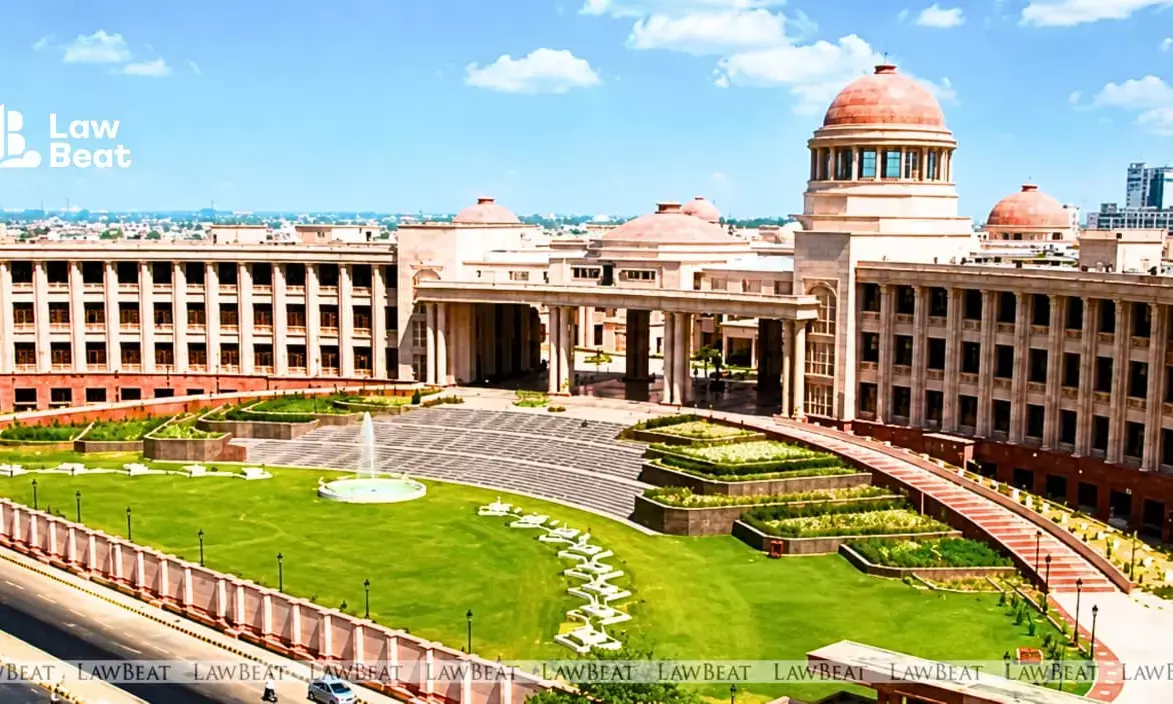
Allahabad High Court says juvenile cases cannot permanently block public employment.
A criminal case from one's childhood cannot become a lifelong barrier to public employment, nor can a selected candidate's future be held hostage to delays in the criminal justice system, the Allahabad High Court recently observed.
Stressing that the Juvenile Justice law is intended to give children a "fresh start" and not saddle them with permanent stigma, court ruled that even the pendency of a juvenile case, or a police closure report awaiting judicial approval, cannot by itself justify withholding appointment.
"It is abundantly clear that not only the pendency of a criminal case against the juvenile delinquent, but, even if he is convicted, the same would have no bearing so far as the appointment in the job, government or private is concerned," court said.
The bench of Justice Shree Prakash Singh directed the Employees' State Insurance Corporation (ESIC) to issue a joining letter to a candidate whose appointment had been withheld after he disclosed two criminal cases, one relating to an offence allegedly committed as a juvenile and another in which the police had already filed a final report.
Juvenile criminal case cannot become a bar to public employment
One of the cases against the petitioner was an NCR registered in 2015, in which he had been declared a juvenile by the Juvenile Justice Board.
Referring to Section 19 of the Juvenile Justice (Care and Protection of Children) Act, 2000, court said the provision makes it clear that even a juvenile who has been convicted does not suffer any disqualification attached to that conviction.
"A bare reading" of the provision, court observed, makes it "abundantly clear" that a juvenile dealt with under the Act "would not suffer any disqualification", adding that the legislative intent is that "such juvenile even convicted for an offence, would not make him disqualified".
Relying on the Supreme Court's judgment in Union of India v. Ramesh Bishnoi (2019), court reiterated that the object of the juvenile justice law is to erase the stigma attached to childhood offences and enable reintegration into society. It also cited a recent division bench decision of the high court, which held that if even a juvenile's conviction is irrelevant to service, the mere pendency of proceedings arising from a juvenile offence cannot stand in the way of employment.
Delay in deciding closure report cannot cost a candidate a job
The second case against the petitioner involved allegations under cheating and forgery provisions of the IPC. However, the investigating officer had already filed a final report before the trial court, effectively concluding that there was no material to proceed against the petitioner.
The high court said filing of a final report prima facie indicates that the investigating agency has found no involvement of the accused, unless the trial court later rejects the report.
Court noted that trial courts across the country are burdened with heavy pendency, often resulting in final reports remaining undecided for long periods. It said candidates cannot be made to bear the consequences of such institutional delay.
"If the trial court accepts the final report at a belated stage, such accused person must suffer irreparable loss and injury, which cannot be compensated by any means. In fact this can never be the intent of any law," court observed.
It further said that where the charges are not serious and the police have already filed a final report, a candidate should not be denied employment merely because the report is awaiting judicial consideration. If the report is eventually rejected and the employee is convicted, the government retains the power to take action in accordance with law, it added.
Court underscored that registration of a criminal case does not establish guilt.
"The allegation of the involvement of the accused in a criminal case, does not mean that he is guilty," it observed, adding that guilt can be determined only after adjudication of the evidence.
Depriving a person of livelihood merely because of alleged involvement in a criminal case would be "highly improper and unjustifiable", court said, observing that such a decision carries far-reaching consequences and finds support neither in common sense nor in law. It added that a candidate "cannot be thrown to suffer for unlimited period of time, to wait for a job, because of the pending final report".
Background of the case
The petitioner had applied pursuant to ESIC's 2021 recruitment for Multi-Tasking Staff in Uttar Pradesh. He cleared both stages of the examination, completed document verification and received an offer of appointment in July 2024. While submitting his attestation form, he disclosed the two criminal cases. Although other selected candidates were allowed to join, his appointment remained pending because ESIC withheld the joining letter after police verification.
Allowing the writ petition, the high court directed the ESIC Regional Director, Kanpur, to issue the joining letter within 30 days, ignoring the pendency of the criminal cases.
Case Title: Shusheel Tripathi v. Union of India through Secretary, Ministry of Labour and Employment & 4 Others
Judgment Date: May 21, 2026
Bench: Justice Shree Prakash Singh