
Absence Of Vagina Amounts To Impotency Under Hindu Marriage Act: Calcutta HC Upholds Marriage Annulment
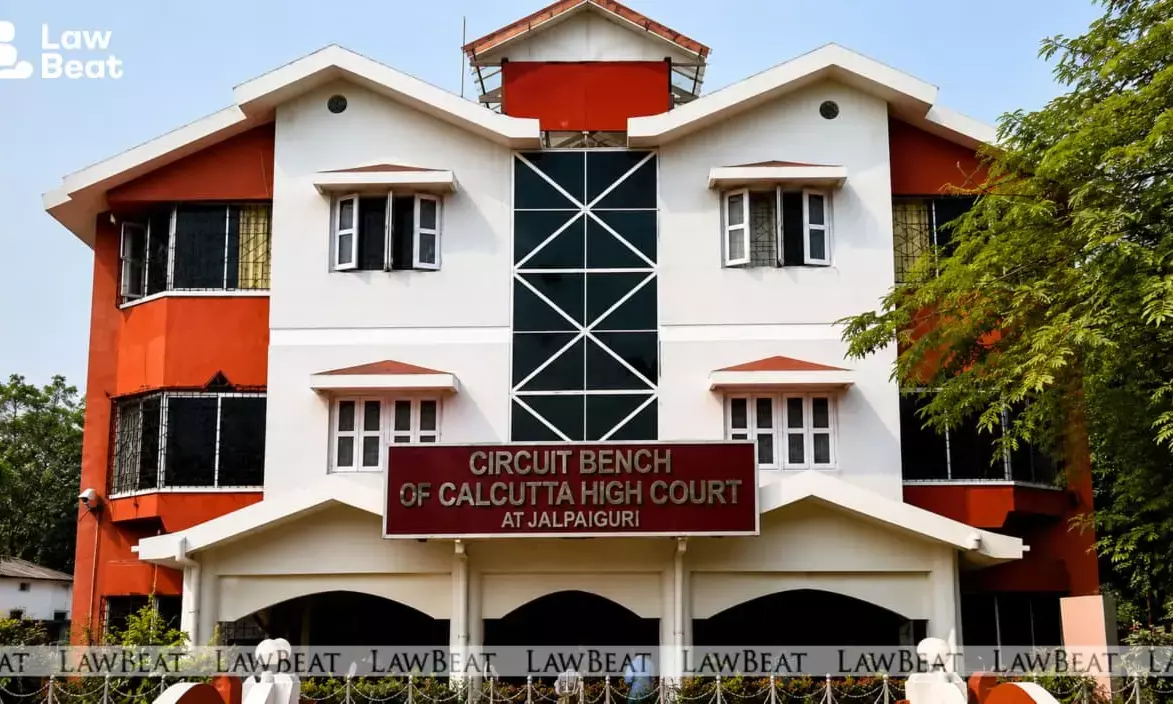
The Calcutta High Court has upheld the annulment of a Hindu marriage under Section 12(1)(a) of the Hindu Marriage Act, 1955, holding that the absence of a vagina, which made normal sexual intercourse impossible, amounts to 'impotency' for the purpose of the provision.
A Division Bench comprising Justice Arijit Banerjee and Justice Chaitali Chatterjee (Das) dismissed the wife's appeal against the decree of nullity passed by the Trial Court.
The case concerned the marriage of Haimanti Karjee and Sougata Karjee, solemnised according to Hindu rites and customs on February 8, 2012. The husband subsequently instituted proceedings under Section 12 HMA, alleging that the marriage had not been consummated owing to the wife's impotency.
Medical examination revealed absence of Vagina, Uterus
According to the husband's case, attempts at sexual intercourse revealed an abnormality in the wife's private parts. She was eventually examined by a gynecologist, who diagnosed Mullerian agenesis and advised further investigations.
An MRI report subsequently recorded that the vagina and uterus were absent, while the kidneys were fused and located in the midline pelvic region.
The wife disputed the allegations and challenged the medical reports. She also maintained that there had been physical intimacy between the parties and contested the husband's claim that the marriage had not been consummated.
The Trial Court, relying upon the evidence of two doctors, held that the marriage could not have been consummated owing to the wife's physical condition and annulled the marriage under Section 12(1)(a) HMA.
Calcutta HC: Impotency is about normal Sexual relations
The High Court noted that the conflicting versions of the husband and wife were not decisive because the central question was essentially a medical issue. The evidence of the two doctors established that the wife had neither a uterus nor a vagina.
Referring to the Supreme Court's judgment in Yuvraj Digvijay Sinhiji v. Yuvrani Pratap Kumari, (1969) 2 SCC 279, the Bench noted that a person is impotent where their mental or physical condition makes consummation of marriage a practical impossibility.
The Court also relied upon Jagannath Muduli v. Nirupama Behera, where the absence of a vaginal canal was held capable of constituting impotency under Section 12(1)(a) HMA.
‘World Of Difference’ between infertility and impotency
The Bench made an important distinction between the inability to conceive and inability to have sexual intercourse.
The Court observed: "However, there is a world of difference between not being able to conceive and being impotent. A lady may be unable to conceive for various reasons. However, she may well be enjoying a perfect conjugal life with her husband. It is the inability to have a normal sexual life that makes a lady impotent."
The Court then applied this distinction directly to the case:
"In the present case, the fact that Haimanti will not be able to bear a child is not relevant. However, because of lack of vagina, she will never be able to have normal sexual intercourse, and, therefore, she must be held to be impotent. This has been clearly established by the evidence on record."
Thus, the Court made clear that infertility and impotency are not synonymous. The inability to bear a child was not the basis for the annulment; the relevant factor was the medically established inability to have normal sexual intercourse.
Under Section 12(1)(a) of the Hindu Marriage Act, 1955, a marriage is voidable and may be annulled by a decree of nullity where: “the marriage has not been consummated owing to the impotency of the respondent.”
Therefore, as the Court noted, the statutory ground is not infertility as such, but non-consummation of marriage owing to the respondent's impotency.
The High Court's decision was based on the finding that the physical condition established through medical evidence made normal sexual intercourse impossible.
The Bench found the two doctors to be independent expert witnesses and saw no reason to doubt their diagnosis.
The wife had cross-examined both doctors but had not produced expert evidence contradicting their findings. The Court therefore rejected the argument for the constitution of a fresh medical board.
The Court also rejected reliance on an isolated statement made by the husband during cross-examination as proof that the marriage had been consummated.
The High Court found no apparent error or infirmity in the Trial Court's judgment.
The Bench also noted that it was unnecessary to examine whether the wife's physical condition had been concealed from the husband or his family before the marriage.
The wife's appeal was accordingly dismissed.
Case title : X v Y