
Allahabad HC Orders 24/7 CCTV Surveillance At Police Stations, Lays Down Safeguards For CCTV Failure
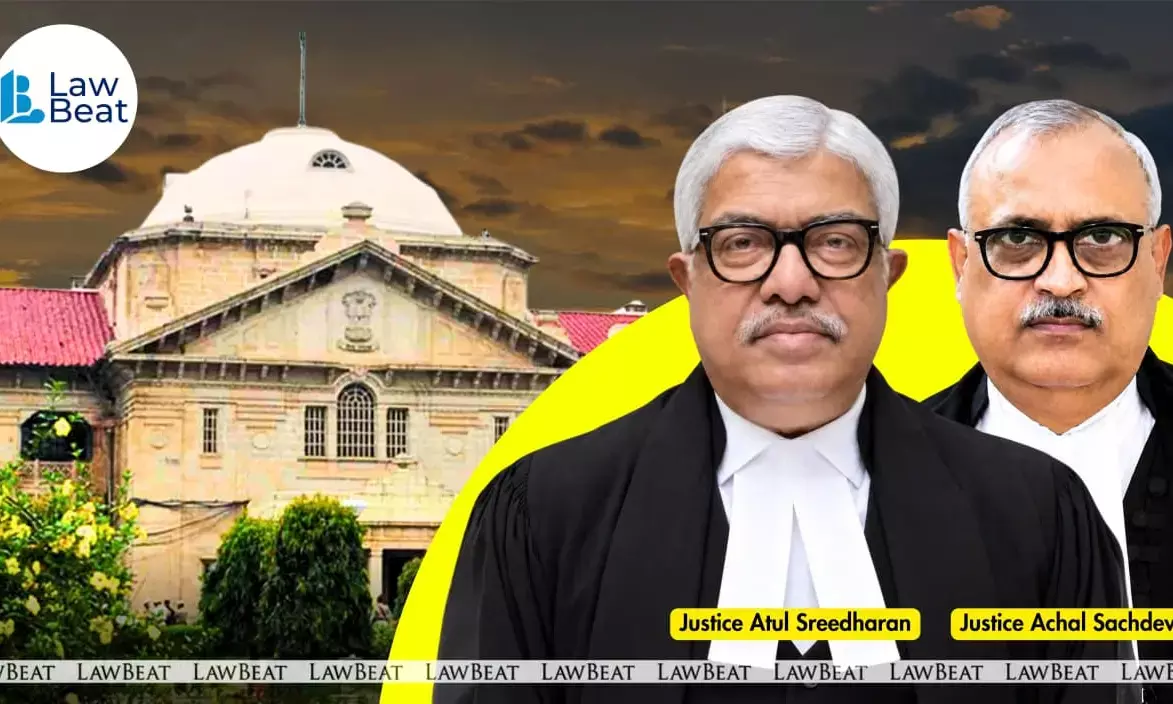
Allahabad High Court orders safeguards against illegal police station detention.
The Allahabad High Court has directed police stations to maintain CCTV surveillance round the clock and prescribed a set of safeguards for situations where the system is not working, including making immediate general diary entries whenever a person is brought in for interrogation or arrest.
Court said that if CCTV surveillance goes down, the Station House Officer (SHO) must record the time of failure in the general diary and mention the official to whom the failure was reported. The district Superintendent of Police must also be informed and must ensure that the system is restored at the earliest.
The bench of Justices Atul Sreedharan and Achal Sachdev further directed that, during any period when CCTV cameras are not functional, details of every person brought to the police station for interrogation or arrest must be entered in the general diary immediately.
If the person is subsequently released, police must record the time of release and obtain a receipt stating when the person was released and to whom he or she was handed over.
Court said non-compliance with these safeguards could lead to a presumption that allegations of illegal detention inside the police station were correct.
Discrepancies in police records
The directions came in a habeas corpus petition filed by one Raghvendra Dubey through his wife, Jyotsana Dubey. Dubey was in custody in connection with an FIR registered in Chitrakoot on May 9, 2026, under Sections 420, 406 and 506 of the IPC. The alleged incident concerned a dispute dating back to June 15, 2021.
The case pertained to a dispute over sand-mining arrangement. The informant, Pradeep Yadav, alleged that Dubey, proprietor of Ayaninfra Developers Firm, had promised him 19% income or profit for participating in a mining allotment.
Yadav claimed that he incurred expenses of Rs 1,05,42,675 and Rs 24,84,585 on construction of a road, camp office and weighbridge, among other things. He also claimed to have given Rs 1.07 crore to Dubey as a contribution to his firm. According to him, he was neither paid the promised profit nor allowed to continue at the mining site and was allegedly threatened.
The high court highlighted that the informant's own case showed that the dispute arose from a civil transaction. At the same time, it said it would not decide whether the allegations were purely civil or also disclosed a criminal offence, as that was for the appropriate court to determine.
Dubey had alleged that police picked him up from a barber shop in Asansol on July 12 and brought him to Chitrakoot. The counsel for the State disputed this and said Dubey had been absconding after the FIR was registered and was taken into custody pursuant to non-bailable warrants.
Court then examined CCTV footage relating to July 13. Of the five cameras installed at the police station, footage from only two was available. One camera covered the entrance and exit, while another covered the lock-up. The footage from three cameras inside the station had not been saved.
The counsel for the State said Dubey had been brought to the station at 9 am and was kept in the CCTNS room rather than the lock-up. But the camera covering the CCTNS room was among those whose footage was unavailable.
The available footage showed Dubey leaving the station at 10:19 am with the investigating officer. He was taken away in the informant's vehicle and returned to the police station at 8:24 pm.
Court held that he remained in the constructive custody of the police during this period.
Missing CCTV footage
The discrepancies became more significant when the division bench compared the CCTV footage with the police records.
The arrest memo showed Dubey's arrest at 3:30 pm. The general diary recorded that he had been placed in the lock-up at 6:41 pm. But the CCTV footage showed him returning to the police station only at 8:24 pm.
The police had attributed the missing CCTV footage to the failure of an information technology official to save the recordings. Court rejected this explanation as “false and mischievous”.
It noted that there was no claim that the three cameras had malfunctioned. Court held that the footage had been deliberately deleted or deliberately not saved.
Court applied the adverse presumption under Section 119(g) of the Bharatiya Sakshya Adhiniyam (BSA). It said there was a strong presumption that the petitioner's version was correct.
Section 119(1)(g) of the BSA allows a court to presume that any evidence which could be produced, but is withheld, would be unfavorable to the person who keeps it hidden.
Arrest set aside
Court separately examined whether Dubey had been informed of the grounds of his arrest in accordance with law.
It found the grounds of arrest “woefully inadequate” and held that merely referring to details contained in the case diary was not sufficient. Court concluded that the arrest violated Dubey's rights under Article 21 of the Constitution.
The bench also noted that the arrest memo had not been authenticated by any independent witness. The two witnesses who had signed it were police personnel.
The high court, therefore, allowed the habeas corpus petition, set aside Dubey's arrest and ordered his release forthwith, if he was not wanted in any other case.
It also awarded him Rs 10,000 as compensation for 24 hours of illegal detention. The amount is to be recovered from the person found responsible after an inquiry.
Court said the facts of the case prima facie 'strongly went to disclose' that police personnel had acted as 'recovery agents' on behalf of the complainant.
It, however, made clear that its observations while deciding the habeas corpus petition would not prejudice the criminal trial and should not be taken into account by the trial court.
Case Title: Raghvendra Dubey and Another v. State of U.P. and 4 Others
Bench: Justice Atul Sreedharan and Justice Achal Sachdev
Order date: September 23, 2026