
Allahabad HC Refuses to Order FIR Against Jagadguru Rambhadracharya Over Community Remarks
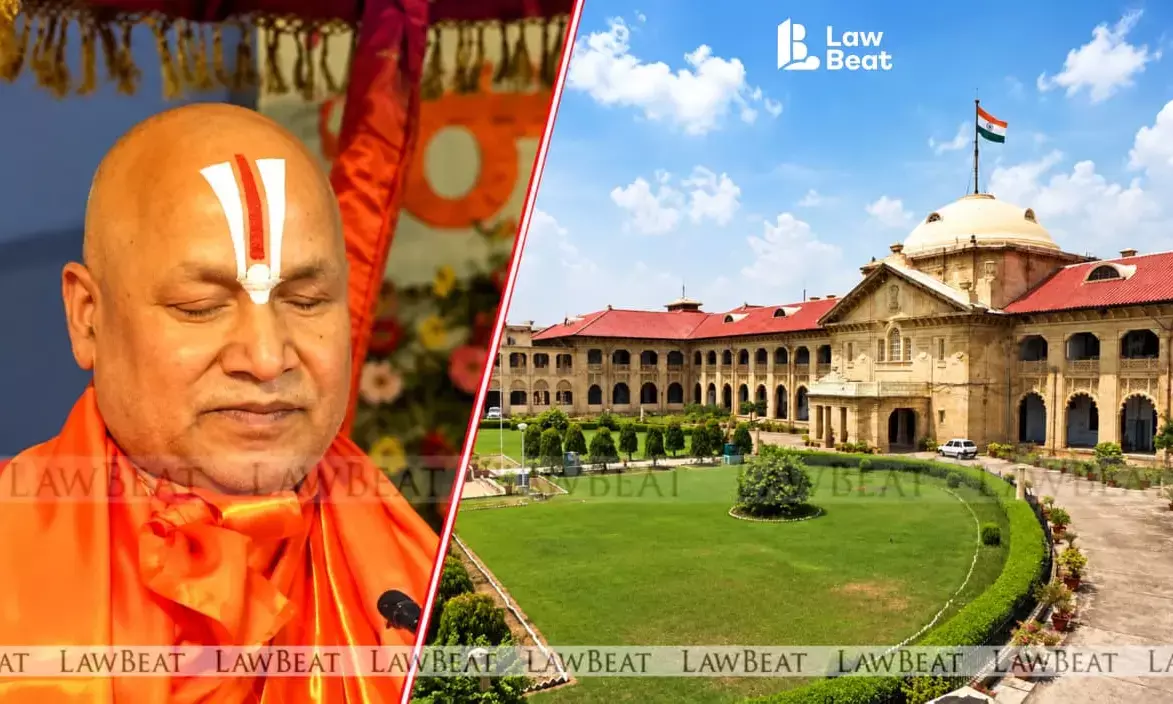
Allahabad HC declines FIR plea against Jagadguru Rambhadracharya.
The Allahabad High Court has dismissed a plea by an advocate seeking registration of an FIR against Jagadguru Rambhadracharya over alleged derogatory remarks against the Upadhyay community and religious figures, including Shankaracharyas.
Advocate Ramesh Upadhyay claimed the remarks, circulated in videos on social media, had insulted him, his community and their ancestors and hurt religious sentiments.
The bench of Justices Chandra Dhari Singh and Tarun Saxena, however, declined to direct registration of the FIR, holding that Upadhyay had approached the high court without first exhausting the statutory remedy available before a Magistrate under Section 175(3) of the Bharatiya Nagarik Suraksha Sanhita (BNSS) [earlier Section 156(3) of the CrPC].
Court said the remedy before the Magistrate is not merely an alternative but the “primary and preferred remedy” where police have failed to register an FIR or conduct a proper investigation.
Allegations against Jagadguru Rambhadracharya
The petitioner told the court that on October 1, 2025, while he was sitting in Chamber No. 46 of the Advocate Building at the Collectorate in Varanasi, some people showed a video containing statements allegedly made by Rambhadracharya concerning persons belonging to his community.
According to the him, the remarks caused “mental agony, humiliation and insult” to him and other members of the community. He also alleged that the statements were circulated on social media, including YouTube, and contained objectionable remarks about revered religious personalities, including Shankaracharyas.
The petitioner claimed that he had sent a complaint dated October 8, 2025, to the Commissioner of Police, Varanasi, seeking registration of an FIR under appropriate penal provisions. He argued that the complaint disclosed a cognizable offence and that the police were therefore bound to register an FIR under the law laid down by the Supreme Court in Lalita Kumari v. State of Uttar Pradesh.
The State disputed the petitioner's claim that he had approached the police for registration of the FIR. Additional Government Advocate told the court that the petitioner had not approached the concerned police station and had instead directly moved the high court.
The State also pointed out that the October 8 letter relied upon by the petitioner was addressed to the Commissioner of Police, with a copy to the Uttar Pradesh Chief Minister, but there was no postal or police record showing that it had actually been received by a police official.
The State argued that, under Section 175(3) BNSS, the petitioner should have approached the jurisdictional Magistrate for an order directing registration of an FIR rather than invoking the high court's writ jurisdiction.
The high court agreed with the State on this point. It said that although Article 226 gives high courts wide powers, those powers are discretionary and are ordinarily not exercised where an effective alternative remedy is available.
Court relied on the Supreme Court's judgment in Sakiri Vasu v. State of Uttar Pradesh, under which a person aggrieved by non-registration of an FIR should approach the Magistrate under Section 156(3) of the CrPC, now Section 175(3) of the BNSS. The Magistrate has the power to direct registration of an FIR, order a proper investigation and even monitor the investigation.
The bench also referred to the Supreme Court's recent decision in Sujal Vishwas Attavar v. State of Maharashtra, saying that the extraordinary jurisdiction under Article 226 cannot be used to compel registration of an FIR when statutory remedies under the BNSS have not been exhausted.
Court further clarified that Lalita Kumari does make registration of an FIR mandatory when information discloses a cognizable offence. But, it said, the judgment “does not sanction” bypassing the statutory remedies available when police fail to perform that duty.
“Sympathy cannot override procedure,” the bench said, adding that the statutory mechanism is a substantive safeguard because it enables an independent judicial officer i.e. the Magistrate to direct registration, order investigation and monitor it.
Court also noted that it was disputed whether the petitioner had approached any police authority before filing the writ petition. It found no “cogent reason” to exercise its extraordinary Article 226 jurisdiction and direct registration of the FIR.
The petition was accordingly dismissed as devoid of merit. However, the court gave Upadhyay liberty to avail himself of an appropriate remedy under law.
Case Title: Ramesh Upadhyay v. State of U.P. and 4 Others
Bench: Justice Chandra Dhari Singh and Justice Tarun Saxena
Date of order: September 1, 2026