
Allahabad High Court acquits murder accused nearly four decades after trial court’s life sentence
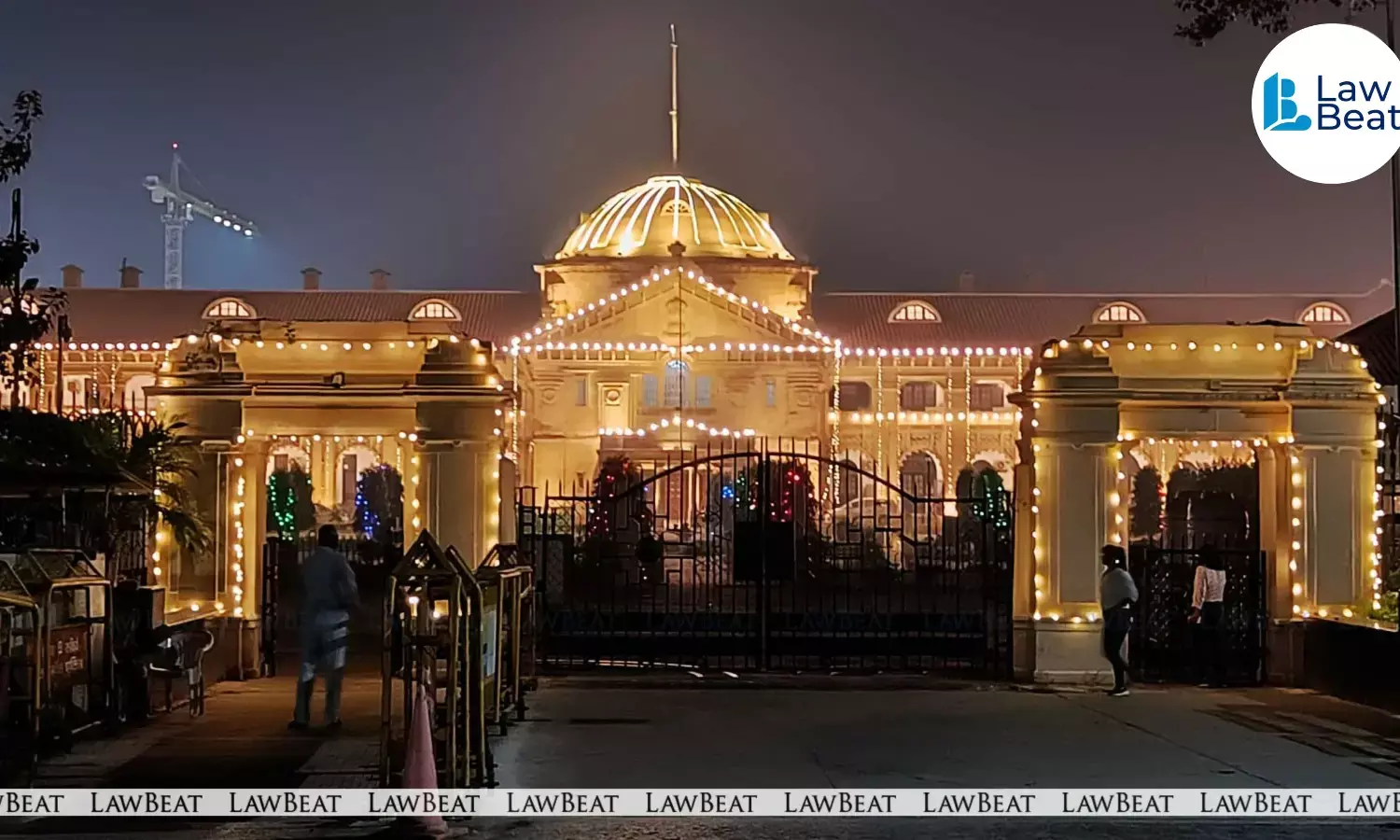
Allahabad High Court clears three men of murder charges in a 1982 murder case
The Allahabad High Court recently set aside the conviction of three men who had been sentenced to life imprisonment for the murder of a labourer in a 1982 case, holding that the prosecution failed to prove its case beyond reasonable doubt and that the evidence on record suffered from serious inconsistencies.
A division bench of Justices J.J. Munir and Sanjiv Kumar allowed two connected criminal appeals arising out of a 1987 sessions court judgment, which had convicted 11 accused persons for offences under Sections 147 and 302 read with Section 149 of the Indian Penal Code. The trial court had held them guilty for forming an unlawful assembly and murdering Ram Dulare in village Bhadri under Police Station Soraon in Allahabad district.
According to the prosecution, the incident occurred around 1 am on July 8, 1982, when Ram Dulare was guarding a brinjal crop near a canal and railway line. It was alleged that a group of villagers assaulted him with lathis, kicks and fists because he worked as a labourer for their political opponents. The FIR claimed that one of the accused forcibly inserted a lathi into the victim’s rectum, resulting in his death at the spot.
The FIR was lodged by Ram Kishor, the deceased’s brother, at 6:05 am the same morning. Following investigation, a charge-sheet was filed against 11 accused. The trial court relied primarily on the testimony of Ram Kishor and Pancham, the deceased’s uncle, both of whom claimed to be eyewitnesses, and convicted all the accused in April 1987.
During the pendency of the appeals, eight appellants died and the appeals against them abated. The high court was left to decide the appeals of the surviving accused, namely Amrit Lal, Harish Chandra and Kallu.
After reappreciating the evidence, the bench found the prosecution version unreliable. Court noted that both alleged eyewitnesses were close relatives of the deceased and that their presence at the scene of crime was highly doubtful. It observed that the prosecution failed to explain how an unidentified person allegedly informed Pancham about the assault in the middle of the night and why that person did not directly inform the deceased’s brother.
The bench also found the conduct of the eyewitnesses unnatural, observing that despite allegedly knowing their relative was being assaulted by several men, they went to the scene empty-handed, took a longer route instead of the shortest path, and did not make any attempt to rescue the deceased. Court held that such conduct raised serious doubts about whether they had actually witnessed the assault.
Significantly, the high court highlighted major contradictions between the ocular version and the medical evidence. While the eyewitnesses claimed that a lathi was forcibly inserted into the deceased’s rectum causing profuse bleeding, the post-mortem report recorded no injury to the rectum and no signs of bleeding from the nose or anus. The medical officer opined that the cause of death was coma resulting from head injury.
The bench held that this was not a case where minor discrepancies could be ignored, but one where medical evidence completely ruled out the prosecution’s ocular version. It also noted that despite claims that several villagers were present at the spot, no independent witness was examined.
Court further found inconsistencies regarding the lodging of the FIR, including contradictions about where and when the written report was prepared, casting doubt on its reliability.
Concluding that the case appeared to be a “blind murder” and that false implication due to village factionalism could not be ruled out, the high court opined that the murder was likely committed by someone else.
Accordingly, the bench allowed both appeals, set aside the 1987 conviction, and acquitted the surviving appellants. It directed their immediate release from jail, subject to execution of personal bonds as required under law.
Case Title: Lala and another vs. State
Judgment Date: December 18, 2025
Bench: Justices J.J. Munir and Sanjiv Kumar