
Allahabad High Court: Giving Dowry Is as Much an Offence as Taking It; Acquits Husband in Dowry Suicide Case
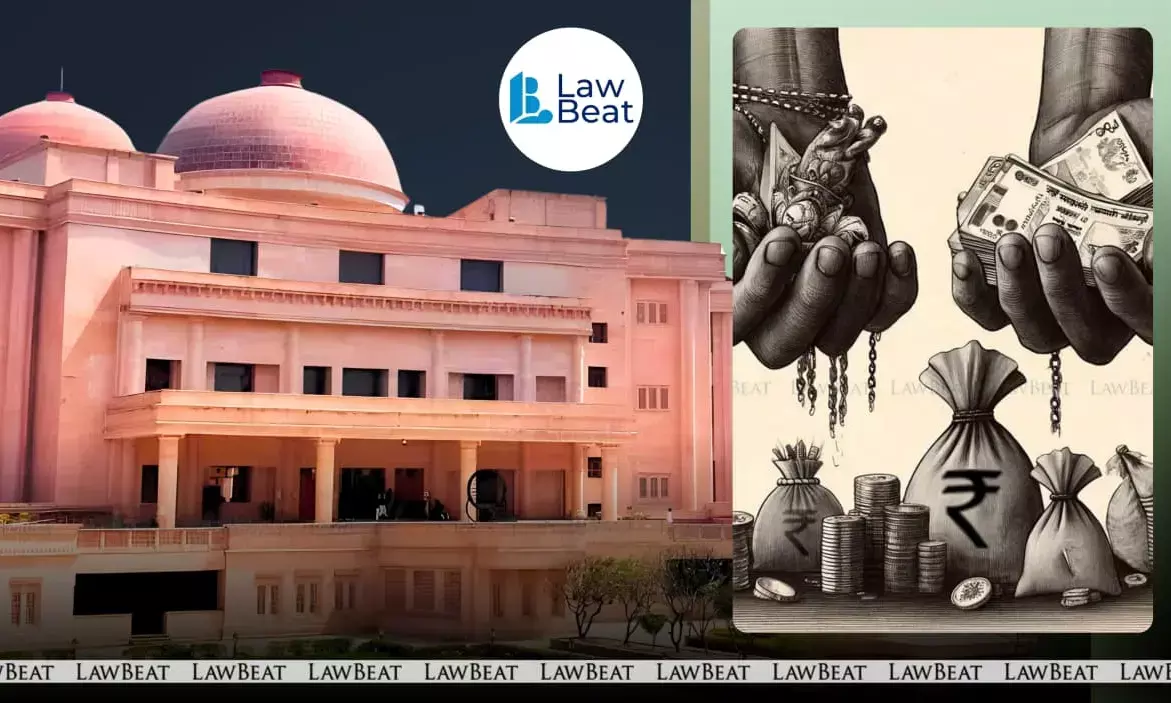
Allahabad High Court acquits husband in dowry suicide case.
Holding that a husband cannot be held guilty of abetting his wife's suicide in the absence of any contact or communication with her for over five months before her death, the Allahabad High Court has acquitted a man convicted in a dowry suicide case.
Court said the prosecution had failed to prove the allegations of dowry harassment beyond reasonable doubt and had also failed to establish any act of instigation or incitement by the husband immediately preceding the suicide, a necessary requirement to sustain a conviction under Section 306 of the IPC [corresponding to Section 108 of the Bharatiya Nyaya Sanhita (BNS)].
Court also underscored that giving dowry is as much an offence as taking it, observing that if the prosecution's claim that the deceased's father paid Rs 6 lakh as dowry were accepted, it would amount to a confession of an offence by the giver as well.
The bench of Justice Subhash Vidyarthi allowed the appeal filed by Ankur Tandon, setting aside his convictions under Sections 498A and 306 of the IPC (corresponding to Sections 85 and 108 of the BNS) and Sections 3 and 4 of the Dowry Prohibition Act. The trial court had earlier acquitted him of the charge of dowry death under Section 304-B of the IPC (corresponding to Section 80 of the BNS) but convicted him for cruelty, abetment of suicide and dowry-related offences.
The prosecution case was that Monika, who married the appellant in December 2004, was subjected to repeated demands for dowry, including Rs 10 lakh for purchase of a flat. It was alleged that her father sold a plot and paid Rs 6 lakh to the appellant, but the harassment continued for the remaining amount, driving her to commit suicide on October 2, 2010.
The deceased left behind two suicide notes blaming her husband for ill-treatment, accusing him of forcing her out of the matrimonial home and holding him responsible for her death. However, neither note mentioned any demand for dowry.
Why did the high court reject the dowry charges?
The high court found several inconsistencies in the prosecution's case regarding the alleged dowry demands and payments.
It noted that although the complainant's family claimed Rs 6 lakh had been paid in cash after selling a plot, they failed to disclose the particulars of the property, the date of sale or the date on which the alleged payment was made. The testimonies of the prosecution witnesses also differed on the nature and extent of the alleged demands.
Court further noted that the allegation of dowry demand appeared in writing for the first time only in the FIR lodged by the deceased on April 20, 2010, despite several earlier disputes and litigations between the couple.
Holding that the allegation of payment of Rs 6 lakh had not been proved beyond reasonable doubt, the court made a significant observation on the Dowry Prohibition Act.
It said Section 3 criminalises both the giving and taking of dowry.
"Thus, not only taking dowry, but also giving dowry is an offence under Section 3 of the Dowry Prohibition Act," Court observed. It added that if the allegation that the deceased's father had paid Rs 6 lakh as dowry were accepted, it would amount to a confession regarding commission of an offence under the Act by the giver as well. Since the alleged payment itself was not proved, court held that neither the offence of taking dowry nor the related allegations stood established.
Why did the high court set aside the conviction for abetment of suicide?
Court examined the requirements of Section 306 of the IPC in the light of several Supreme Court decisions, reiterating that conviction for abetment of suicide requires proof of instigation, incitement or intentional aid, and that such conduct must be closely connected with the suicide. Mere harassment or matrimonial discord is insufficient.
A crucial factor, the high court said, was that the trial court itself had found that after the deceased lodged an FIR against the appellant on April 20, 2010, the couple remained out of contact until her death more than five months later.
"When the trial court has held that the appellant had no contact with the deceased for the past 5 months and 12 days before the incident it cannot be said that the appellant abetted the deceased to commit suicide even without there having been any contact or communication between them," the high court observed.
Court also found that the trial court had convicted the appellant merely because the marriage had broken down and the deceased had blamed him in her suicide note.
"It has merely looked into the factum of suicide," the high court said, adding that there was no evidence of any act committed by the appellant during those five months that could legally amount to instigation or abetment.
The high court further held that the presumption under Section 113-A of the Evidence Act could not be invoked because the prosecution had failed to establish cruelty under Section 498-A of the IPC. In the absence of cogent evidence of cruelty or abetment, the statutory presumption was unavailable.
Allowing the appeal, court acquitted the appellant of all charges, directed his release from custody subject to statutory conditions and ordered refund of the fine deposited by him.
Case Title: Ankur Tandon vs. State of U.P. Thru. Prin. Secy. Home Deptt. Lko.
Judgment Date: July 31, 2026
Bench: Justice Subhash Vidyarthi