
Allahabad High Court Holds Lucknow Lawyers' Strike Over Demolition Drive Illegal
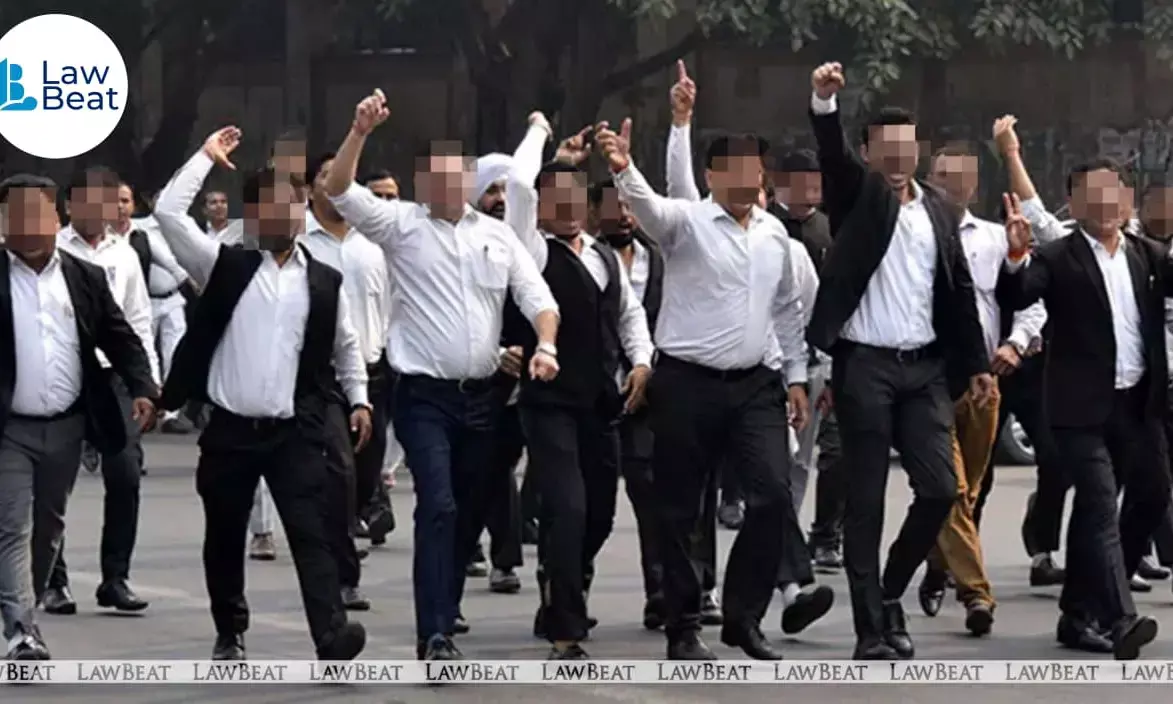
The Allahabad High Court's Lucknow Bench has held that the strike and boycott of judicial work by members of the Central Bar Association and Lucknow Bar Association between May 18 and May 26, 2026, was "unjustified and illegal", while issuing notices to bar office-bearers and three advocates to explain why criminal contempt proceedings should not be initiated against them.
A Bench of Justice Rajesh Singh Chauhan and Justice Rajeev Bharti passed the order while hearing a public interest litigation concerning the removal of illegal encroachments near Chakbast Crossing in Lucknow.
Court noted that the Lucknow Nagar Nigam had informed authorities that out of 72 identified encroachments, only 14 could be removed as advocates allegedly created obstructions during the demolition drive.
The bench also took on record reports submitted by the District Judge, Lucknow, along with photographs, videos and a pen drive containing footage of meetings of lawyers' associations and strike-related activities.
Why did the High Court examine the lawyers' strike?
According to the court, advocates associated with the Central Bar Association and Lucknow Bar Association abstained from judicial work from May 18 to May 26 following a call given by office-bearers of the associations.
The bench said the strike caused serious prejudice to litigants, particularly witnesses who had appeared for recording of evidence and poor litigants who had travelled to Lucknow for court proceedings.
"The conduct of the Advocates is not only unjustified but the same is illegal also," court observed, referring to a series of Supreme Court decisions holding that lawyers have no right to go on strike or boycott courts.
The bench reiterated that the Supreme Court in decisions including Harish Uppal v Union of India, Common Cause v Union of India, Krishnakant Tamrakar v State of M.P. and District Bar Association, Dehradun v Ishwar Shandilya had consistently held that strikes by lawyers cannot be justified and may attract contempt action.
What did the court say about the impact on litigants?
The high court emphasised that the right to speedy justice is protected under Articles 14 and 21 of the Constitution and cannot be compromised by strikes.
It observed that litigants suffered because judicial work was disrupted and many individuals incurred financial loss after travelling to attend court proceedings that could not take place due to the boycott.
The bench further remarked that lawyers were fully aware of previous directions of both the Supreme Court and the Allahabad High Court prohibiting strikes and court boycotts.
What allegations did the court record?
Court took note of material placed before it indicating that one advocate allegedly distributed plastic lathis to lawyers during a meeting. The order records that slogans were allegedly raised suggesting that advocates would deal with the administration through force.
The bench also referred to allegations against another advocate for allegedly posting provocative content on social media against the administration and police, and against a third advocate for allegedly making personal comments against the Administrative Judge, Lucknow.
However, court noted that the Central Bar Association had already initiated action by issuing show-cause notices and had subsequently expelled two advocates from its primary membership for five years.
What action has the high court taken?
Taking note of the action already initiated by the bar association, court refrained from immediately commencing criminal contempt proceedings.
Instead, it issued notices to office-bearers of both bar associations and to the three advocates concerned, directing them to explain why criminal contempt proceedings should not be initiated and why their conduct should not be referred to the Bar Council of Uttar Pradesh.
The advocates have been directed to file affidavits and undertakings within two weeks stating that they will abide by Supreme Court directions and maintain proper conduct.
The matter has been posted for further hearing on July 27, 2026, when the court will consider the explanations and undertakings submitted by those concerned.
Case Title: Anuradha Singh and Others vs State of Uttar Pradesh through Principal Secretary, Home, Lucknow and Others
Order Date: June 8, 2026
Bench: Justice Rajesh Singh Chauhan and Justice Rajeev Bharti