
Allahabad High Court: Husband Can't Deny Maintenance Under Section 125 CrPC Over Wife's Education
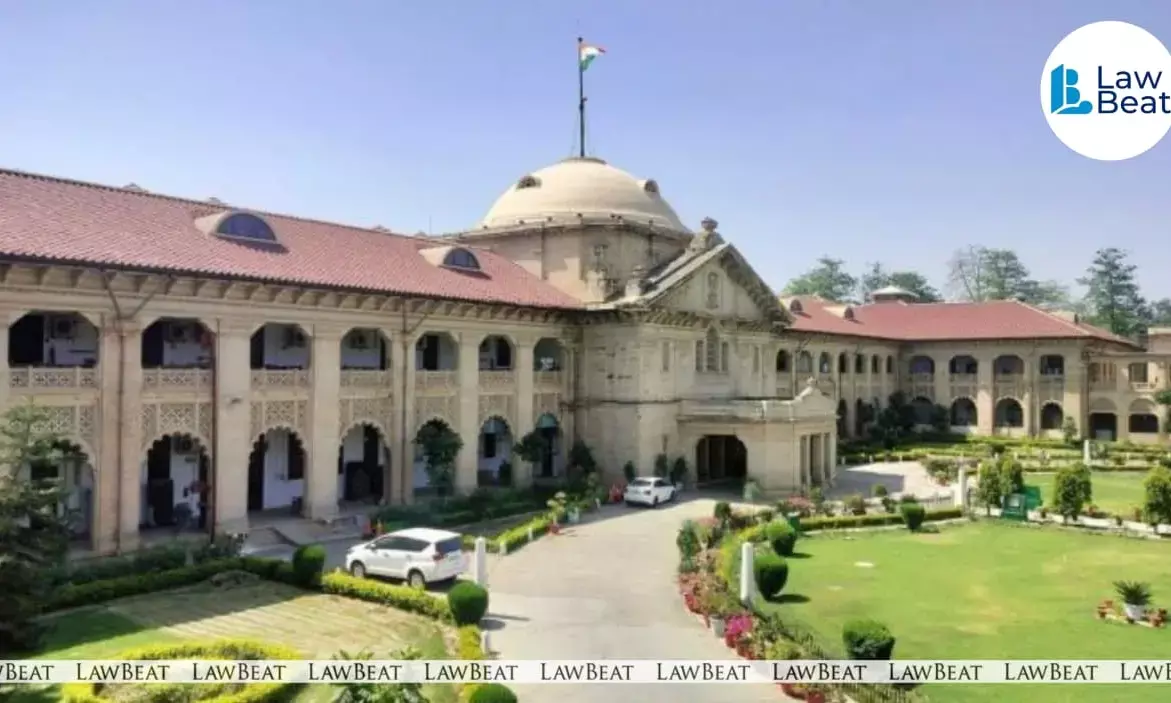
Allahabad High Court upholds maintenance for qualified estranged wife.
The Allahabad High Court recently observed that an educated wife cannot be denied maintenance merely because she is qualified or because her parents have financial resources, observing that a husband's legal obligation to maintain his wife cannot be shifted onto her mother's pension or property.
Upholding a family court order directing a Chartered Accountant to pay ₹20,000 per month to his estranged wife, court also held that continuous pressure on a wife and her widowed mother to arrange money for the purchase of a flat amounts to cruelty, even if such a demand may not technically constitute dowry.
Case Background
The bench of Justice Garima Prashad dismissed a criminal revision filed by Alok Tiwari challenging the Mainpuri Family Court's August 2024 order granting maintenance under Section 125 CrPC to his wife, Neha Shukla. The maintenance was directed to be paid from June 17, 2017, the date on which the wife had filed her application.
The husband had argued that his wife was an M.Sc. and B.Ed. graduate, earned through coaching and tuition classes and was financially supported by her retired mother, who also owned properties. He further contended that after losing his employment with Jaypee Group, he was left with only irregular income from freelance consultancy and therefore could not afford to pay the maintenance fixed by the family court.
The high court, however, observed that educational qualifications and earning capacity cannot be equated with actual income.
Court held that the decisive test under Section 125 CrPC is whether the wife is actually able to maintain herself. Since the husband failed to produce any documentary evidence showing that she earned from tuition, coaching or any other employment, court refused to deny her maintenance merely because she possessed higher educational qualifications.
It also rejected the argument that the wife's mother's pension and properties constituted the wife's independent source of income, observing that the legal obligation to maintain the wife rests upon the husband alone.
Finding of cruelty
The high court found no error in the family court's conclusion that the wife had sufficient cause to reside separately.
According to the wife, after their marriage in February 2013, she was repeatedly pressured to arrange ₹25 lakh for the purchase of a flat. The husband admitted receiving ₹5.5 lakh from her mother but claimed it was only a loan.
Court observed that continuous pressure on the wife and her widowed mother to arrange money for purchasing a flat, coupled with harassment, would amount to cruelty even if the demand did not technically qualify as dowry. It also noted that the husband gave inconsistent explanations regarding injuries sustained by the wife while she was residing in the matrimonial home, weakening his defence.
Court further noted that after leaving the wife at her parental home in December 2016, the husband soon instituted divorce proceedings and made no genuine effort to bring her back. Mediation proceedings showed that while the wife was willing to resume cohabitation, the husband was unwilling.
Court also took note of unsupported allegations made by the husband questioning the wife's character and mental condition, holding that such baseless accusations themselves constituted a relevant circumstance in assessing whether she had sufficient reason to live separately.
Why did the Court reject the husband's plea of financial incapacity?
The high court found that the husband continued to possess substantial earning capacity despite his claim of unemployment.
Court noted that he admitted being a qualified Chartered Accountant and acknowledged working at different places, including Noida, Kanpur, Lucknow and Bewar. It also relied on his admission that he owned a Honda City car and had travelled with his wife by air to destinations such as Goa, Delhi and Udaipur while staying in hotels, indicating a standard of living above ordinary means. Significantly, court observed that the husband had earlier admitted earning around ₹90,000 per month and had failed to produce income tax returns, bank statements or other financial records to substantiate his claim that his income had subsequently declined.
Court held that where a person possessing special knowledge of his income withholds the best evidence, an adverse inference can legitimately be drawn against him.
Referring to the Supreme Court's decision in Rajnesh v. Neha (2021), the high court reiterated that maintenance should be determined keeping in view the status of the parties, the husband's income and liabilities, the wife's reasonable needs and the standard of living enjoyed during marriage. Finding no perversity or legal infirmity in the Family Court's findings, the Court dismissed the revision petition and affirmed the maintenance award of ₹20,000 per month from the date of the application.
Case Title: Alok Tiwari v. State of Uttar Pradesh and Another
Judgment Date: June 17, 2026
Bench: Justice Garima Prashad