
Allahabad High Court: No Relief In PIL Alleging UP Police Removed Ayatollah Khamenei, Al-Sistani Posters
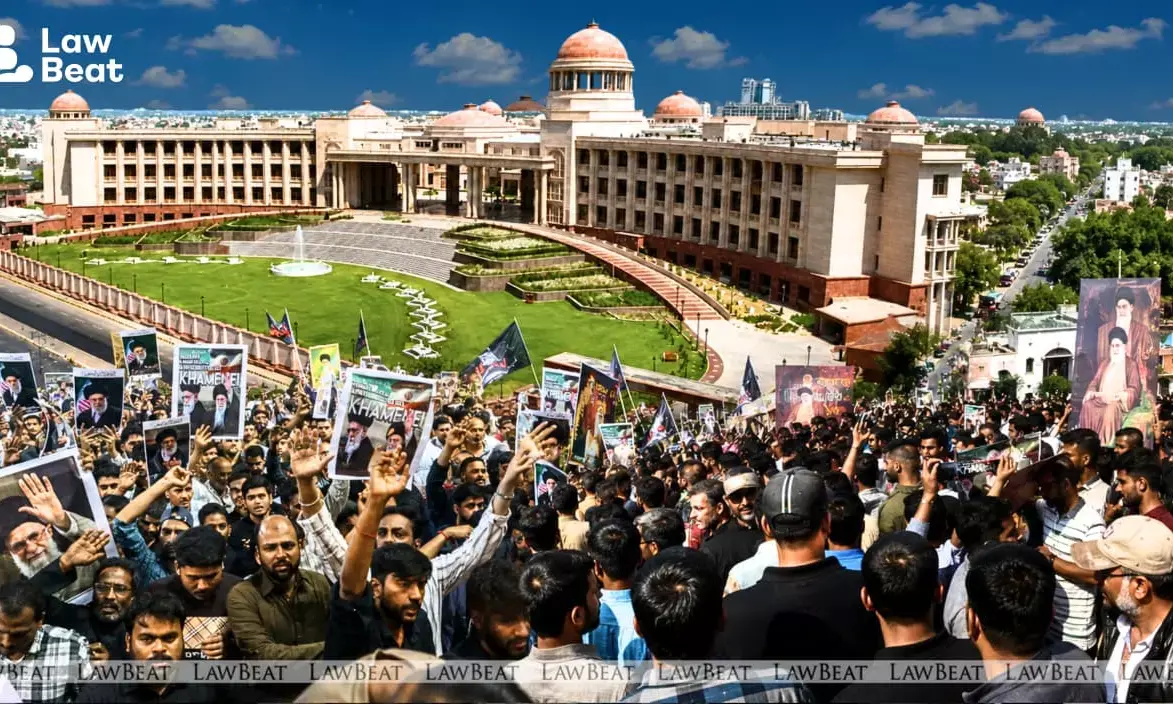
Allahabad High Court declined to entertain the PIL over alleged removal of posters of Iranian Shia religious leaders.
The Allahabad High Court (Lucknow Bench) has refused to entertain a public interest litigation alleging that Uttar Pradesh Police was illegally removing posters of prominent Iranian Shia religious leaders, including Ayatollah Seyyed Ali Khamenei and Ayatollah Seyyed Ali Al-Sistani, holding that the petition was founded on "general and vague" allegations without any specific instance to support the claims.
A Bench of Justices Rajan Roy and Manjive Shukla disposed of the PIL filed by Majlis Ulema-E-Hind through its General Secretary, Maulana Syed Kalbe Jawad Naqvi, observing that a public interest litigation cannot proceed on broad and unspecified allegations against the police.
The petitioner had sought directions restraining police authorities across Uttar Pradesh from taking coercive action against persons peacefully displaying portraits of global spiritual leaders or participating in religious mourning.
It also requested the court to prohibit police from interfering with or removing portraits, banners and visual representations of recognised global spiritual leaders, including Ayatollah Khamenei and Ayatollah Al-Sistani, when displayed lawfully on private residential or commercial properties. The PIL further sought a direction to the State to decide a representation submitted on June 12, 2026.
Why did the Allahabad High Court reject the PIL ?
The high court found that the pleadings did not disclose any concrete facts to justify judicial intervention.
After examining the petition, the bench observed that it merely contained "general and vague averments" alleging police interference and removal of posters of certain Iranian religious leaders revered by the Shia community. However, it said the petitioner had not cited even a single specific incident where such action had actually taken place.
Court pointed out that the petition failed to identify any particular house or premises where the posters had allegedly been displayed or removed. It also noted that the petitioner had not demonstrated how the alleged removal had been carried out by the authorities.
According to the bench, such sweeping allegations are insufficient to invoke the court's jurisdiction in a public interest litigation.
The bench, however, made it clear that if any police officer has committed an illegal act in a specific case, the law already provides an appropriate remedy.
Holding that the petition lacked the factual foundation necessary for a PIL, the bench declined to issue any directions to the State or the police authorities and disposed of the writ petition.
Case Background
Ayatollah Seyyed Ali Khamenei was killed in an Israeli airstrike on Tehran on February 28, 2026, and his death was officially confirmed by the Iranian government on March 1, 2026. Shia communities in India and abroad thereafter held mourning assemblies and displayed his portraits as an expression of religious grief and solidarity.
Through the PIL, Majlis Ulema-e-Hind, alleged that Uttar Pradesh Police compelled residents to remove portraits of Iran's late Supreme Leader and initiated criminal action against peaceful Shia mourners, violating their constitutional rights.
Case Title: Majlis Ulema-E-Hind, Through Its General Secretary Maulana Syed Kalbe Jawad Naqvi v. State of Uttar Pradesh and 3 Others
Order Date: July 7, 2026
Bench: Justices Rajan Roy and Manjive Shukla