
Allahabad High Court Orders Statewide Probe Into SC/ST Act Relief Claims, Misuse
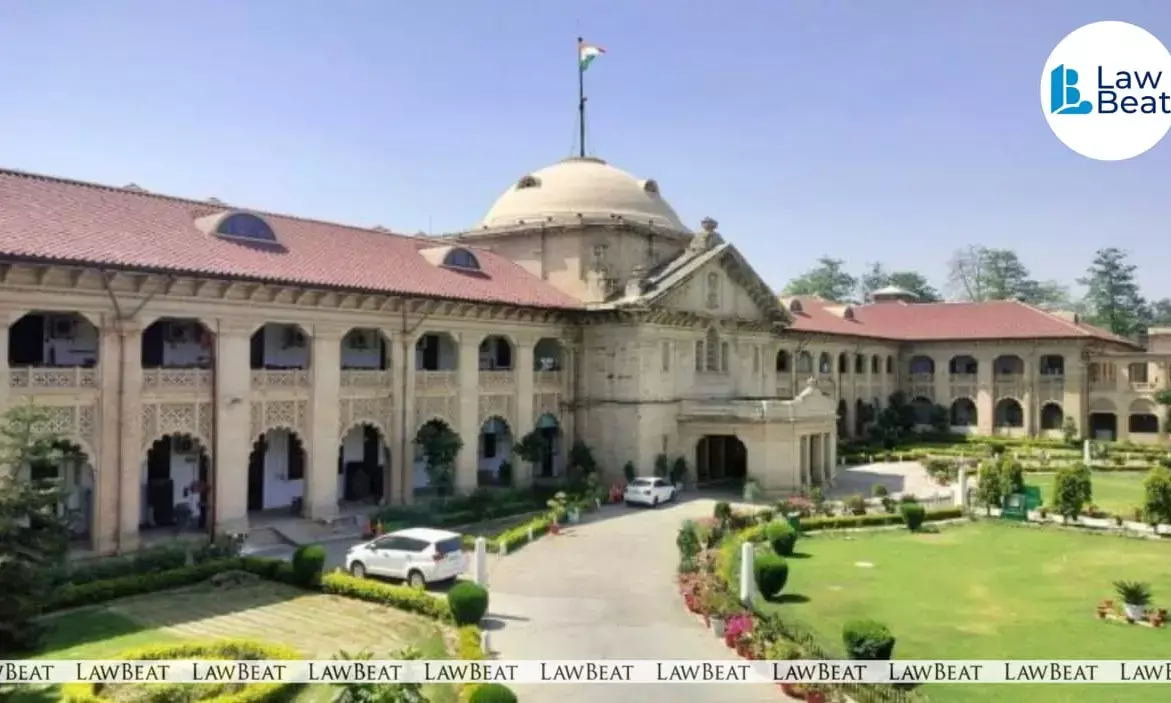
Allahabad High Court orders scrutiny of SC/ST Act financial relief claims.
The Allahabad High Court has directed the Uttar Pradesh government to conduct a “broad-based and intensive enquiry throughout the State” into the manner in which financial benefits under the SC/ST (Prevention of Atrocities) Act and the rules and schemes framed under it are claimed and disbursed, and to develop an “effective regulatory mechanism and supervisory system” in every district to check possible misuse of the scheme.
Court said the exercise should particularly examine cases involving repeated claims by the same persons or their family members, and whether adequate verification and scrutiny are being carried out before public funds are released. It directed the state to take corrective measures wherever misuse is found.
The bench of Justice Santosh Rai issued the directions while deciding two criminal appeals arising from Jhansi, concerning the payment of financial relief to victims in cases registered under provisions of the SC/ST Act, besides offences under the IPC and the Information Technology Act. The judgment was delivered on August 11, 2026.
SC/ST relief scheme
The appeals challenged orders passed by the Special Judge, SC/ST Act, Jhansi, on July 23, 2024, rejecting applications seeking payment of the balance financial relief to the victims.
In the leading case, Arvind Kumar and two others had challenged the rejection of their application seeking the remaining Rs 75,000 per victim. In the connected appeal, Santosh Kumar Dohrey had sought release of the balance relief in another criminal case.
The investigating officers had proposed Rs 2 lakh as relief for each victim under Item 41 of the Schedule to Rule 12(4) of the Scheduled Castes and the Scheduled Tribes (Prevention of Atrocities) Rules, 1995. The rules prescribe payment of 25% at the FIR stage, 50% when the charge sheet is sent to court and the remaining 25% after conviction. Consequently, 75%, or Rs 1.5 lakh, became payable after the charge sheet was filed.
However, the District Social Welfare Officer released only Rs 75,000 per victim, or 37.5% of the proposed relief. Representations seeking the balance amount were not acted upon, following which applications were filed before the special judge.
Special court's power to grant SC/ST compensation
The high court held that the special judge had proceeded on an “erroneous premise” in concluding that the court could not determine the nature of the offence or quantum of assistance.
Referring to Rule 12(7), court said the special court is specifically empowered to examine whether relief has been paid on time, whether it is sufficient, or whether only part of the relief has been paid. Where it finds a shortfall, it can direct payment of the balance.
Court observed that the provision envisages “active judicial scrutiny” and that the special court is “not a passive recipient of the administrative report”. It said Rule 12(7) provides a “judicial check against under-payment, delayed payment or arbitrary curtailment of statutory relief by the administrative authorities".
Why did court order an enquiry into repeated relief claims?
The State informed the court that Dohrey, an advocate, and his family members had received an aggregate Rs 23,36,250 in relief and financial assistance under the 1995 Rules and connected schemes in different criminal cases. It further said around 10 to 12 criminal cases lodged by Dohrey or his family members were pending before the District Level Committee for further relief.
The high court, however, cautioned that repeated criminal cases followed by claims for relief “without more” did not by themselves establish misuse. At the same time, it said the scale and frequency of the claims disclosed in the proceedings could not be left unexamined.
It directed the Jhansi District Magistrate, in coordination with the Senior Superintendent of Police, to conduct a “thorough, fair and time-bound enquiry” within three months into the criminal cases registered by Dohrey and his family and the relief amounts received or claimed.
Court made clear that this did not amount to a finding that Dohrey or the victims had misused the scheme or were not entitled to compensation.
What happens to the two compensation claims?
The high court set aside the special judge's July 23, 2024 orders and remitted both applications for fresh consideration within six weeks.
The special judge must now examine the nature and ingredients of the offences and determine which Schedule entry applies. The District Welfare Committee must thereafter decide, through a reasoned order, whether the applicable compensation is Rs 1 lakh or Rs 2 lakh. Court specifically said this determination cannot be made mechanically merely on the basis of the sections mentioned in the charge sheet.
Court also directed special judges and district authorities across Uttar Pradesh to strictly comply with Rule 12(7), including forwarding prescribed reports on relief and rehabilitation to the concerned special courts.
Case Titles: Arvind Kumar and 2 others v. State of U.P. and 2 others and Santosh Kumar Dohrey v. State of U.P. and 2 others
Order Date: August 11, 2026.
Bench: Justice Santosh Rai