
Allahabad High Court Pulls Up UP Home ACS, Sends Judgment to DoPT Over Alleged Defiance of Court Orders
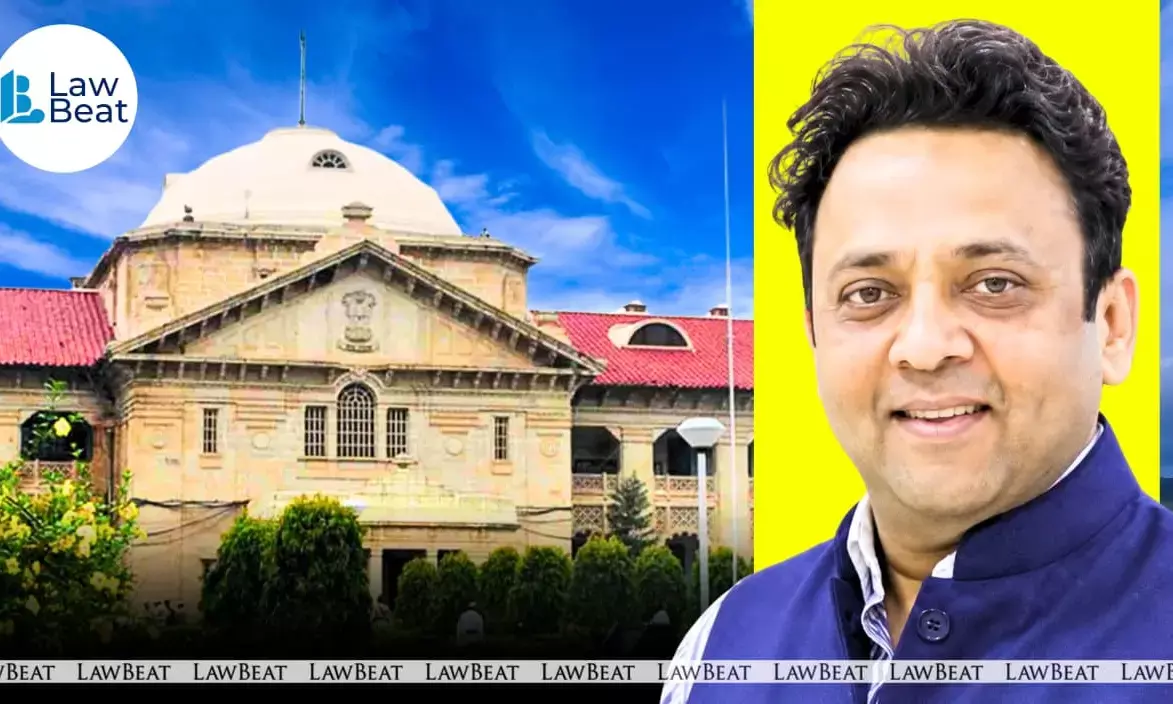
Allahabad High Court questions UP official's compliance stance.
Holding that the conduct of Uttar Pradesh Additional Chief Secretary (Home) Sanjay Prasad, IAS, prima facie appeared to be a "deliberate and calculated attempt" to undermine the authority of the court, the Allahabad High Court has directed that a copy of its judgment be forwarded to the Department of Personnel and Training (DoPT) for consideration while assessing his suitability for future assignments by the Appointments Committee of the Cabinet (ACC).
The observations came in a habeas corpus petition filed for the recovery of a missing minor girl from Jhansi, during which Justice Vinod Diwakar examined the State government's compliance with directions issued in an earlier judgment aimed at improving the quality and accountability of criminal investigations.
Court noted that although the State informed it in February this year that it had decided to challenge the May 2025 judgment in Subhash Chandra & Others v. State of U.P. & Another (2025) on police investigation reforms before the Supreme Court, no order showing that the challenge had been pursued or considered by the apex court was produced even after more than three months.
The present case arose from an FIR lodged at Sipri Bazar police station in Jhansi after the minor girl went missing on June 10, 2025. During the hearing, the high court examined the investigation carried out by the local police and expressed concern over the manner in which the charge-sheet had been filed.
Justice Diwakar observed that the investigation appeared to have been conducted primarily on the basis of statements of the accused and some witnesses who claimed that the girl had accompanied the accused and later boarded a train on her own. Court said the material before it prima facie suggested that the investigation had not been carried out in a fair, impartial and effective manner.
Why did the court examine police investigation reforms?
While scrutinising the charge-sheet, the court found that the directions issued in its May 2025 judgment in Subhash Chandra did not appear to have been followed.
The Subhash Chandra judgment had laid down detailed guidelines for criminal investigations and preparation of charge-sheets, including mandatory disclosures regarding the role of each accused, witness statements, forensic evidence, CCTV footage, call detail records, recoveries made during investigation and steps taken by investigating officers.
To assess whether the directions were being implemented across the State, the court called for charge-sheets from ten different districts.
After examining them, court observed that compliance with the directions was not uniform and that the material placed before it reflected a lack of effective implementation at the field level.
Court further noted that despite nearly a year having elapsed since the judgment, the mandate laid down in Subhash Chandra had not been effectively implemented and no adequate steps appeared to have been taken to ensure uniform compliance.
What did the State government tell the high court?
In an affidavit filed before the court, the Home Department stated that it had decided to challenge the Subhash Chandra judgment before the Supreme Court.
The State argued that some of the directions requiring scrutiny of draft charge-sheets by prosecution officers before their submission raised substantial questions of law and required consideration by the apex court.
It was also contended that existing government orders and police circulars issued in compliance with Supreme Court judgments were already in force and that the State continued to act in accordance with those directions.
Court, however, noted that no challenge had been filed for almost a year after the judgment was delivered on May 12, 2025. It further observed that the decision to approach the Supreme Court surfaced only after questions were raised regarding non-compliance with the judgment.
"The conduct of Shri Sanjay Prasad... prima facie reflects a deliberate and calculated attempt to undermine the authority of this court," the judge observed, adding that the officer had projected the proposed SLP as a ground for seeking restraint in enforcement of judicial directions while failing to pursue the remedy with diligence.
Court said such conduct, if left unaddressed, could render orders of constitutional courts nugatory at the hands of recalcitrant administrative officers and set a harmful precedent in matters relating to accountability and police reforms.
Call for greater bureaucratic accountability
The judgment also contains broader observations on administrative accountability and police reforms.
Court said there was a need to evolve a doctrine of "superior responsibility" under which senior officers could be held accountable for failing to prevent or address misconduct by subordinates.
Observing that excessive administrative discretion without accountability undermines the rule of law, court said senior officers must bear responsibility for ensuring effective delivery of public services and implementation of government policies.
Accordingly, it directed the Registrar (Compliance) of the High Court to send a certified copy of the judgment, along with the earlier Subhash Chandra ruling, to the DoPT, the cadre controlling authority for IAS officers.
The observations have come amid increasing judicial scrutiny of the Uttar Pradesh bureaucracy by the Allahabad High Court. In recent months, the court has repeatedly flagged administrative inaction, poor investigations and non-compliance with judicial directions. Last month, Justice Vinod Diwakar called upon UP Chief Secretary to personally explain investigation delays, ACS (Home)'s alleged disregard of judicial directions, and the unauthorized summoning of a Lucknow DCP to court in a monitored criminal probe.
More recently, Justice Diwakar observed that police officers in Uttar Pradesh appeared to be "more loyal to the ruling dispensation than the Constitution", while stressing that state authorities must remain accountable to the rule of law rather than political convenience
Regarding the matter at hand, court was informed that the missing girl had since been traced and restored to the custody of her parents. Recording that the principal grievance in the habeas corpus petition no longer survived, court disposed of the matter while appreciating the efforts of the Senior Superintendent of Police, Jhansi, and the police team involved in securing her recovery.
Case Title: Megha Raikwar v. State of U.P. and 4 Others
Judgment Date: June 3, 2026
Bench: Justice Vinod Diwakar