
Allahabad High Court Refuses to Quash FIRs Against Chandrashekhar Ravan in Saharanpur Violence Case
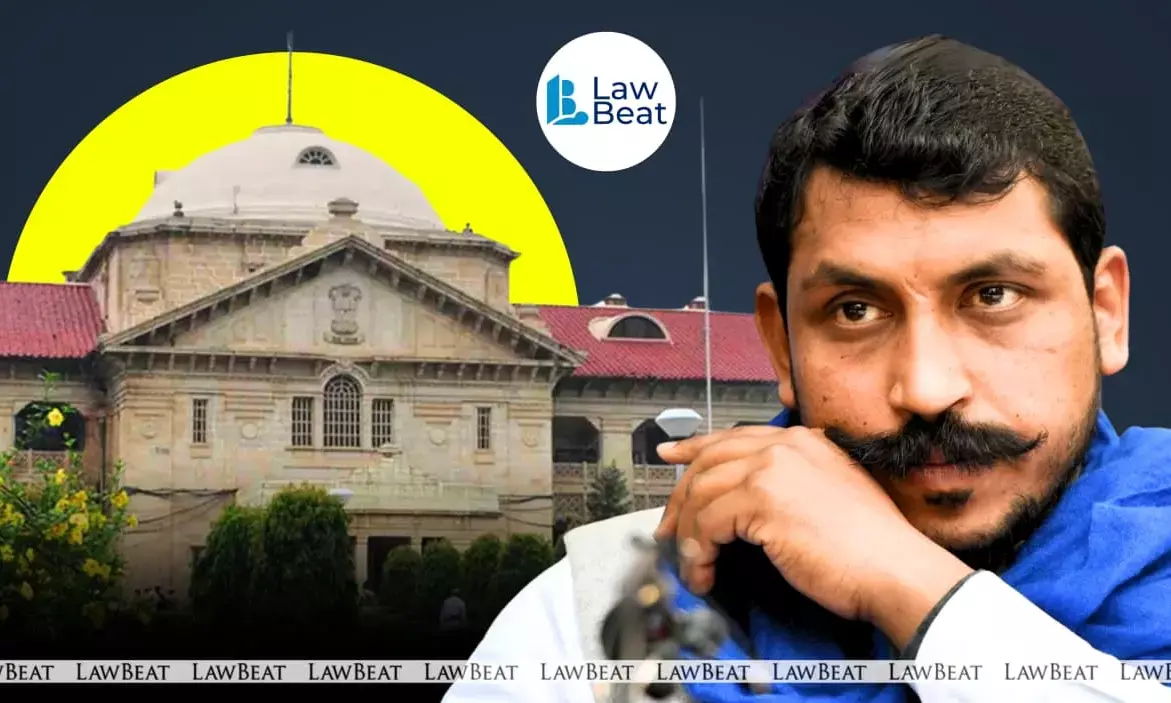
Allahabad High Court orders trial to continue for Chandrashekhar Ravan in 2017 Saharanpur violence cases
The Allahabad High Court on December 17, 2025, refused to quash criminal proceedings arising out of four FIRs registered against Bhim Army chief Chandrashekhar alias Ravan in connection with large-scale violence and arson that broke out in Saharanpur in May 2017, holding that the cases relate to distinct incidents and cannot be treated as an impermissible “second FIR”.
Justice Sameer Jain dismissed a batch of applications filed under Section 528 of the Bharatiya Nagarik Suraksha Sanhita, by which Chandrashekhar sought quashing of charge-sheets and trials arising out of Case Crime Nos. 154, 156, 162 and 163 of 2017, all registered at Kotwali Dehat police station.
The judge noted that in the matter, the alleged Bhim Army mob carried out arson and property damage over several hours at different locations. Court held that while the incidents could be seen as part of the same broader episode, Chandrashekha being a sitting MLA and the alleged involvement of party workers meant that a larger conspiracy could not be ruled out.
In these circumstances, and in view of Supreme Court precedent, the court held that it was not appropriate to quash the proceedings arising from the subsequent FIRs.
On May 9, 2017, widespread violence allegedly erupted in Saharanpur. An initial FIR, Case Crime No. 152 of 2017, was lodged at 5.30 pm alleging that a mob of 250–300 persons, allegedly linked to the Bhim Army and led by Chandrashekhar and others, indulged in arson, damaged public and private property, attacked police and administrative officials, and vandalised a police outpost and an under-construction building.
Later the same day, four more FIRs were registered. These included complaints by a newspaper employee whose motorcycle was allegedly set on fire, by a contractor whose under-construction building wins torched and vandalised, and by police personnel who alleged assaults, damage to police vehicles, and injuries sustained in the violence.
Appearing for Chandrashekhar, senior counsel argued that all five FIRs arose out of the same transaction and described different facets of a single episode of mob violence. It was submitted that once the first FIR had been lodged, subsequent FIRs on the same set of facts were barred in law. Reliance was placed on Supreme Court decisions holding that a second FIR relating to the same incident or transaction is impermissible, and that, at the highest, later investigations could only result in supplementary charge-sheets.
The State, however, strongly opposed the plea. The Additional Advocate General argued that the incidents occurred at different locations, involved different victims and witnesses, and were reported by separate complainants, including private individuals whose grievances could not be subsumed into a single police case. It was also contended that the violence unfolded over several hours across the district and could not be reduced to one monolithic incident.
Justice Jain, after examining the FIRs and the governing law, agreed with the State. Court noted that while the incidents occurred on the same day and were part of a broader episode of unrest, the places, complainants, and factual allegations differed. One of the FIRs, the court observed, was lodged by a journalist in his individual capacity for the burning of his motorcycle, making it difficult to characterise it as merely a repetition of the first police FIR.
Court relied on recent Supreme Court judgment in State of Rajasthan v. Surendra Singh Rathore, which clarified that multiple FIRs are permissible where their ambit is different, even if they arise from the same set of circumstances, or where investigations reveal a larger conspiracy or new factual elements. The single judge also referred to Nirmal Singh Kahlon v. State of Punjab to underline that discovery of a broader conspiracy can justify separate proceedings.
A significant factor weighed by the court was the stage of the trials. It recorded that cognizance had already been taken in all cases, trials were underway, and several prosecution witnesses had been examined in each matter. At such an advanced stage, the court held, it would not be appropriate to exercise inherent powers to quash proceedings or to merge charge-sheets.
Holding that the subsequent FIRs were legally permissible and that no ground was made out for interference, the high court dismissed all applications, allowing the trials to continue independently in accordance with law.
Case Title: Chandrashekhar Alias Ravan vs. State of U.P. and Another
Judgment Date: December 17, 2025
Bench: Justice Sameer Jain