
Anand Kedia Suppressed Encroachment Proof, Says MP High Court While Dismissing Plea Against Demolition Notice
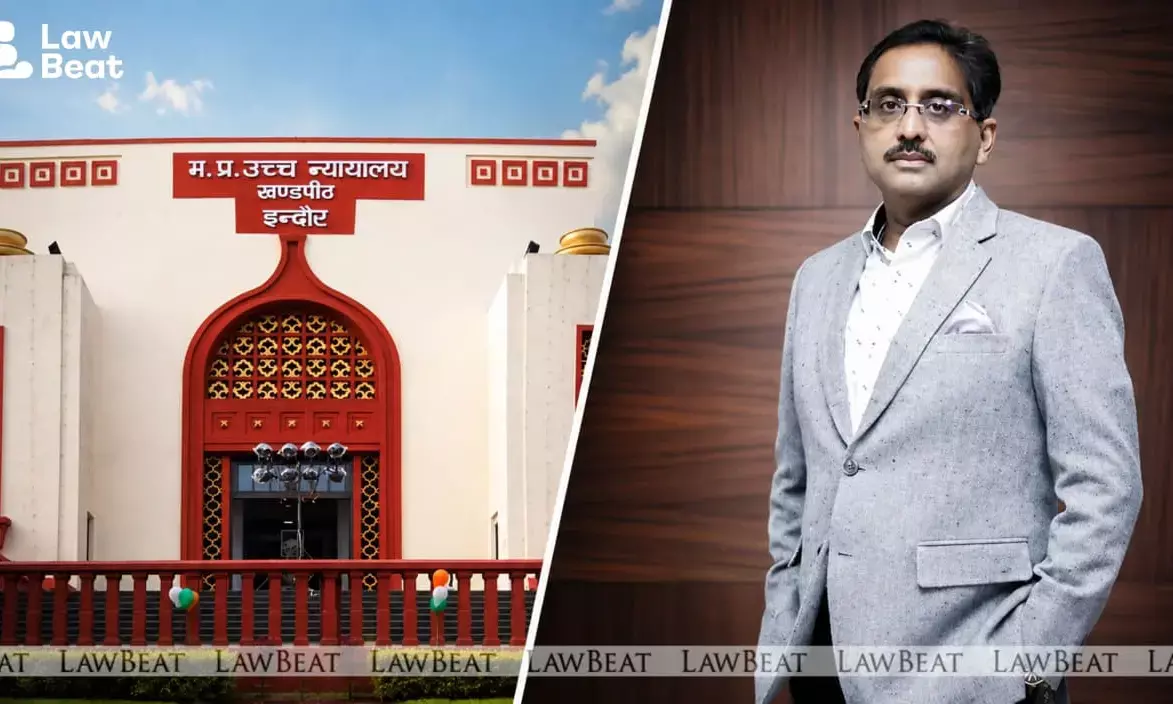
"Falsus in Uno, Falsus in Omnibus": MP High Court Dismisses Indore Anand Kedia's Plea With Cost
The Madhya Pradesh High Court's Indore Bench has dismissed a writ petition challenging a demolition notice issued by the Indore Municipal Corporation for road-widening work, holding that the petitioner had approached the court with unclean hands by suppressing a material document that showed encroachment on government land.
Justice Sandeep N. Bhatt, in an order dated August 17, 2026, rejected the petition filed by Anand Kumar Kedia against the State of Madhya Pradesh and others, and imposed a cost of Rs 20,000 on him, payable to the M.P. Legal Aid Services Authority, Indore, within seven days.
Anand Kumar Kedia is a key promoter and business leader associated with the Kedia Group, specifically serving in leadership roles like Chairman of Business Promotion & Development at Associated Alcohols & Breweries Ltd. (AABL).
Kedia, who owns 1.452 hectares of land in Bicholi Hapsi village in Indore, had approached the court against a demolition notice dated August 11, 2026, issued by the Building Officer of Zone 19 of the Indore Municipal Corporation. The notice required him to demolish construction on his residential premises to an "average depth" of 12.782 metres to make way for a 30-metre road being built under the Indore Development Plan, 2021, connecting Hotel Pride to the City Forest.
The notice followed an earlier round of litigation, in which the High Court had disposed of a petition by Kedia on July 21, 2026, directing a joint inspection and an opportunity to object before any coercive action.
Appearing for Kedia, Senior Advocate Kishore Shrivastava, assisted by Advocate Amit Dubey, argued that the demolition notice was illegal since no Town Development Scheme had been finalised and published under Section 50(7) of the M.P. Nagar Tatha Gram Nivesh Adhiniyam, 1973, without which, he contended, no vesting of acquired land could occur under Section 57 of the Adhiniyam.
It was also argued that the Corporation had shifted the road's central line to protect illegal encroachers at the cost of the petitioner's legitimately owned property, a step said to be "malice in law" and violative of Article 14, and that the action breached Article 300A of the Constitution and the Right to Fair Compensation Act, 2013.
Advocate Rishi Tiwari, representing respondent nos. 2 and 3, along with Panel Lawyer Tanishq Patel for the State, opposed the plea. They submitted that the petitioner had suppressed a joint inspection report, prepared after site demarcation by a team of three departments, showing that he had encroached upon government land by constructing a wall enclosing it within his own property.
Relying on the Supreme Court's ruling in Ravindra Ramchandra Waghmare v. Indore Municipal Corporation, they argued that a development plan is binding on the Corporation, that Section 305 of the M.P. Municipal Corporation Act, 1956 allows for automatic vesting of land upon road-widening without a separate acquisition process, and that no violation of Article 300A arises from its exercise.
The court examined the mauka panchnama dated July 30, 2026, and found that it "clearly indicates that the petitioner herein has put up the construction of the wall by including the Government land into his own land," and that the document had been served on the petitioner's representative, whose signature appeared on its overleaf.
Holding that the petitioner had "not come before this Court with clean hands," the court invoked the Latin maxim falsus in uno, falsus in omnibus, meaning false in one thing, false in everything, to deny him any relief in the matter. It further held that the Corporation was not required to follow the acquisition procedure under Sections 78 and 79 of the 1956 Act, since vesting under Section 305 takes place by operation of law, and that there was no violation of Article 14 or Article 300A.
"I find that all the contentions raised in the present petition by the petitioner though sounds to be attractive, but lacks in merits in the facts and circumstances of the present petition," the court observed, dismissing the writ petition while directing Kedia to deposit the exemplary cost with the Legal Aid Authority and submit proof of the deposit before the Registry within the stipulated period.
Case Title: Anand Kumar Kedia vs. State of Madhya Pradesh Through Its Principal Secretary Department of Urban Development and Housing and Others
Date of Order: August 17, 2026
Bench: Justice Sandeep N. Bhatt