
Arbitration Cannot Be Avoided Merely Because Agreement Uses Word ‘May’: MP High Court
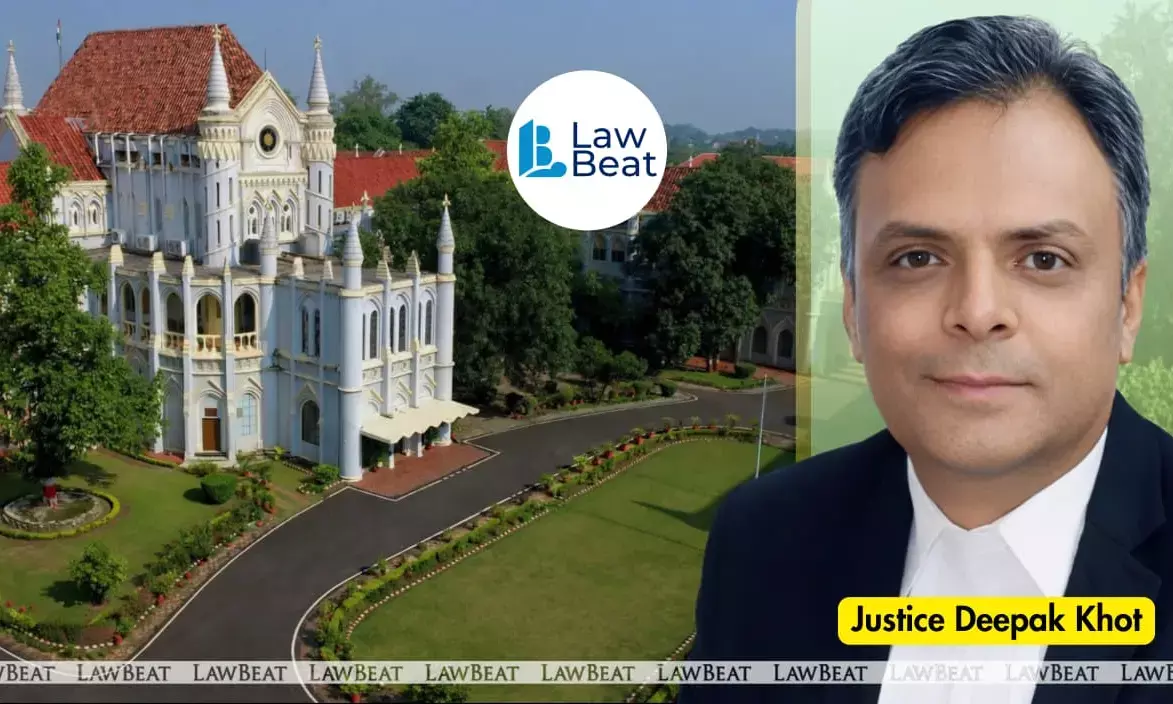
MP High Court Refers Shareholding Dispute To Arbitration, Says Use Of ‘May’ Does Not Defeat Arbitration Clause
The Madhya Pradesh High Court has held that the mere use of the word “may” in an arbitration clause does not necessarily make arbitration optional and cannot be used as a ground to avoid resolution of disputes through arbitration where the overall intention of the parties points towards that mechanism.
Justice Deepak Khot passed the ruling while allowing an application filed by M/s JVS Foods Pvt. Ltd. under Section 11(6) of the Arbitration and Conciliation Act, 1996, seeking appointment of an arbitrator in a dispute with M.P. State Agro Industries Development Corporation Ltd. arising out of a Shareholders’ Agreement executed on November 27, 2012.
The applicant was represented by Advocate Astha Nagori, while Advocate Arjun Bajpai appeared for the respondent corporation.
The dispute arose after the respondent sought to exit the shareholding arrangement. Under the agreement, the exiting party’s equity shares were to be purchased by the remaining parties. Differences emerged regarding the valuation of those shares, leading the applicant to invoke the arbitration clause and issue a notice on May 22, 2024.
The respondent opposed the request for appointment of an arbitrator, arguing that the arbitration clause used the expression that either party “may” refer the dispute to arbitration. According to the corporation, this indicated that arbitration was only an optional remedy and could not be imposed if one party was unwilling to participate.
The applicant, however, argued that a similar dispute involving the same respondent and an identical arbitration clause had already been referred to arbitration by the High Court in an earlier case. It was further pointed out that the Supreme Court had affirmed that decision. Reliance was also placed on the Supreme Court’s decision in Tarun Dhameja v. Sunil Dhameja, where the Court held that describing arbitration as optional does not necessarily render the arbitration clause ineffective.
After examining the agreement and the rival submissions, the High Court noted that there was no dispute regarding the existence of the arbitration clause, the existence of a live dispute between the parties, or the fact that the claim was within limitation.
The Court reproduced Clause 16 of the agreement, which required parties to first attempt negotiation and thereafter provided that either party “may refer the dispute for resolution to a sole arbitrator.” The respondent placed significant reliance on this wording to contend that arbitration was not mandatory.
Justice Khot observed that the legal position regarding arbitration agreements has been settled by the Supreme Court in Jagdish Chander v. Ramesh Chander, which emphasised that courts must ascertain the true intention of the parties from the agreement as a whole.
The Court noted that the Supreme Court has distinguished between clauses that merely contemplate a future agreement to arbitrate and clauses that demonstrate a present intention to resolve disputes through arbitration. In the present case, the agreement not only referred to arbitration but also specified the seat of arbitration, governing law and jurisdiction of courts, indicating that the parties had consciously agreed upon arbitration as the dispute resolution mechanism.
Importantly, the Court found that the respondent had previously supported arbitration in similar disputes and had even raised objections to the maintainability of a writ petition on the ground that arbitration was an available alternative remedy.
Making a significant observation, Justice Khot held that the respondent could not adopt inconsistent positions depending on convenience. The Court remarked that the corporation “cannot blow hot and cold according to their whims and wishes” when it comes to appointment of an arbitrator.
Referring to the Supreme Court’s ruling in Tarun Dhameja, the Court further observed that an arbitration clause cannot be treated as non-existent merely because it describes arbitration as optional. The judgment clarified that such clauses remain enforceable unless they require a fresh consensus between parties before arbitration can commence.
Holding that the dispute was arbitrable and that the parties intended disputes to be resolved through arbitration, the Court allowed the application and appointed former Madhya Pradesh High Court Judge Shri Alok Verma as the sole arbitrator. The Court directed that arbitration proceedings shall take place in Bhopal and be conducted in accordance with the applicable rules of the Madhya Pradesh Arbitration Centre. The arbitration case was accordingly disposed of.
Case Title: M/s JVS Foods Pvt. Ltd. Company Incorporated Under Companies Act 2013 v. M.P. State Agro Industries Development Corporation Ltd.
Date of Order: June 17, 2026
Bench: Justice Deepak Khot