
Article 16(4): Madras HC To Examine OBC, MBC Reservation For Christian Converts In Tamil Nadu
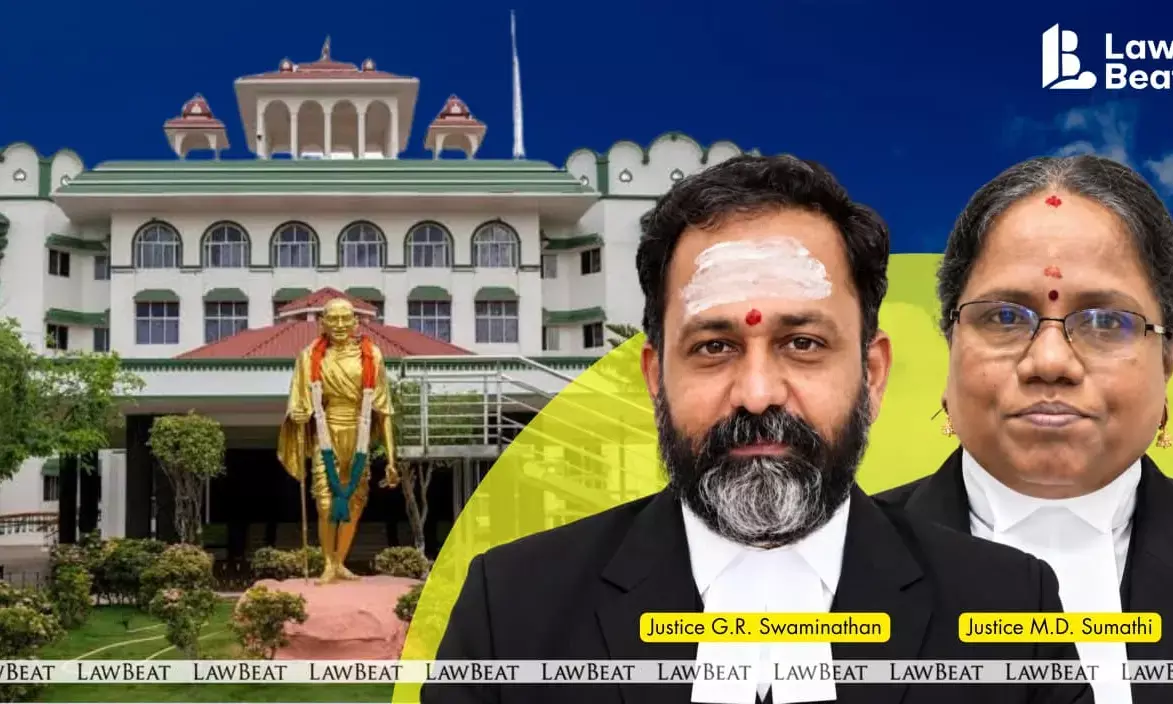
Madras High Court questions continued inclusion of convert communities in OBC list.
The Madras High Court has admitted a writ petition challenging the constitutional validity of provisions granting Backward Class and Most Backward Class reservation benefits to certain Christian communities and converts in Tamil Nadu, observing that the challenge raises serious questions about the State's reservation policy.
Court permitted the petitioner to file an interim application citing urgency arising from ongoing recruitment processes.
Court observed that there is nothing permanent or automatic about a community's Other Backward Class (OBC) status and that the State must justify the inclusion or continued retention of communities in the reservation list whenever their classification is challenged.
"There is nothing axiomatic or eternal about one’s OBC status. A clear case has to be made out for inclusion or retention in the OBC list. Merely because some entities have enjoyed the privilege of reservation for a few decades, would that necessarily mean that the original inclusion was constitutionally justified? We answer in the negative," stated the order authored by Justice G.R. Swaminathan on behalf of the division bench also comprisig Justice M.D. Sumathi.
Court was hearing a petition filed by G. Kodeeswaran, a member of the Kallar community, challenging specific entries in Schedule I of the Tamil Nadu Government Servants (Conditions of Service) Act, 2016.
The petitioner questioned the inclusion of certain Christian communities, including Christian Nadars, Christian Shanars and Christian Gramanis, in the Backward Classes list. He also challenged provisions permitting converts to Christianity from certain communities, including Meenavar, Parvatharajakulam, Pattanavar, Sembadavar and Mukkuvar, to enjoy Most Backward Class status.
Justices G.R. Swaminathan and M.D. SumathiThe petitioner, who had applied for the Tamil Nadu Public Service Commission's Combined Civil Services Examination IV (Group IV Services), contended that the inclusion of these communities diluted the reservation pool meant for genuinely backward classes.
He argued that their inclusion had not been supported by objective and quantifiable data establishing their social and educational backwardness, as required under Article 16(4) of the Constitution.
Referring to the reports of the State's Backward Classes Commissions, the petitioner submitted that the First Backward Classes Commission, headed by A.N. Sattanathan, had declined to examine the claims of Christian communities for inclusion in its 1970 report.
He further pointed out that the Second Backward Classes Commission, headed by J.A. Ambashankar, had rejected the inclusion of Christian converts from Backward Classes in its 1985 report. The report had placed "Christian (Converts from B.C.)" under Code 902 in the list of communities found ineligible for inclusion.
However, the petitioner alleged that the State subsequently included converts to Christianity from Hindu Backward Class communities through G.O.Ms.No.558 dated February 24, 1986. Christian Nadars, Shanars and Gramanis had also been included through G.O.Ms.No.2029 dated August 5, 1983.
The petitioner further questioned the inclusion of Church of South India (CSI) members in the Backward Classes list. He argued that the existing framework could allow even a person belonging to a forward community to claim OBC status by acquiring CSI membership through baptism.
On this aspect, the bench recorded that the petitioner's counsel had asserted that even a Brahmin converting to Christianity and joining the CSI could enjoy OBC status under the existing statutory framework.
"If this assertion is true, then a serious re-think is certainly called for," the court observed.
The petitioner also highlighted what he described as unequal treatment between different categories of converts. While persons belonging to Scheduled Castes who convert to Christianity are placed in the Backward Classes category, converts from certain Most Backward Classes are permitted to retain their MBC status.
Relying on the Supreme Court's decision in The Secretary to Government v. Sameer Ahamed, 2026, the petitioner argued that conversion to another religion cannot, by itself, establish a new birth-based community identity or automatically preserve reservation entitlements.
After considering the submissions, the bench held that the petitioner had established a prima facie case warranting deeper constitutional scrutiny.
"The factual assertions regarding the lack of objective data, the explicit disregard of the Recommendations of the Expert Commissions, and the arbitrary nature of the classifications raise serious doubts about the constitutional validity of the impugned entries in Schedule I of the 2016 Act," it observed.
Court accordingly admitted the writ petition and ordered notice returnable in eight weeks. Taking note of the petitioner's submission that recruitment processes were ongoing, it permitted him to file an interim application.
Advocate K. Suresh appeared for the petitioner, while Special Government Pleader M. Kannan represented the State. Advocate V. Panneerselvam appeared for the Tamil Nadu Public Service Commission, which was suo motu impleaded as a respondent.
Case Title: G. Kodeeswaran v. State of Tamil Nadu & Ors.
Order Date: November 12, 2026
Bench: Justices G.R. Swaminathan and M.D. Sumathi