
Arvind Kejriwal Argues Own Case In Delhi HC, Seeks Recusal of Judge In Excise Policy Matter
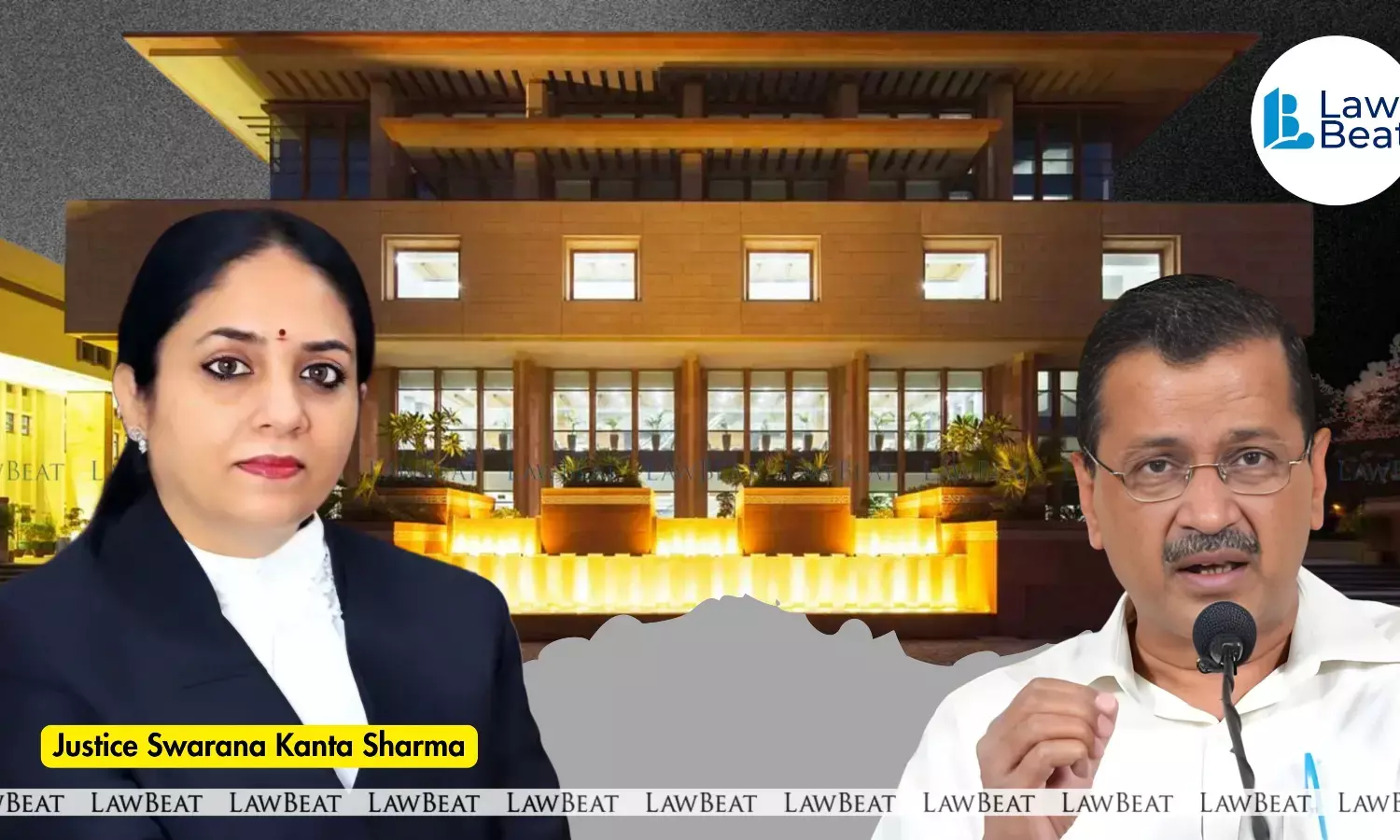
Arvind Kejriwal declined to participate in Delhi High Court proceedings citing concerns over judicial impartiality
The Delhi High Court heard submissions on a plea seeking recusal of the presiding judge in the Central Bureau of Investigation’s appeal against the acquittal of several accused persons in the Delhi excise policy case, with the Court indicating that the proceedings would remain confined to the limited question of recusal and not the merits of the appeal.
The matter was taken up by a single judge bench of Justice Swarana Kanta Sharma, which heard detailed submissions from Delhi Chief Minister Arvind Kejriwal, who appeared in person.
The Court clarified at the outset that the scope of the hearing was restricted to examining whether any legally sustainable ground for recusal was made out, and not to revisit the findings of the trial court or the merits of the CBI’s challenge to the acquittal order.
Appearing in person, Kejriwal commenced his submissions by expressing respect for the judiciary and the Bench, while simultaneously placing on record his apprehension regarding the fairness of the proceedings.
He submitted that despite his acquittal by the trial court, he continued to face proceedings before the High Court owing to the CBI’s appeal, and that the circumstances gave rise to a “reasonable apprehension” in his mind that the matter may not be adjudicated with complete neutrality.
He argued that the settled legal position governing recusal does not require proof of actual bias, but is founded on whether a reasonable litigant could perceive a likelihood of bias.
According to him, the principle of judicial propriety requires not only that justice be done, but also that it must be seen to be done, and that the perception of fairness is integral to maintaining confidence in the judicial process.
Referring to an earlier order dated March 9, passed at the stage of issuing notice in the CBI’s appeal, Kejriwal contended that certain prima facie observations appeared to have been made in favour of the investigating agency in the absence of the respondents.
He pointed out that the case involved a voluminous chargesheet running into more than 40,000 pages, and argued that such observations could not have been made without a detailed examination of the record, thereby contributing to his apprehension.
He further informed the Court that he intended to rely on multiple grounds and judicial precedents to substantiate his plea for recusal, emphasising that the test is one of reasonable perception and not conclusive proof.
His submissions sought to underline that the threshold for recusal is met where a litigant can legitimately apprehend a lack of impartiality, irrespective of whether such apprehension is ultimately borne out.
The plea was opposed by the Central Bureau of Investigation, represented by Solicitor General Tushar Mehta and Additional Solicitor General S. V. Raju.
The agency reiterated its earlier stand that the recusal application was devoid of merit and cautioned against the increasing tendency of litigants to seek recusal on untenable grounds. It was submitted that such attempts, if entertained without strict scrutiny, could undermine the independence of the judiciary and disrupt the orderly administration of justice.
The Court also took note of the fact that similar recusal applications had been filed by other co-accused persons in the same matter.
It was observed that such applications may be considered together to ensure consistency in adjudication and to avoid conflicting determinations on identical issues arising in the same case.
The background of the dispute lies in the trial court’s judgment dated February 27, whereby Kejriwal, former Deputy Chief Minister Manish Sisodia, and other accused persons were acquitted in the Delhi excise policy case. The trial court had recorded strong findings against the prosecution, holding that the material placed on record did not meet the threshold necessary to sustain criminal charges.
Aggrieved by the acquittal, the CBI approached the High Court seeking reversal of the trial court’s findings.
On March 9, the High Court issued notice in the appeal and made certain prima facie observations indicating that aspects of the trial court’s reasoning required closer scrutiny, which led to the filing of the present recusal plea.
It was also noted that an earlier request seeking transfer of the case to another bench had been declined by the Chief Justice, who clarified that issues relating to recusal fall within the domain of the judge concerned.
The High Court is now expected to first decide the question of recusal, which will determine whether the present bench will continue to hear the CBI’s appeal against acquittal.
The determination of this issue is likely to have a bearing not only on the trajectory of the excise policy case but also on the broader principles governing judicial recusal, particularly in high-profile criminal matters where perceptions of fairness assume heightened significance.
Case Title: CBI v. Arvind Kejriwal
Bench: Justice Swarana Kanta Sharma