
Being An Excise Officer Not Enough To Hand Probe To CBI, Says MP High Court
"Review Is Not an Appeal in Disguise": MP High Court Refuses to Recall Order Quashing CBI Probe
The Madhya Pradesh High Court at Indore has dismissed a review petition filed by the father of a liquor contractor who died by suicide, refusing to disturb its earlier ruling that quashed a single judge's order handing the probe against an Excise Assistant Commissioner to the Central Bureau of Investigation (CBI).
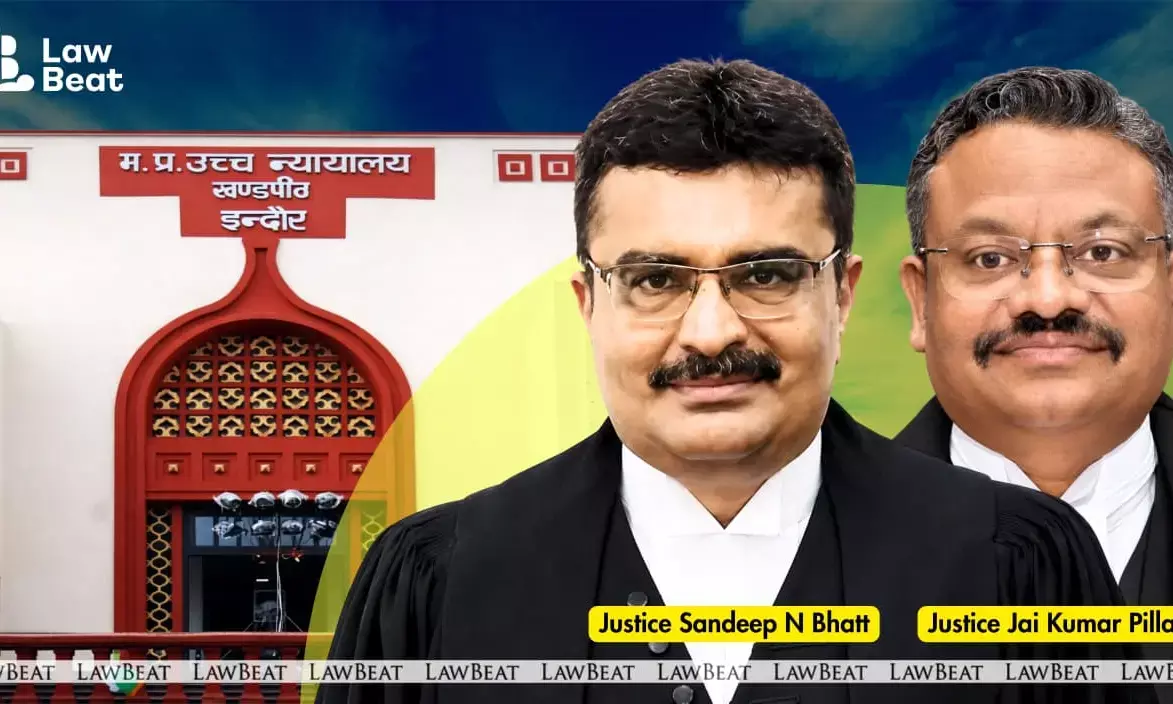
A Division Bench of Justice Sandeep N. Bhatt and Justice Jai Kumar Pillai held that the plea was, in substance, an appeal in disguise. Pronouncing the order on September 29, 2026, the bench said no error apparent on the face of the record had been shown. The review petition, filed by Santosh, challenged the July 17, 2026 order in Writ Appeal No. 1810/2026.
According to the petition, Santosh's son, Dinesh Makwana, held licences for liquor shops in Indore and Dewas. It was alleged that Mandakini Dixit, the Excise Assistant Commissioner posted in Dewas, demanded Rs 1.5 lakh per month per shop, and asked him to sell a quarter bottle worth Rs 280 for Rs 90 and pay her an extra Rs 10 as commission. She also allegedly withheld permits for incoming stock until the money was paid.
Makwana, the petition claimed, had already paid Rs 22 lakh, yet the pressure continued, along with a threat to implicate him in a false case. He died by suicide on November 8, 2025, leaving behind a video recording. The family alleged that the police neither investigated properly nor acted against Dixit.
A single judge then directed that the investigation be handed over from Police Station Kanadia, Indore, to the CBI, which registered an FIR on May 22, 2026 at its Bhopal unit. Dixit challenged that direction, and the Division Bench allowed her writ appeal on July 17, 2026.
Seeking review, advocate Ashish Gupta argued that the Division Bench wrongly assumed Santosh should first have exhausted remedies under Sections 154(3), 156(3) and 200 of the CrPC/BNSS. An alternative remedy, he said, is a "rule of self-restraint" and not an absolute bar where exceptional circumstances demand an independent probe.
Gupta also contended that the allegations were against a senior public servant and that an FIR registered on judicial direction should not have been quashed merely because the original writ petition was held not maintainable.
Advocate Shashank Shekhar Rai, appearing with advocate Yash Agrawal for Dixit, argued that no ground under Order 47 Rule 1 of the Code of Civil Procedure was made out, that the petition used "the language of appeal", and that the same issues had already been raised and decided.
Advocate Manoj Kumar Soni, appearing for the CBI, submitted that the papers had been deposited before the concerned trial court for further process, and that the agency had carried out some further investigation by recording statements.
The bench surveyed the settled law, including the Supreme Court's rulings in Malleeswari v. K. Suguna and Shri Ram Sahu v. Vinod Kumar Rawat. It then found that "it cannot be said that the Court has failed to consider any of the submission made at the bar by the petitioner."
The bench observed that "the petitioner is praying for exercising power of appellate jurisdiction and not for review."
The court also noted the petitioner's conduct. After approaching the police with the video recording, the petitioner sent a registered post within four days and filed the petition the very next date, which, the bench said, "speaks about the conduct and intention of the review petitioner." The police, it added, could not have had sufficient time to investigate, and the accused being an Excise officer was no ground to hand the probe to the CBI.
Concluding, the bench held that "no material error on face of the record is found. Other requirements are also not satisfied," and dismissed the review petition.
Review jurisdiction is narrow by design. A litigant who loses on merits cannot return to the same bench to argue the case afresh, however grave the allegations.
Case Title: Santosh vs. The State of Madhya Pradesh and Others
Order Date: September 29, 2026
Bench: Justice Sandeep N. Bhatt and Justice Jai Kumar Pillai