
Belated SC/ST Act Allegations, Probe Gaps & More: Why Delhi Court Granted Swatantra Bhardwaj Interim Bail
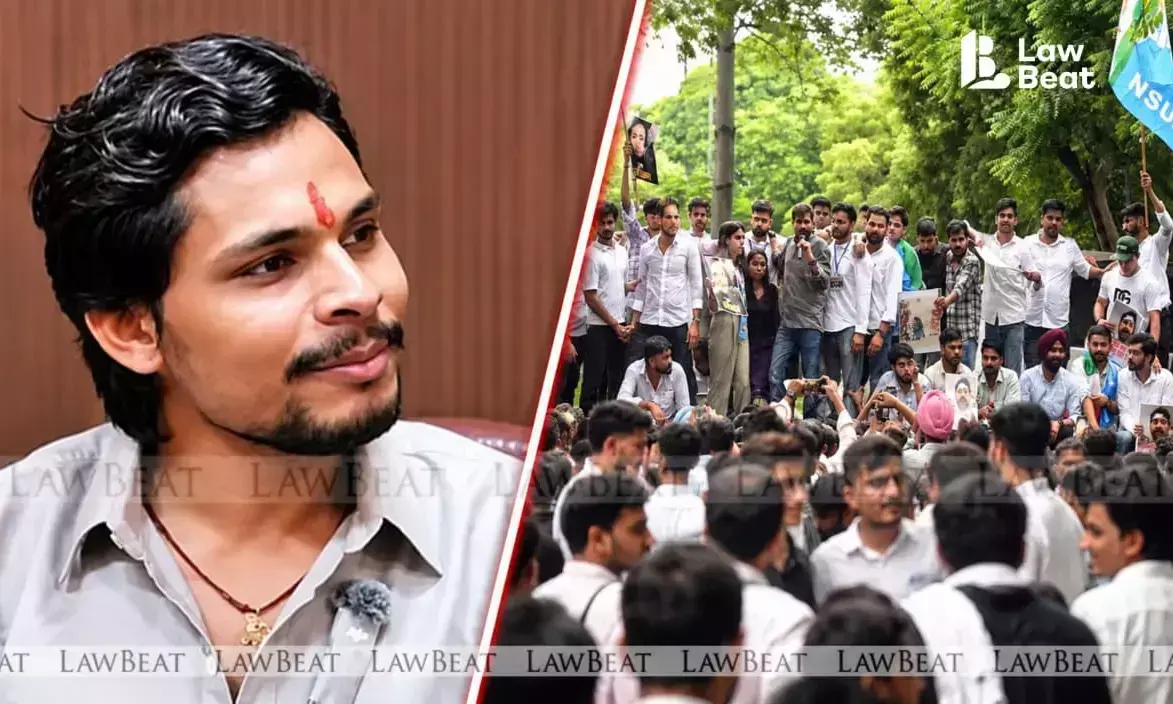
A Delhi Court said social media can become a “new medium of intimidation”, while directing police to examine CCTV, electronic evidence, call records and the authenticity of videos and a podcast
Granting three weeks’ interim bail to Swatantra Bhardwaj in a case arising from an alleged assault at Jantar Mantar, Delhi’s Patiala House Court barred him from making any public statement, social-media post, podcast, interview or other public communication concerning the case.
The Court simultaneously flagged what it described as “significant ground” left uncovered in the investigation, directing the police to undertake several basic investigative steps before the matter is considered again.
Additional Sessions Judge-03/Special Judge SC/ST (POA) Act Saurabh Partap Singh Laler noted that Bhardwaj had been in custody for a little over 10 days and this period would have granted him time to ‘reflect’ upon his conduct.
It also noted that his custodial interrogation was complete and the offences carried a maximum sentence of seven years.
The Court observed that the principal concern was the safety of the complainant and his minor daughter, but held that this could be secured through appropriate conditions.
"In the considered view of this Court, the duty under the Act to protect the victim and the duty under Article 21 to safeguard personal liberty are best reconciled by releasing the applicant on interim bail for three weeks on stringent conditions."
The Court said Bhardwaj’s conduct during the three-week period would be observed before his plea for regular bail is considered.
"Whatever is to be decided about the incident of 23.06.2026 must be decided in a court of law, on evidence, and not in public or on social media" Court said.
Court’s Concern Over Social Media Conduct
The Court said its greater concern was Bhardwaj’s conduct in the weeks following the alleged incident. Both sides had placed podcasts and social-media videos before the Court. The Court said such material had to be assessed not merely by its words but by its overall tenor and demeanour.
Subject to forensic verification, it recorded: "the Court’s tentative impression is that the material reflects a tendency to boast about the incident rather than any remorse for it."
The Court then made a broader observation about intimidation in the digital age: "In today's era, intimidation of a victim no longer requires physical proximity."
It added: "A public boast about an assault, broadcast to an online audience, reaches the victim and the witnesses as surely as a threat delivered at their doorstep, and often with greater reach and permanence. Social media has thus become a new medium of intimidation."
The Court clarified that abusive and sexually explicit messages allegedly sent from several numbers to the complainant and his minor daughter were not, on the present record, traceable to Bhardwaj and it drew no inference against him from them.
Nevertheless, it said such material illustrated how public commentary about a pending case could “let loose hostility” against a victim and family.}
"The duty of protection under Section 15A of the Act therefore cannot be discharged merely by keeping the accused physically away from the victim. It extends to what is being said publicly about the case" the Court said.
On freedom of speech, the Court observed: "The freedom does not extend to using public platforms to overawe a victim or to try a pending case before the public."
It held that restraining Bhardwaj from commenting publi cly had a direct connection with protecting the victim and maintaining the integrity of proceedings and was not a general restraint on lawful expression.
Why Was Bhardwaj Arrested?
The case initially concerned an alleged assault at Jantar Mantar on June 23, 2026. The original FIR invoked Sections 115(2) and 126(2) BNS, which were bailable and carried maximum punishments of one year and one month respectively.
The Court noted that for more than two months the investigating agency did not consider Bhardwaj’s arrest necessary. He instead joined the investigation pursuant to a Section 35(3) BNSS notice and produced the alleged weapon. The injury was opined to be simple.
The Court therefore observed: "It follows that the applicant is not in custody for causing simple hurt or for wrongful restraint."
His arrest followed a supplementary statement dated September 4, which brought in offences under the SC/ST Act and Section 351(3) BNS, carrying a maximum punishment of seven years.
The Court also noted that the allegation of caste-based insult was absent from the original complaint and surfaced for the first time approximately 10 weeks later.
It, however, cautioned: "A belated allegation is not, for that reason alone, false; nor can this Court decide its truth at the threshold."
However, the delay was a circumstance relevant to the weight of the accusation at the bail stage. Whether the delay was satisfactorily explained, whether the alleged words were uttered and who was the aggressor were left for trial.
Police Probe Left "Significant Ground Uncovered"
The Court was particularly critical of the investigation. It noted that the podcast was central to the State’s opposition to bail and its authenticity was disputed. Yet, the police reply did not state whether the channel manager had been examined, whether the original footage had been requisitioned or whether the electronic material had been sent for forensic examination.
The Court also found the reply silent on:
• CCTV footage of the Jantar Mantar protest site;
• recordings made by Delhi Police personnel;
• Bhardwaj’s call-detail records and location data;
• information from social-media service providers;
• statements of the complainant’s companions and police personnel who apprehended the accused; and
• the present position of co-accused Suraj Kumar.
The Court said: "These are elementary steps in an investigation of this nature, and they ought to have been taken by now."
It clarified that the deficiencies did not mean Bhardwaj should remain in custody until they were cured. “It is that the investigating agency must be directed to proceed with purpose and dispatch.”
“Bail Is An Expression Of The Court’s Trust”
The Court also deprecated Bhardwaj’s incomplete disclosure of his criminal antecedents. His affidavit disclosed FIR No. 403/2024 but omitted FIR No. 91/2026, although he was aware of the latter.
It observed: "The disclosure mandated by Zeba Khan is intended to ensure that discretionary relief is not obtained on an incomplete picture. It is not a formality, and the applicant’s incomplete disclosure is deprecated."
However, it stressed that antecedents did not by themselves disentitle an accused from bail.
On continued custody, the Court held that custodial interrogation had already taken place and much of the electronic material had been seized. The apprehension that Bhardwaj might influence the complainant or witnesses was acknowledged as real, but the Court said it could be addressed through stringent conditions.
The Court also made it clear that “Bail is an expression of the Court’s trust, and it is not a trophy to be displayed.”
Bhardwaj has been barred from making, publishing, uploading or sharing any statement, comment, video, podcast, interview, reel or post concerning the case, his defence, or the complainant and his family on social media, electronic media, print media or any other public platform.
He has also been barred from having conversations with electronic, print or social media concerning the matter.
He cannot contact the complainant, his minor daughter, family members or prosecution witnesses, directly or indirectly, and cannot threaten, induce or influence them.
He must cooperate with the investigation and cannot tamper with electronic records or social-media content.
The Court has directed the police to collect CCTV and police recordings, analyse call-detail and tower-location data, obtain social-media subscriber details, upload logs, IP addresses and original files, examine the podcast operator, and subject the podcast and videos relied upon by both sides to forensic examination to determine whether they are genuine, morphed or artificially generated.
The matter will next be considered on October 6, 2026, when the investigating officer must submit a status report, including Bhardwaj’s conduct during interim bail. Any breach can be brought before the Court immediately for review or recall of the interim bail.
Case Title: State v. Swatantra Bhardwaj
Bench: ASJ Saurabh Partap Singh Laler
Order Date: September 15, 2026
Next Story