
“Benefit of Doubt on Age Must Favour Accused”: Gauhati HC Sets Aside POCSO Conviction
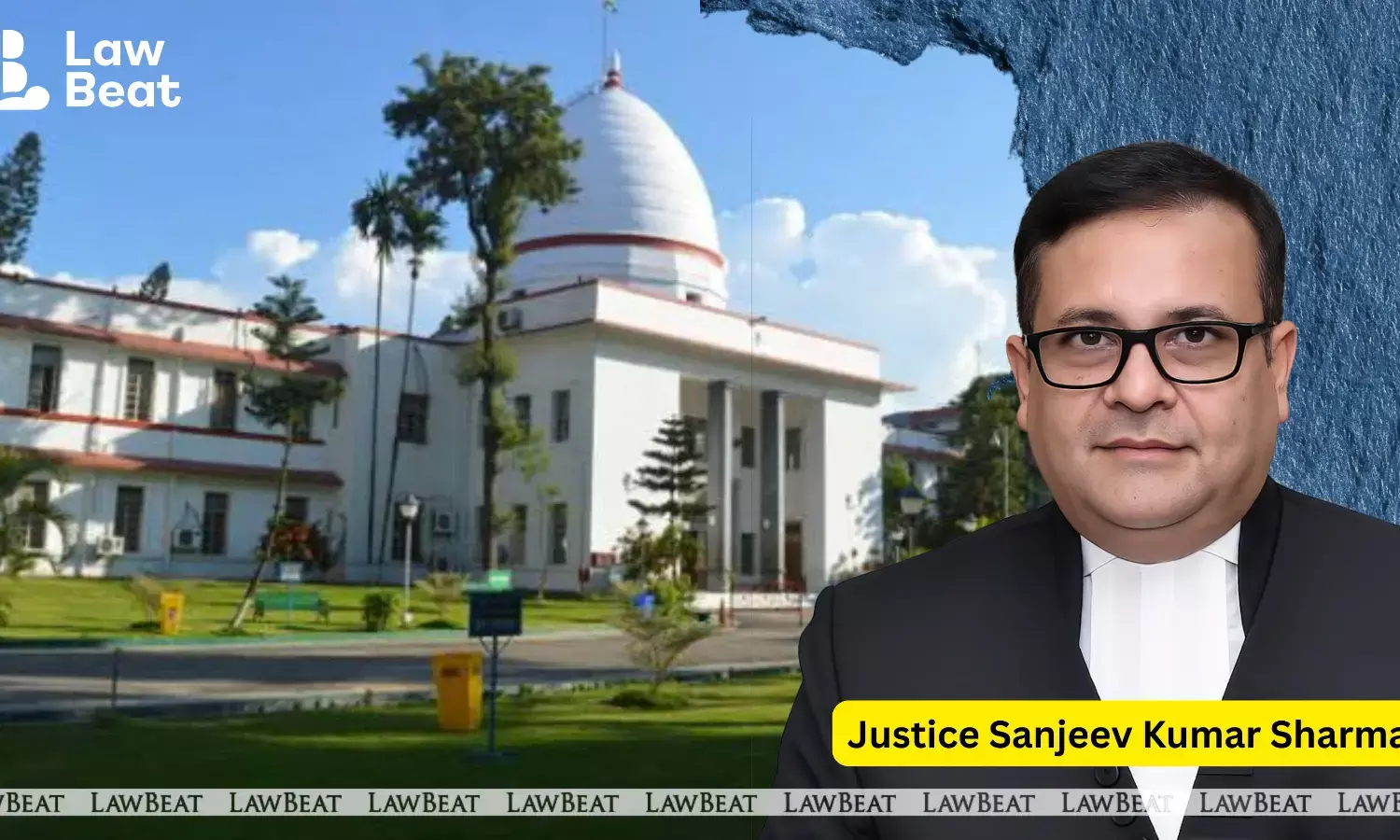
Gauhati High Court sets aside POCSO conviction, reiterating that benefit of doubt in age determination must go to the accused
The Gauhati High Court has set aside the conviction of a man under the Protection of Children from Sexual Offences Act, 2012, holding that the prosecution failed to conclusively establish the victim’s age as a minor and that the evidence on record suffered from material inconsistencies, improbabilities, and lack of corroboration, making it unsafe to sustain the conviction.
A single judge bench of Justice Sanjeev Kumar Sharma allowed the criminal appeal and set aside the judgment and sentence dated 08.02.2023 passed by the Sessions Judge, Karimganj in Special Sessions Case No. 05/2020.
The Court held that the conviction under Section 6 of the POCSO Act could not be sustained and that the prosecution had failed to prove its case beyond reasonable doubt. The Court accordingly directed that the accused be released forthwith.
The prosecution case arose from an FIR lodged on 05.03.2018, alleging that the accused, who was the paternal uncle of the victim, had committed rape on the minor girl on 26.02.2018, in the absence of her mother.
It was alleged that the victim had been left at a nearby house and the accused took advantage of the situation to sexually assault her.
The FIR was lodged after a delay of approximately one week, with the explanation that the informant initially attempted to resolve the matter through a village-level settlement.
During trial, the prosecution examined seven witnesses including the victim, her parents, the investigating officer, and the medical officer.
The trial court had relied primarily on the testimony of the victim to convict the accused under Section 6 of the POCSO Act and sentenced him to rigorous imprisonment for ten years along with a fine.
Upon appeal, the High Court first examined the foundational requirement of the applicability of the POCSO Act, namely whether the victim was a minor at the time of the alleged incident.
The Court noted that no documentary evidence such as birth certificate or school records was produced, and the only material on record was the medical opinion based on ossification tests, which assessed the victim’s age to be between 16 and 18 years.
The bench reiterated the settled legal position that age determined through radiological examination is not exact and carries a margin of error of two years on either side.
Applying this principle, the Court held that the possibility of the victim being above 18 years could not be ruled out and therefore the benefit of doubt must go to the accused, rendering the provisions of the POCSO Act inapplicable.
The Court then evaluated the case under the framework of Sections 375 and 376 of the Indian Penal Code and proceeded to scrutinize the evidence on record.
It found that the testimony of the victim contained material contradictions when compared across her statement under Section 164 CrPC and her deposition before the Court.
The Court noted that the sequence of events narrated by the victim varied significantly, particularly regarding whether the alleged act occurred while she was asleep or at the time of entering the room after attending to nature’s call.
Such inconsistencies were held to be material and went to the root of the prosecution case.
The High Court further observed that the prosecution failed to examine key independent witnesses, including the village president who was allegedly approached for settlement, thereby weakening the explanation offered for the delay in lodging the FIR.
The Court noted that although delay in cases of sexual assault is not always fatal, in the present case the explanation was not substantiated by any reliable evidence.
On the contrary, the evidence suggested that the alleged incident had been disclosed to several villagers immediately, thereby diluting the justification for delay.
The Court also took note of the fact that independent witnesses cited by the prosecution had not supported the case and were declared hostile.
While their previous statements were brought on record through the investigating officer, the Court found that even those statements did not clearly establish the element of force, which is central to the offence of rape.
Significant weight was also given to omissions and contradictions in the testimony of the informant, particularly her failure to state before the police that the victim had narrated the act of forcible sexual intercourse.
The Court held that such omissions were material and undermined the credibility of the prosecution’s version.
Additionally, the Court observed that there were admitted disputes between the family of the victim and the accused regarding landed property, which could not be entirely ruled out as a potential motive for false implication. While not decisive on its own, this factor added to the overall doubt arising from the inconsistencies in the prosecution case.
The medical evidence was also found to be inconclusive, as there were no signs of recent sexual intercourse or injuries on the victim’s body.
Although the Court acknowledged that absence of injuries is not determinative in sexual assault cases, it held that in the present case, when viewed alongside other deficiencies, it contributed to the uncertainty surrounding the prosecution’s case.
Ultimately, the bench held that the testimony of the victim did not qualify as that of a “sterling witness” capable of sustaining a conviction without corroboration.
Given the material contradictions, lack of independent support, unexplained delay, and uncertainty regarding the age of the victim, the Court concluded that it would be unsafe to uphold the conviction.
Accordingly, the appeal was allowed, the conviction and sentence were set aside and the accused was directed to be released forthwith.
Case Title: Fakrul Islam v. State of Assam & Anr.
Bench: Justice Sanjeev Kumar Sharma
Date of Judgment: 27.03.2026