
Bhojshala-Kamal Maula Mosque | Continuous Possession Since Centuries: Muslim Intervenor Argues Before Madhya Pradesh High Court
Intervenor Tells Madhya Pradesh High Court: Bhojshala Site Linked to Ancestral Lineage, Not Petitioners’ Claim
The Indore Bench of the Madhya Pradesh High Court on Wednesday continued hearing submissions by Mr. Noor Ahmed Sheikh, Advocate for Intervenors in the Bhojshala dispute, with arguments focusing on lineage, historical grants, and revenue records to assert long-standing rights over the disputed site.
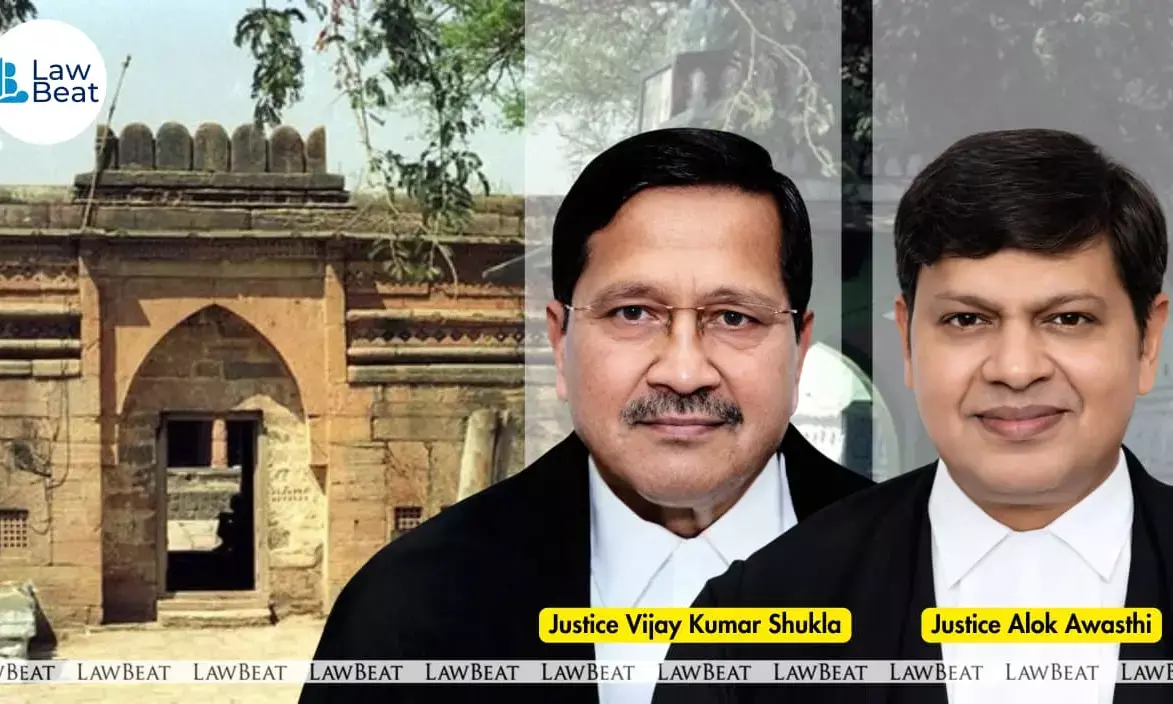
Appearing before a Division Bench of Justice Vijay Kumar Shukla and Justice Alok Awasthi, Mr. Sheikh contended that Maulana Kamaluddin’s family’s connection to the site traces back several centuries and is supported by documentary material including sanats and land records.
At the outset, Mr. Sheikh referred to a family tree placed on record, asserting that it establishes a direct lineage from the descendants of Kamaluddin, whom he described as historically associated with the site. He submitted that the genealogy, obtained from official records, has not been disputed and therefore supports the claim that the intervenors belong to the original custodial lineage. According to him, this lineage forms the basis of their continued role in managing religious observances at the site.
Elaborating further, Mr. Sheikh relied on historical sanats to argue that substantial parcels of land, 100 bighas and subsequently 50 bighas were granted to the ancestors of Kamaluddin. These grants, he submitted, were issued by successive rulers and reaffirmed over time, demonstrating continuity of recognition. He argued that such grants were not isolated but were acknowledged in subsequent sanats, thereby reinforcing the legitimacy of the family’s association with the land.
The Bench questioned the nature of these sanats, including whether they amounted to ownership or merely permissive use. In response, Mr. Sheikh clarified that while sanats may be treated as grants or licenses, they nonetheless conferred rights of occupation and enjoyment, which were passed on to successors. He emphasized that successive confirmations of these grants indicated continuity rather than temporary or revocable arrangements.
Mr. Sheikh also relied extensively on revenue records to demonstrate possession. Referring to khasra entries from the early twentieth century, he submitted that the disputed land, earlier recorded under a specific khasra number and now reflected as Survey No. 604, was consistently entered in the name of the ancestors of Maulana Kamaluddin. He argued that these entries establish uninterrupted and peaceful possession by the lineage, including the presence of structures such as the mosque within the recorded land.
According to Mr. Sheikh, the continuity of entries across different periods, including records from 1907-08 and later revenue documents, indicates that the land was treated as part of a religious endowment associated with the dargah. He submitted that the surrounding lands granted through sanats formed part of a larger estate, and the disputed portion must be viewed within that context rather than in isolation.
Addressing the court’s queries on possession, Mr. Sheikh maintained that the intervenors and their predecessors have continued to exercise rights over the site, including conducting religious practices. He argued that any interruption or regulation in later years, including actions by the Archaeological Survey of India, does not negate the historical continuity of possession and use.
Mr. Sheikh further referred to earlier pleadings by the Archaeological Survey of India, highlighting statements that historical claims based solely on books or hearsay cannot be treated as conclusive evidence. He pointed out that even the ASI had acknowledged uncertainty regarding the exact historical origins of the Bhojshala, describing it as a matter requiring further determination. This, he argued, weakens the petitioners’ reliance on historical narratives.
Relying on statutory provisions, Mr. Sheikh emphasized that under the framework governing ancient monuments, entry and usage of a religious site must consider the concurrence of persons in charge of its religious affairs. He argued that since the intervenors’ lineage has historically been in charge, any arrangement affecting access or usage must necessarily account for their role.
He also submitted that the petitioners themselves have not claimed title, possession, or management rights, instead relying on faith-based assertions. In contrast, he argued, the intervenors have demonstrated both possession and documented rights, thereby establishing a stronger legal footing.
Concluding his submissions, Mr. Sheikh maintained that the dispute raises questions of title, possession, and religious character that can only be resolved through evidence in a civil proceeding. He reiterated that the intervenors’ rights, rooted in lineage, grants, and continuous possession, must be duly considered before any determination is made.
The matter will continue before the Bench Tomorrow (April 30, 2026).
Case Title: Hindu Front for Justice (Regd. Trust No. 976) Through its President Ms. Ranjana Agnihotri v. Union of India Ministry of Culture and other connected matters
Date of Hearing: April 29, 2026
Bench: Justice Vijay Kumar Shukla and Justice Alok Awasthi