
Bhojshala-Kamal Maula Mosque | Sr. Adv. Salman Khurshid Says Title Cannot Be Decided On Archaeology Or Faith
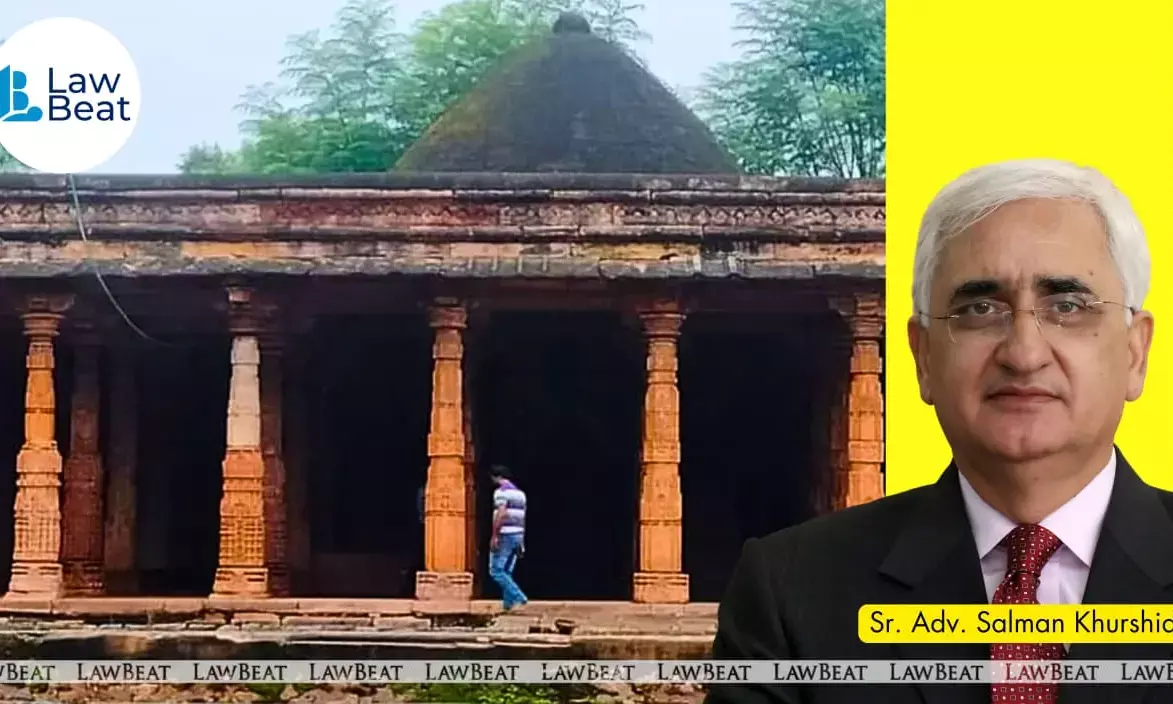
Sr. Adv. Salman Khurshid: Historical Narratives Cannot Determine Present-Day Property Rights
Senior Advocate Salman Khurshid on Thursday continued his submissions before the Madhya Pradesh High Court in the Bhojshala-Kamal Maula Mosque dispute, sharpening a key contestable issue: whether archaeological findings and historical narratives can legally determine present-day title.
Appearing for respondent Maulana Kamaluddin Welfare Society, Sr. Adv. Khurshid before a division bench of Justice Vijay Kumar Shukla and Justice Alok Awasthi repeatedly emphasized that courts cannot adjudicate property disputes on the basis of faith, belief, or historical inference, but must rely on settled evidentiary standards applicable to civil trials.
During his arguments today, Sr. Adv. Khurshid took the Bench through the Ayodhya judgment to underline that archaeological reports, by their very nature, are inferential and cannot conclusively establish title. He stressed that even where an underlying structure is found, there remains a significant evidentiary gap, particularly regarding whether such a structure was demolished and by whom.
Sr. Adv. Khurshid argued that the existence of a prior structure, without proof of its destruction or continuity of possession, cannot translate into a legal claim over present property. He reiterated that title must be determined on the basis of legally admissible evidence tested through cross-examination, not on historical speculation.
Sr. Adv. Khurshid also cautioned the Court against reliance on travelogues, gazetteers, and secondary historical materials, submitting that such sources may at best corroborate facts but cannot substitute primary evidence in determining title.
He underscored that faith and belief may indicate patterns of worship but cannot confer ownership or legal entitlement. In doing so, Sr. Adv. Khurshid sought to dismantle the opposing narrative that historical or religious claims could override established legal principles governing immovable property.
Addressing the rival contention that the disputed site must be treated as a temple on the principle of “once a temple, always a temple,” Sr. Adv. Khurshid argued that such a proposition inherently involves a claim to title, even if framed as a limited request for access or worship rights.
He submitted that any assertion seeking alteration of access or control over the site necessarily implicates ownership and possession, which must be adjudicated through proper civil proceedings rather than writ jurisdiction. Sr. Adv. Khurshid maintained that attempts to avoid title adjudication through careful drafting cannot bypass the requirement of proving legal entitlement.
Expanding on the limits of historical claims, Sr. Adv. Khurshid argued that courts cannot remedy alleged wrongs of medieval history. He submitted that legal rights must be assessed within the framework of contemporary law and constitutional principles, particularly considering conduct and possession in more recent periods. Sr. Adv. Khurshid emphasized that reliance on distant historical events, without continuous legal recognition, cannot form the basis of present claims.
In a broader historical rebuttal, Sr. Adv. Khurshid placed reliance on scholarly works to argue that destruction and reconstruction of religious structures was a common feature across different regimes and was not confined to any one community.
He submitted that political and symbolic acts of conquest often involved appropriation or alteration of religious sites, thereby cautioning against drawing simplistic conclusions of religious targeting in the present case. Sr. Adv. Khurshid contended that such historical patterns further weaken attempts to attribute exclusive religious character to the site based on selective narratives.
On factual aspects, Sr. Adv. Khurshid questioned the evidentiary value of claims regarding the Saraswati idol allegedly linked to Bhojshala, pointing to conflicting material including a communication from the British High Commission clarifying that the sculpture in the British Museum is of a Jain deity, Ambika, and not Saraswati. He argued that even the petitioner’s own material contains inconsistencies and cannot be treated as conclusive proof of historical claims.
Sr. Adv. Khurshid further relied on historical records and revenue documents to assert continued recognition of the mosque, including a 1935 proclamation affirming the right to offer Namaz at the site. He also highlighted the association of the mosque with Sufi saint Kamaluddin Chishti to counter suggestions of forcible imposition.
Concluding his submissions, Sr. Adv. Khurshid offered to file concise written submissions, reiterating that the dispute ultimately turns on legal principles of title, possession, and maintainability, not on faith-driven assertions or contested historical narratives.
Case Title: Hindu Front for Justice (Regd. Trust No. 976) Through its President Ms. Ranjana Agnihotri v. Union of India Ministry of Culture and other connected matters
Date of Hearing: April 23, 2026
Bench: Justice Vijay Kumar Shukla and Justice Alok Awasthi