
Bhojshala-Kamal Maula Mosque | Hindu Front Alleges ASI Failed To Protect Hindu Character Of Site
ASI Violated Statutory Duty Under 1958 Act By Allowing Muslim Namaz: Hindu Front Before Madhya Pradesh HC
Appearing before the Indore Bench at Madhya Pradesh High Court in the Bhojshala-Kamal Maula Mosque dispute, advocate Vishnu Shankar Jain on Friday sought to clarify that the Supreme Court’s December 12, 2024 order in the batch of pleas challenging the Places of Worship Act, 1991, does not operate as a bar on the ongoing proceedings before the High Court.
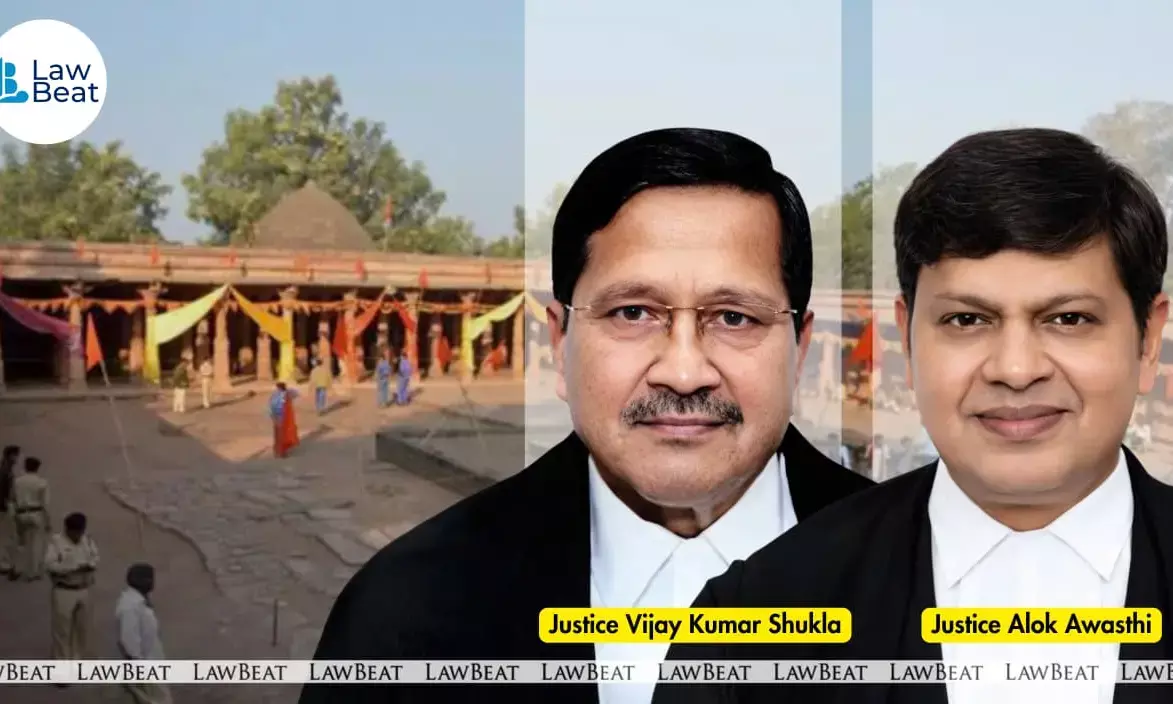
Addressing the Division Bench of Justice Vijay Kumar Shukla and Justice Alok Awasthi, Jain argued that the present matter stood on a distinct statutory footing because the Bhojshala complex is a protected monument governed by the Ancient Monuments and Archaeological Sites and Remains Act, 1958.
He submitted that the petition before the High Court was fundamentally directed against the Archaeological Survey of India’s April 7, 2003 order regulating worship rights at the disputed site and was therefore maintainable under writ jurisdiction.
Jain referred extensively to the Supreme Court’s December 12, 2024 order passed in the Ashwini Upadhyay batch concerning the constitutional validity of the Places of Worship Act. Reading from the operative portion, he pointed out that the apex court had directed that while fresh suits may be filed, no suit would be registered and no effective interim or final orders, including survey directions, would be passed in pending suits until further orders.
However, Jain contended that the embargo applied specifically to civil suits and not to the present writ proceedings. He emphasized that the Bhojshala matter had already been tagged with the Places of Worship Act batch before the Supreme Court and was subsequently remanded to the High Court for adjudication through an order dated January 22, 2026.
Calling this sequence “very remarkable,” Jain argued that the same coordinate bench of the Supreme Court, while aware of the earlier December 2024 order, nevertheless directed the High Court to proceed with the matter. “The order of 12th December 2024 does not operate as a bar so far as adjudication of the dispute at hand is concerned,” he submitted before the Bench.
He further argued that Section 4(3)(a) of the Places of Worship Act itself excludes monuments covered under the Ancient Monuments and Archaeological Sites and Remains Act, 1958 from the purview of the legislation. According to Jain, the Bhojshala complex, having been declared a monument of national importance under the 1951 Act and subsequently governed by the 1958 legislation, fell squarely within that exception.
Taking the court through the statutory framework, Jain relied on the Ancient and Historical Monuments and Archaeological Sites and Remains Declaration of National Importance Act, 1951, and pointed out that Bhojshala appeared at serial number 19 in the schedule of protected monuments. He argued that once the monument came within the ambit of the 1958 Act, the ASI became bound by Section 16(1), which mandates that a protected monument that is a place of worship “shall not be used for any purpose inconsistent with its character.”
Describing Section 16(1) as “the heart of the matter,” Jain argued that the ASI’s 2003 order permitting different forms of access and worship at the site violated the statutory obligation to preserve the religious character of the monument. He maintained that the petitions before the High Court were aimed at enforcing fundamental rights of worshippers and compelling the ASI to discharge its statutory duties in accordance with the law.
Rejecting the argument that disputed questions of fact required a civil trial, Jain submitted that the challenge was directed against “state action” and therefore properly lay before the constitutional court. He informed the Bench that detailed written submissions would be filed on the remaining issues raised during the hearings.
He also stressed that the proceedings before the High Court could not be dismissed as an instance of “clever drafting,” asserting that the grievance arose from alleged infringement of worship rights protected under the Constitution. According to Jain, the controversy turned on whether the ASI had acted consistently with the monument’s recognised religious character.
The Bench will continue to hear the matter on Monday (May 11, 2026).
Case Title: Hindu Front for Justice (Regd. Trust No. 976) Through its President Ms. Ranjana Agnihotri v. Union of India Ministry of Culture and other connected matters
Date of Hearing: May 8, 2026
Bench: Justice Vijay Kumar Shukla and Justice Alok Awasthi