
Bhojshala-Kamal Maula Mosque | MP High Court Delivers Verdict, Holds Bhojshala Temple Of Goddess Saraswati
MP High Court Examines Waqf Claims, Worship Rights And ASI Order
The Madhya Pradesh High Court on Friday delivered a significant judgment in the long-pending Bhojshala-Kamal Maula Mosque dispute at Dhar, holding that the religious character of the disputed area of the Bhojshala complex and Kamal Maula Mosque is Bhojshala with a temple of Goddess Vagdevi Saraswati.
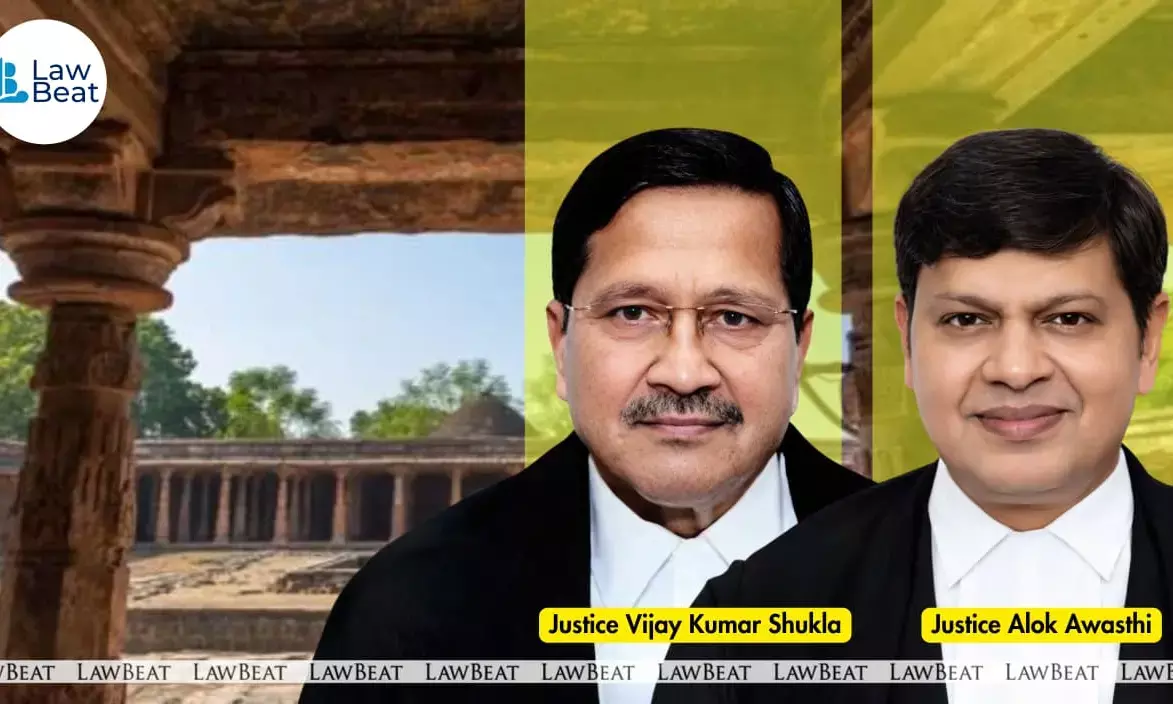
A Division Bench of Justice Vijay Kumar Shukla and Justice Alok Awasthi passed the common order while deciding a batch of writ petitions and an appeal concerning competing claims over worship rights, management of the monument and the legality of the Archaeological Survey of India’s order regulating entry and prayers at the site.
The court was hearing petitions filed by Hindu Front for Justice through its president Ranjana Agnihotri, Kuldeep Tiwari, Salek Chand Jain, Maulana Kamaluddin Welfare Society and others. The matters involved claims relating to Hindu worship, Muslim namaz and Jain prayer rights in the disputed area situated at Dhar in Madhya Pradesh.
At the outset, the Bench recorded that the disputed area of Bhojshala and Kamal Maula Mosque is a protected monument under the law. The court noted that the petitions challenged the April 7, 2003 order passed by the Archaeological Survey of India restricting Hindu worship on particular days and timings while permitting the Muslim community to offer Friday namaz within the disputed premises.
The petition filed by Hindu Front for Justice sought a declaration that only members of the Hindu community have the fundamental right under Article 25 of the Constitution to perform pooja and rituals at the Bhojshala complex. The petitioners also sought directions for creation of a trust for administration and management of Bhojshala, re-establishment of the idol of Goddess Saraswati and restoration of Sanskrit learning within the premises.
Appearing for the petitioners, advocate Vishnu Shankar Jain argued that the dispute was not related to ownership of the property but concerned the exclusive right of worship in the disputed area. He submitted that Bhojshala was established by Raja Bhoj in 1034 AD as a centre for Sanskrit education and worship of Goddess Saraswati. The petitioners relied upon historical records, inscriptions and archaeological references to support their claims.
The judgment referred to several historical materials cited during the proceedings, including the Imperial Gazetteer of India, publications of the Royal Asiatic Society and archaeological references concerning Bhojshala. The court noted references describing the structure as Raja Bhoj’s school and a centre associated with Sanskrit grammar and learning. The Bench also referred to inscriptions and serpentine grammatical carvings found within the premises.
The court further recorded the petitioners’ contention that Muslim rulers had damaged portions of the original temple complex but failed to convert the entire structure into a mosque. According to the petitioners, idols, sculptures and architectural features found within the premises established its Hindu religious character.
Senior advocate Salman Khurshid appeared for respondent no. 8, Maulana Kamuluddin Welfare Society, while senior counsel Shobha Menon represented interveners Mohammed Farukh and Mohammed Munir. Additional Solicitor General Sunil Kumar Jain represented the Union government and ASI authorities, while Advocate General Prashant Singh appeared for the State of Madhya Pradesh.
The Bench observed that all connected matters involved similar questions concerning worship rights and management of the disputed area and were therefore being decided through a common order. The judgment is expected to have significant legal and political implications because the Bhojshala dispute has remained one of the most sensitive religious issues in Madhya Pradesh for decades.
During the proceedings, the court also examined earlier litigation connected with the Bhojshala complex, including civil suits and writ petitions filed over several decades regarding access to the premises and competing claims over prayer rights. The Bench recorded that different petitions before the court sought reliefs either in favour of namaz arrangements or Hindu worship rights within the monument.
The judges observed that all matters arose from common questions concerning regulation of worship at the disputed area and therefore required adjudication through a judgment covering historical records, pleadings and provisions.
Case Title: Hindu Front for Justice (Regd. Trust No. 976) Through its President Ms. Ranjana Agnihotri v. Union of India Ministry of Culture and other connected matters
Date of Judgment: May 15, 2026
Bench: Justice Vijay Kumar Shukla and Justice Alok Awash