
Bhojshala-Kamal Maula Mosque | Sr Adv Shobha Menon Questions PIL Maintainability, Title Claims
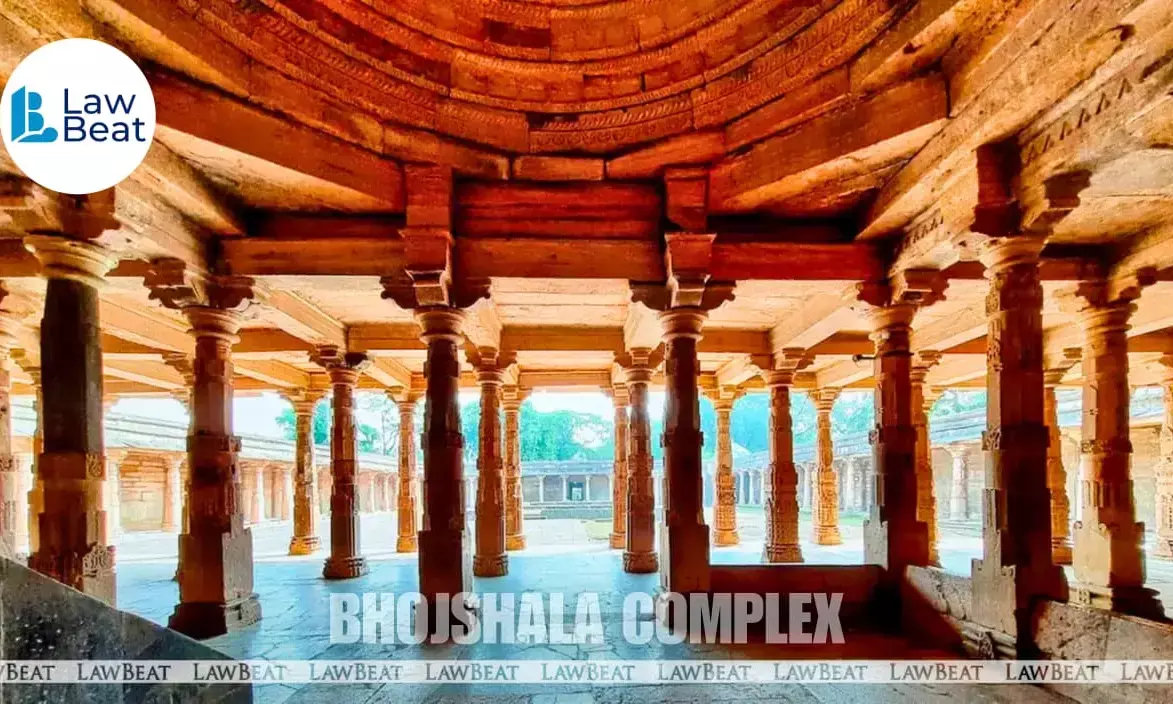
Not a PIL, But a Title Suit: Sr Adv Shobha Menon Flags Locus, Delay, and Civil Remedy in Madhya Pradesh High Court
The Indore Bench of the Madhya Pradesh High Court on Monday continued hearing extensive submissions in the Bhojshala dispute, where Senior Advocate Shobha Menon questioned the maintainability of the petitions, arguing that the controversy cannot be adjudicated under Article 226 of the Constitution of India.
Appearing before a Division Bench of Justice Vijay Kumar Shukla and Justice Alok Awasthi, Sr Adv. Menon contended that the petitions, though framed as public interest litigation, essentially seek determination of title and exclusive rights over the disputed premises.
At the outset, Sr. Adv. Menon outlined the scope of public interest litigation, submitting that PIL jurisdiction is limited and cannot extend to resolving disputed questions of fact requiring detailed evidence. She argued that the reliefs sought by the petitioners including exclusive rights of worship, restraint on another community, and creation of a trust amount to a declaration of ownership in substance. Such claims, she emphasized, fall within the domain of civil courts and cannot be adjudicated in summary writ proceedings.
The Bench noted that interveners had earlier raised similar objections, including the argument that the dispute is civil in nature and akin to a title suit. Sr Adv. Menon supported this position, submitting that where rival communities assert competing historical and religious claims, adjudication requires a full-fledged trial. She distinguished the process adopted in the Ayodhya Ram Janmabhoomi verdict, pointing out that it involved extensive evidence and could not be equated with writ proceedings before a High Court lacking ordinary civil jurisdiction.
Sr Adv. Menon also challenged the locus standi of the petitioners, arguing that mere assertions of being “social workers” are insufficient to invoke PIL jurisdiction. She submitted that courts have consistently required proof of public service credentials and bona fide intent. In the absence of such material, she argued, the petitions fail to meet the threshold for maintainability and appear to advance private or sectarian interests rather than genuine public causes.
On the issue of delay, Sr. Adv. Menon pointed out that the impugned actions date back to the late 1990s and early 2000s, yet the petitions were filed nearly two decades later. She argued that such delay is fatal, particularly in PILs, where prompt action is expected. The claim of a continuing cause of action, she submitted, was unsupported by any intervening developments that would justify approaching the court after such a prolonged period.
Another key submission concerned the availability of an alternative remedy. Sr. Adv. Menon argued that disputes relating to property, title, and the right to worship are civil in nature and fall within the jurisdiction of civil courts under the Code of Civil Procedure, 1908. She stressed that even religious rights, when enforceable as civil rights, must be adjudicated through suits where evidence can be led and tested. The writ court, she submitted, cannot assume the role of a trial court or grant declaratory reliefs determining ownership.
She further critiqued the evidentiary basis of the petitions, noting reliance on historical texts, gazetteers, and archaeological interpretations. While such materials may assist a court, she argued, they do not have conclusive value and cannot resolve contested factual issues. The petitioners’ claims regarding historical construction, demolition, and religious usage were described as inherently disputed and unsuitable for determination on affidavits.
Sr. Adv. Menon also cautioned against the filing of multiple PILs on the same issue, submitting that repeated litigation on identical grounds wastes judicial time and undermines procedural discipline. She argued that once similar issues have been raised earlier, principles of judicial restraint and public policy should prevent re-litigation under the guise of PIL.
Throughout the hearing, the Bench engaged with the submissions on the limits of writ jurisdiction and the nature of the reliefs sought. The proceedings highlighted the complex intersection of faith, history, and property law in the Bhojshala dispute, while underscoring the court’s concern over the misuse of PIL jurisdiction.
The matter will continue tomorrow (April 28, 2026).
Case Title: Hindu Front for Justice (Regd. Trust No. 976) Through its President Ms. Ranjana Agnihotri v. Union of India Ministry of Culture and other connected matters
Date of Hearing: April 27, 2026
Bench: Justice Vijay Kumar Shukla and Justice Alok Awasthi