
“Bite Not A Dangerous Weapon”: Himachal Pradesh High Court Sets Aside Section 324 IPC Conviction
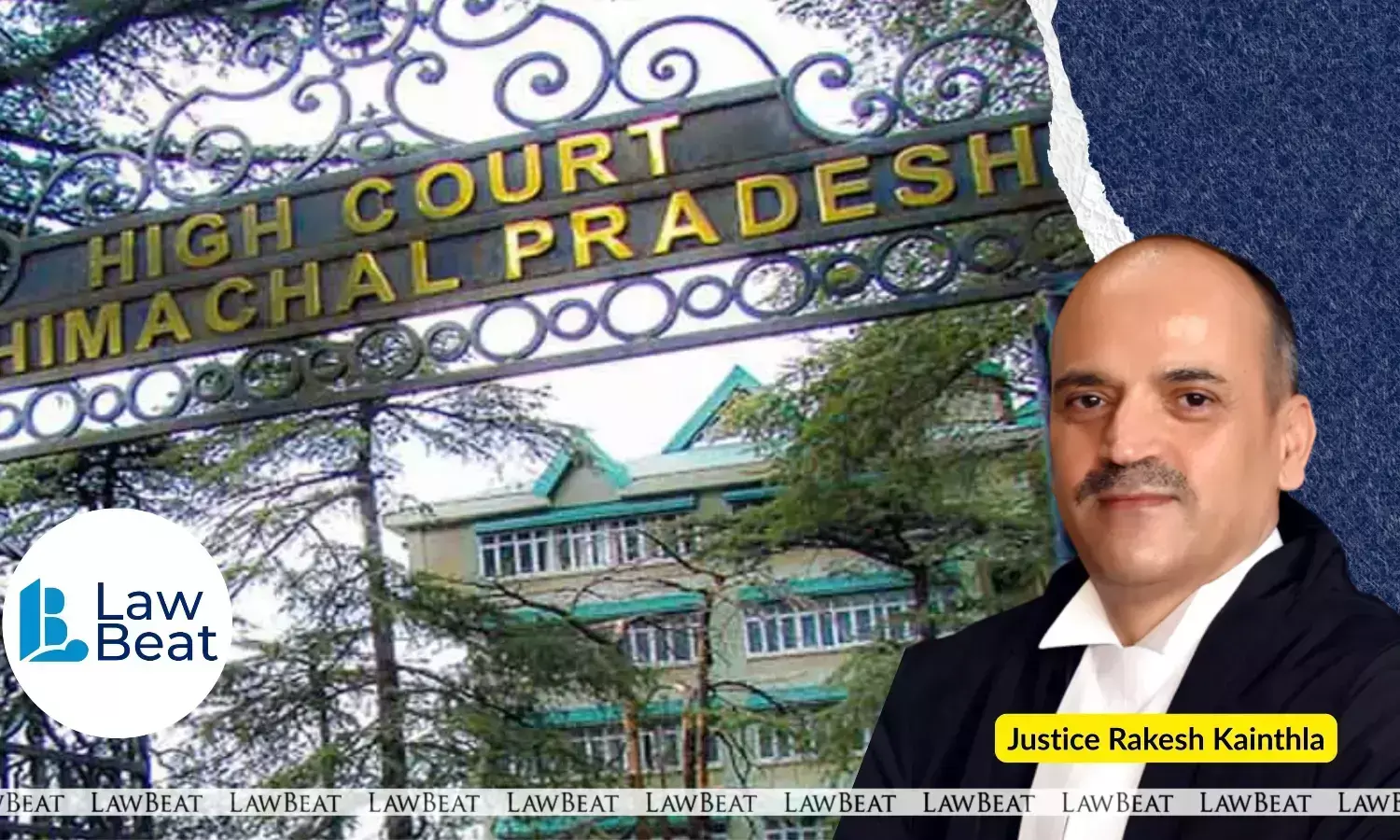
Himachal Pradesh High Court holds that injuries caused by human teeth do not amount to use of a dangerous weapon, modifies conviction
The Himachal Pradesh High Court has held that injuries caused by human teeth cannot be treated as being inflicted by a “dangerous weapon” under Section 324 of the Indian Penal Code, and consequently set aside the conviction of an accused under that provision while upholding his conviction for offences including outraging modesty, wrongful restraint and simple hurt.
A Single Judge Bench of Justice Rakesh Kainthla partly allowed the appeal filed by the accused, modifying the judgment of the Trial Court to the extent of acquittal under Section 324 IPC, while affirming the findings of guilt under Sections 354, 341 and 323 IPC.
The Court held that the trial court had erred in treating a bite injury as one caused by a weapon or instrument contemplated under Section 324 IPC.
The case arose from an incident where the prosecutrix alleged that the accused intercepted her while she was returning home, restrained her, physically assaulted her, bit her face and attempted to disrobe her.
The prosecution had initially invoked offences including attempt to rape, wrongful restraint, hurt, and provisions of the Scheduled Castes and Scheduled Tribes (Prevention of Atrocities) Act.
After trial, the accused was acquitted of attempt to rape and the offence under the SC/ST Act, but convicted for outraging modesty and related offences.
Before the High Court, the accused challenged the conviction on multiple grounds, including alleged inconsistencies in the testimony of the victim and her daughter-in-law, absence of independent witnesses despite nearby habitation, and the claim that the victim had turned hostile.
It was further argued that the medical evidence did not conclusively support the prosecution’s version and that the investigation suffered from procedural infirmity as it was not conducted by a Gazetted Officer, particularly in relation to offences under the SC/ST Act.
The State, on the other hand, supported the conviction, submitting that the trial court had taken a reasonable view based on consistent and corroborated evidence.
It was contended that even if the investigation under the SC/ST Act was defective, it would not vitiate proceedings for offences under the IPC.
The State further argued that the victim’s testimony, though partly inconsistent due to passage of time, remained reliable and was corroborated by medical evidence and the testimony of her daughter-in-law.
The High Court, after examining the record, held that the victim’s testimony could not be discarded merely because she had been treated as hostile or because of minor inconsistencies.
Relying on settled principles, the Court reiterated that the evidence of a hostile witness is not effaced entirely and can be relied upon to the extent it supports the prosecution case. It found that the victim had consistently stated that the accused had restrained her, assaulted her, and attempted to disrobe her, and that this version was corroborated by her daughter-in-law, who saw her in a distressed condition without her salwar and with visible injuries.
The Court also rejected the contention regarding absence of independent witnesses, noting that there was no evidence to show that anyone was present nearby or that the victim’s cries could have been heard, particularly when she had stated that her mouth was gagged.
It further held that minor exaggerations or discrepancies in testimony, especially after passage of time, do not render the prosecution case unreliable if the core narrative remains intact.
On the medical evidence, the Court observed that the injuries found on the victim, including bite marks and abrasions, were consistent with her account of assault and scuffle.
The fact that injuries could also be caused by a fall did not weaken the prosecution case, as the victim had herself stated that she was pushed during the incident.
Addressing the argument regarding investigation by a non-Gazetted Officer, the Court held that even if such irregularity affected the offence under the SC/ST Act, it would not invalidate the prosecution for IPC offences, in line with settled Supreme Court precedent.
However, on the question of conviction under Section 324 IPC, the Court undertook a detailed analysis of the statutory requirement that hurt must be caused by a “dangerous weapon or means.”
Referring to precedents from the Supreme Court and various High Courts, it held that human teeth cannot be classified as an instrument for cutting or a dangerous weapon within the meaning of Sections 324 or 326 IPC. Consequently, the injury caused by biting would fall within the scope of simple hurt under Section 323 IPC and not under Section 324 IPC.
The Court therefore concluded that while the prosecution had successfully proved the offences of wrongful restraint, simple hurt and outraging modesty, the conviction under Section 324 IPC was legally unsustainable.
It accordingly set aside that part of the conviction while maintaining the rest of the sentence, observing that the punishment imposed by the trial court for the remaining offences was not excessive given the nature of the incident.
Case Title: Mohan Singh v. State of H.P.
Bench: Justice Rakesh Kainthla
Date of Judgment: 23.03.2026