
Bombay HC Objects to Lawyers Appearing from Cars, Tells State to Create Virtual Hearing Cubicles
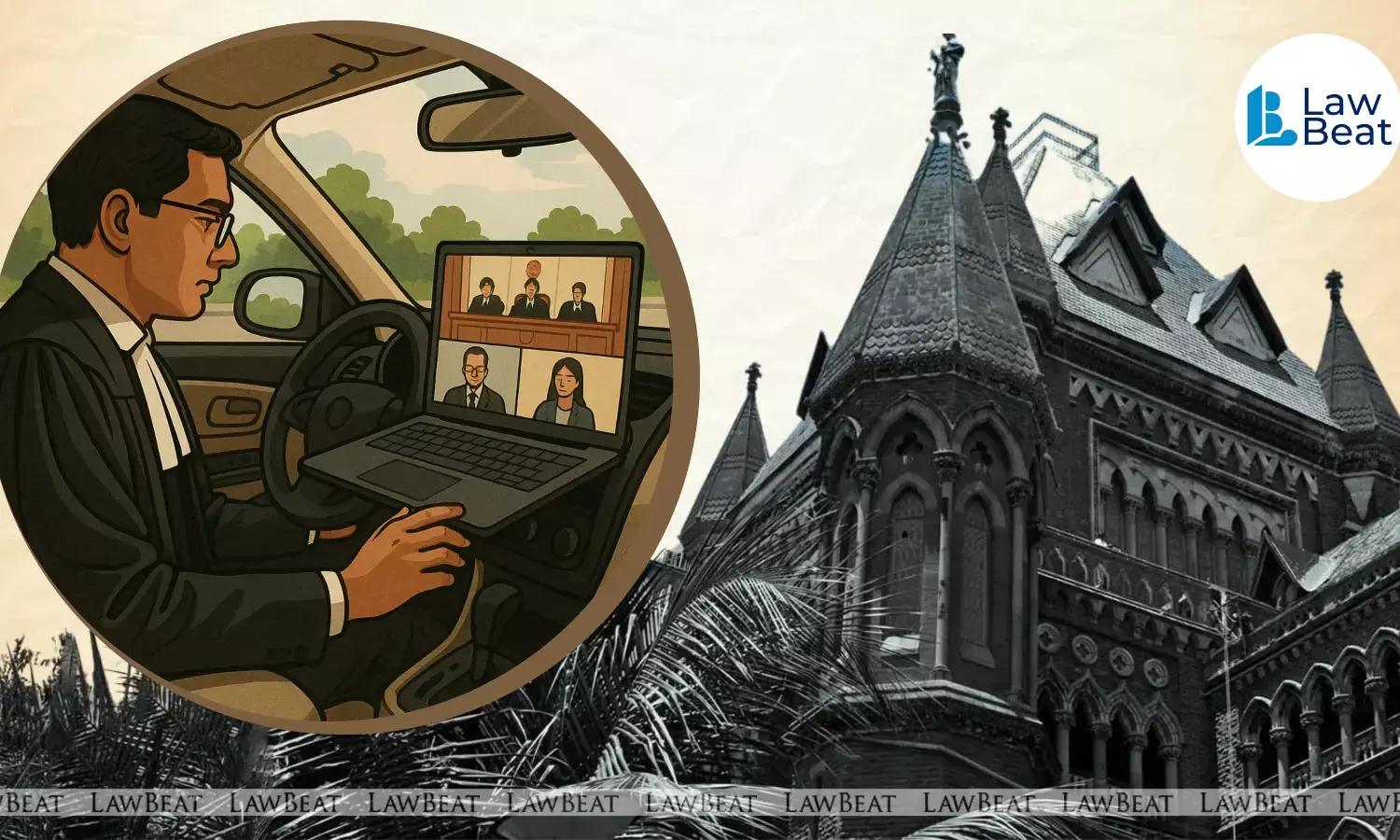
Bombay High Court directed the Maharashtra Government to set up virtual-hearing cubicles after lawyers appeared from their cars during proceedings.
The Bombay High Court has raised serious concern over the manner in which some lawyers have been appearing for virtual hearings, after two separate incidents in which advocates logged into court proceedings from inside their cars.
During a hearing of more than a hundred local body election petitions, the Bench remarked that such appearances compromise the dignity of judicial proceedings and cannot be permitted under any circumstance.
The incident also highlighted a problem well known to the Bar; that while virtual hearings have become routine, basic infrastructure has not kept pace. Lawyers frequently move between physical and online courts with little transition time, and many end up connecting from whatever space they can find. The Court’s direction therefore goes beyond the two instances before it and brings back into focus the long-pending demand for functional VC cubicles in court premises.
When the first advocate logged in from a parked car, the Court immediately questioned who was appearing on screen, and directed the person to disconnect. A short while later, another lawyer joined from her vehicle and attempted to proceed with submissions before the Bench intervened again. She explained that she had just finished a physical matter in the court complex and had no other quiet or authorised space to join from, given the time constraints and lack of dedicated virtual hearing rooms.
The explanation prompted the Court to look beyond the individual lawyer’s conduct and instead address the systemic issue: the absence of adequate infrastructure enabling dignified and uninterrupted virtual participation.
The State Government attempted to justify the difficulty by referring to the lack of available space in the existing High Court building, adding that proper VC facilities would be incorporated only upon completion of the proposed new building project.
It observed that the State cannot merely rely on long-term infrastructure plans while immediate needs remain unaddressed, especially in a period where hybrid hearings have become a consistent part of judicial functioning. The Court emphasised that both decorum and accessibility must coexist, and that virtual hearings are not an informal substitute but an extension of courtroom proceedings requiring the same seriousness.
The Bench then directed the Maharashtra Government to identify suitable space, whether within the High Court complex or in nearby premises, to set up cubicles where lawyers can join virtual hearings confidently and without the embarrassment of appearing from inappropriate locations.
The order goes beyond the momentary incident and reflects a broader reality: courts across the country continue to use online hearings extensively, but the supporting infrastructure often lags behind.
Since lawyers are frequently required to hop between physical and virtual courts on the same day, ad-hoc arrangements such as joining from parked cars, corridors, canteens or crowded litigant areas have become common. While the technology has enabled smoother functioning across benches and reduced delays for outstation matters, the physical environment in which advocates participate remains uneven.
The Bombay High Court’s intervention underscores that access to digital justice requires more than just video links; it also requires designated spaces that maintain confidentiality, clarity of communication, and the decorum associated with courtroom practice.
There is also a professional dimension to the Court’s concern; Advocates often argue that appearing from cars is not a matter of choice but a matter of compulsion created by the urgent listing of matters, lack of notice, or immediate transition from one courtroom to another.
The incident, in that sense, captures the tension between rapidly expanding technological reliance and the slow pace of infrastructural adjustment. By placing the responsibility on the State to create cubicles rather than admonishing the lawyers, the Court appears to acknowledge this gap and treat virtual hearing infrastructure as an essential service rather than an optional convenience.
The order may also encourage similar steps in other court complexes where hybrid hearings continue but dedicated rooms remain insufficient or inaccessible.
The pandemic introduced a system of digital hearings that has settled into a semi-permanent mode, with multiple courts across India relying on virtual appearances for specific categories of cases.
As hybrid functioning becomes the new normal rather than a temporary accommodation, courts and governments will need to ensure that the logistics around them meet minimum standards.