
Bombay HC Refuses To Quash Defamation Case Against Rahul Gandhi Over 'Commander-In-Thief' Remark On PM Modi
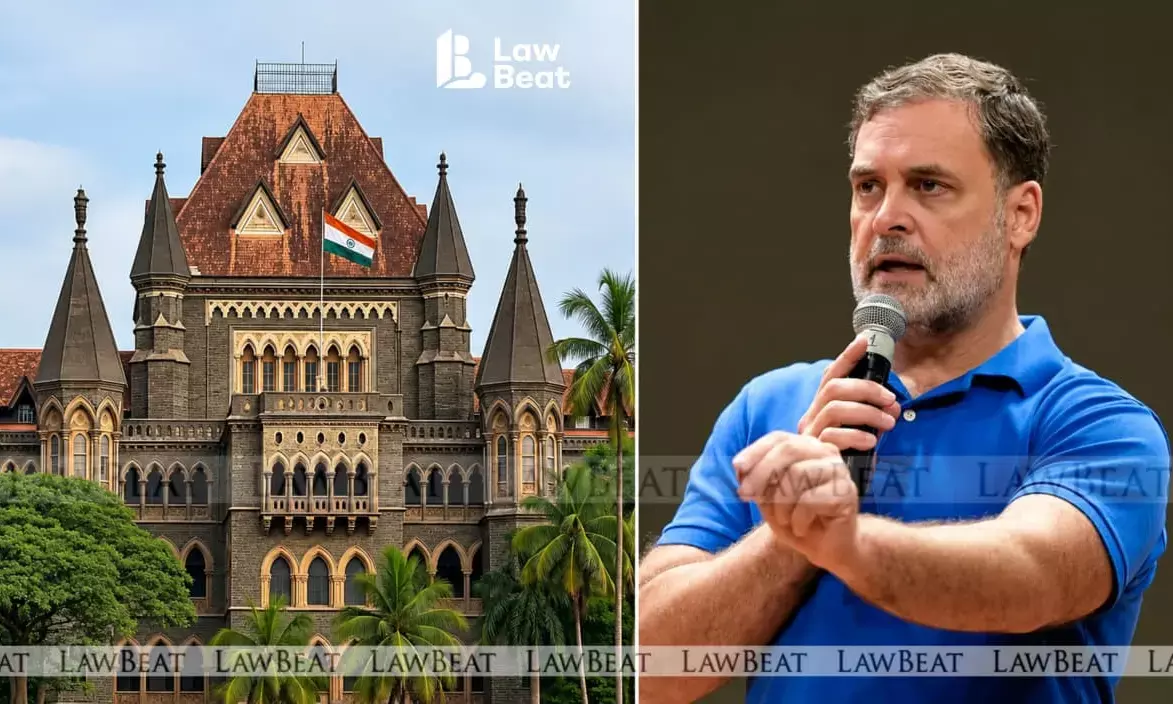
The Bombay High Court today refused to quash criminal defamation proceedings against Congress MP and Leader of Opposition Rahul Gandhi over his 2018 remarks against Prime Minister Narendra Modi, including the reference to PM as "commander-in-thief" and "Choron Ke Sardar".
Justice N.R. Borkar dismissed Gandhi’s petition challenging the Girgaon Magistrate’s order that had issued process against him, holding that there was no manifest illegality or perversity warranting interference under Section 482 of the Code of Criminal Procedure (CrPC).
The Court, however, granted Gandhi six weeks’ relief from appearing before the magistrate, enabling him to approach the Supreme Court against the High Court’s decision. The direction deferring proceedings before the magistrate, which had been issued earlier, was continued for the six-week period.
Complaint over remarks against PM Modi
The case arose from a complaint filed by BJP member Mahesh Shrishrimal before the Girgaon Magistrate Court.
According to the complaint, Gandhi allegedly made defamatory statements about Modi during a public rally in Rajasthan in September 2018, in the context of the Rafale fighter jet controversy.
Shrishrimal also relied upon a video posted by Gandhi on his social media account in which the "commander-in-thief" reference was allegedly repeated.
The complainant claimed that the remarks caused reputational harm to Modi and also affected persons associated with him and the BJP.
The magistrate, after considering the material placed before the court, issued process against Gandhi on August 28, 2019.
Gandhi subsequently approached the Bombay High Court after receiving the summons in 2021, seeking quashing of the proceedings. It was his case that the complaint was legally unsustainable and amounted to a politically motivated prosecution.
A central argument was that Shrishrimal could not maintain the defamation complaint because he was not the person directly targeted by Gandhi's remarks.
Gandhi also relied upon Section 199 of the CrPC, which states about who can initiate criminal defamation proceedings. It was argued that the complaint could not be maintained in the manner adopted by Shrishrimal.
It was further contended that the alleged remarks were directed at the Prime Minister and did not identify the BJP or a sufficiently definite group of persons so as to give an individual party member a cause of action for defamation.
The state opposed his plea, contending that material before the magistrate disclosed a prima facie offence and that the High Court's inherent jurisdiction could not be used to conduct an appreciation of evidence at this stage.
It was also argued that the complainant could qualify as an aggrieved person where the allegedly defamatory imputation was capable of extending to an identifiable group connected with the Prime Minister and the BJP.
Complainant Shrishrimal's counsel also opposed Gandhi's plea, maintaining that the complainant had personally supported the allegations and produced material before the magistrate.
He argued that the magistrate had independently examined the material before issuing process and that there was sufficient basis at the preliminary stage for the proceedings to continue.
What did the High Court say?
The High Court ultimately declined to conclusively determine whether Gandhi's statements were confined to Modi or also extended to members and functionaries of the BJP.
Justice Borkar observed that the question of how far the alleged imputations extended, and whether they affected identifiable members of the party, would depend upon an assessment of the evidence and the context in which the statements were made.
The Court held that such an assessment was better left to the trial stage rather than being conclusively determined while exercising the limited jurisdiction under Section 482 CrPC.
Justice Borkar found no sufficient basis to exercise the High Court's inherent jurisdiction against the magistrate's order. The Court further concluded that, considering the overall facts and circumstances, there was no infirmity in the magistrate's decision to issue process.
Accordingly, Gandhi's petition was dismissed.