
Bombay HC Refuses To Suspend UAPA Convict's Life Term Despite 20 Years In Jail, Cites Role In Alleged SIMI-LeT Conspiracy
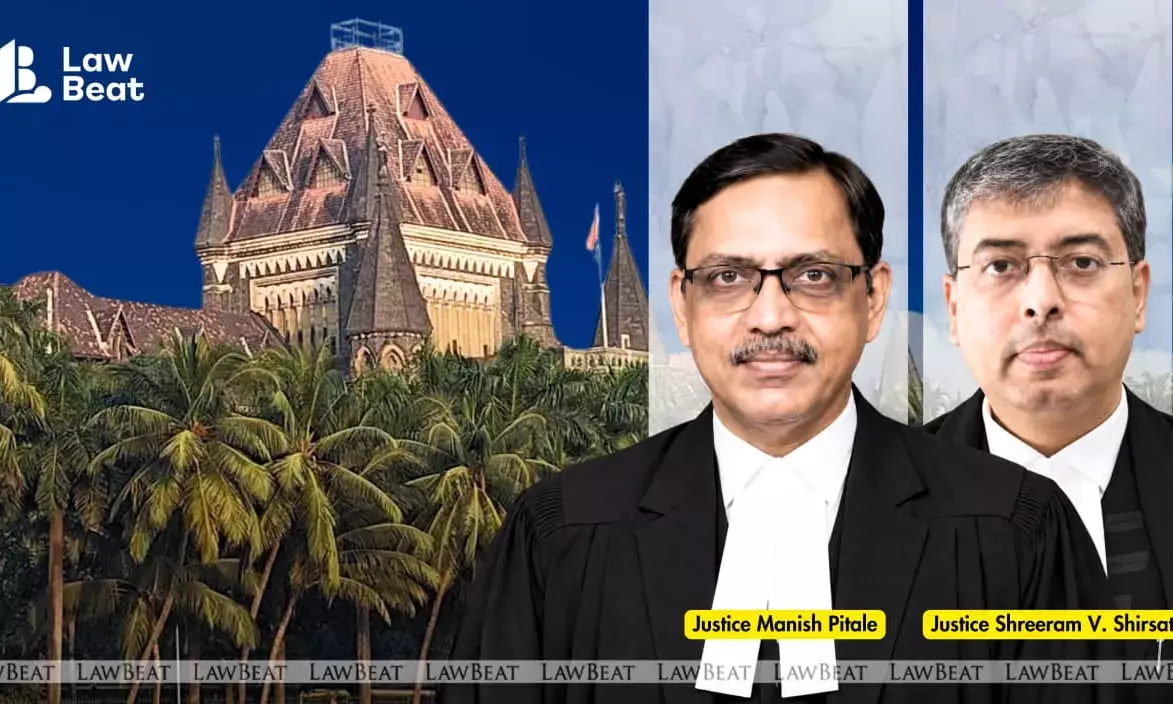
The Bombay High Court on October 21 refused to suspend the life sentence of a UAPA convict who has spent over 20 years in custody, observing that his alleged role in a larger conspiracy involving the Students Islamic Movement of India (SIMI) and the banned terrorist organisation Lashkar-e-Taiba (LeT) was significantly graver than that of co-accused who had been granted bail.
A division bench of Justice Manish Pitale and Justice Shreeram V. Shirsat rejected the plea filed by Mohd Amer Shakil Ahmed Shaikh, citing confessional statements, call detail records and the alleged recovery of a large consignment of arms, ammunition and explosives.
"In fact, it is much graver and on a higher pedestal. The role attributed to the Applicant is considerably severe" the Court observed while rejecting his application for suspension of sentence pending appeal.
The Court also held that confessional statements recorded under Section 18 of the Maharashtra Control of Organised Crime Act (MCOCA) could be considered in the UAPA case despite Shaikh's acquittal under MCOCA.
ATS allegedly recovered 10 AK rifles, 30 kg explosive powder
The case arose from an Anti-Terrorist Squad (ATS) operation in May 2006, following intelligence that weapons and explosives were likely to be transported in a vehicle.
According to the prosecution, ATS teams intercepted a white Tata Sumo near Guruneshwar temple in the Aurangabad area on May 9, 2006. The occupants allegedly attempted to flee, but Shaikh was apprehended.
The prosecution alleged that a search of the vehicle led to the recovery of 10 AK rifles, 40 magazines, 200 live cartridges, 30 kg of explosive powder and 10 magazine pockets. Another vehicle was suspected of carrying a similar consignment.
The Special Court convicted Shaikh in July 2016 under various provisions of the UAPA, Arms Act and explosives laws, sentencing him to life imprisonment for offences under Sections 18, 20 and 23 of the UAPA, Section 25(1AA) of the Arms Act and Section 5(b) of the Explosive Substances Act.
However, he was acquitted of offences under Sections 3(2), 3(1)(ii) and 3(4) of MCOCA, among other charges. The State's appeal against the MCOCA acquittal remains pending.
Trial court described him as ‘front runner’ in alleged conspiracy
The High Court referred to the trial court's findings describing Shaikh as a "front runner" who played a key role in the alleged larger conspiracy. The findings referred to his alleged association with SIMI, propagation of Jihad and involvement in procuring and transporting sophisticated weapons.
The trial court had also referred to alleged support from a Pakistani national identified as Juned, whom the prosecution linked to LeT.
"The role of the Applicant in actively preaching Jihad and the use of sophisticated weaponry to achieve the same and association with SIMI cannot be ignored" High Court said.
MCOCA acquittal does not make confessions irrelevant to UAPA case
Shaikh argued that the prosecution substantially relied on confessional statements recorded under Section 18 of MCOCA and that these had lost their evidentiary significance following his acquittal under that statute. The defence also questioned whether the confessions were voluntary, contending that they were recorded after prolonged custody.
Rejecting the argument that the MCOCA acquittal rendered the statements unusable, the High Court relied on the Supreme Court's decision in Prakash Kumar @ Prakash Bhutto v. State of Gujarat. It noted that confessions recorded under the corresponding provision of TADA could remain admissible for offences under other laws tried alongside TADA offences, despite acquittal under TADA.
Holding that Section 15 of TADA was pari materia with Section 18 of MCOCA, the bench observed: "Thus, even though the Applicant is acquitted under the provisions of MCOCA, we are of the opinion that the confessional statements can be considered in a case involving offences under UAPA."
The Court noted that Shaikh's confession was recorded in two parts on June 6 and 8, 2006, but was not retracted until July 17, 2006.
"Thus, prima facie we hold that the belated retraction of the confessional statement despite availability of ample opportunity is nothing but an after-thought" the bench said.
It found, at this preliminary stage, that the trial court had rightly held the confession admissible and voluntary.
Court rejects parity with co-accused granted bail
Shaikh sought relief on the ground that four co-accused had been granted suspension of sentence pending appeal. The High Court rejected the plea after examining the earlier orders, finding material differences between their cases and his.
In the cases of certain co-accused, the Court had noted the absence of call detail records, corroborative evidence or direct material connecting them with the transportation of the arms and explosives.
In Shaikh's case, however, the bench noted the presence of call detail records and confessional statements indicating communication with co-accused, along with material concerning his alleged participation in conspiracy meetings and transportation of the consignment.
It therefore held that his case could not be equated with those of the co-accused who had obtained bail.
20 years in custody not enough to suspend life sentence
The High Court rejected the argument that over 20 years of incarceration, by itself, justified suspension of the sentence.
Relying on the Supreme Court's decision in Shivani Tyagi v. State of U.P., the bench said courts must consider the nature and gravity of the offence, the manner of its commission and the role attributed to the convict.
The Supreme Court observation quoted in the order states that "the mere factum of sufferance of incarceration for a particular period, in a case where life imprisonment is imposed, cannot be a reason for invocation of power under Section 389 Cr.PC without referring to the relevant factors."
The bench also referred to the need to balance individual liberty with national security and public order.
"Application of Article 21 of the Constitution without giving due importance to the security of the community would suffocate the very purpose of the same" the HC said.
Concluding that there were, prima facie, reasonable grounds for believing the accusations against Shaikh, the Court said it was not inclined to suspend the sentence pending appeal.
The interim application was rejected. Shaikh's criminal appeal, the connected appeals of co-accused and the State's appeal have been listed for final hearing on December 7, 2026, at 3 pm.
The Court clarified that it had not examined the merits beyond the limited question before it and had refrained from commenting on the applicant's ultimate culpability, which would be considered at the final hearing.
Case title - Mohd Amer Shakil Ahmed Shaikh v The State of Maharashtra