
Bombay HC Rejects Plea Challenging Bar On Muslims Claiming SC Status, Cites Binding Supreme Court Precedent
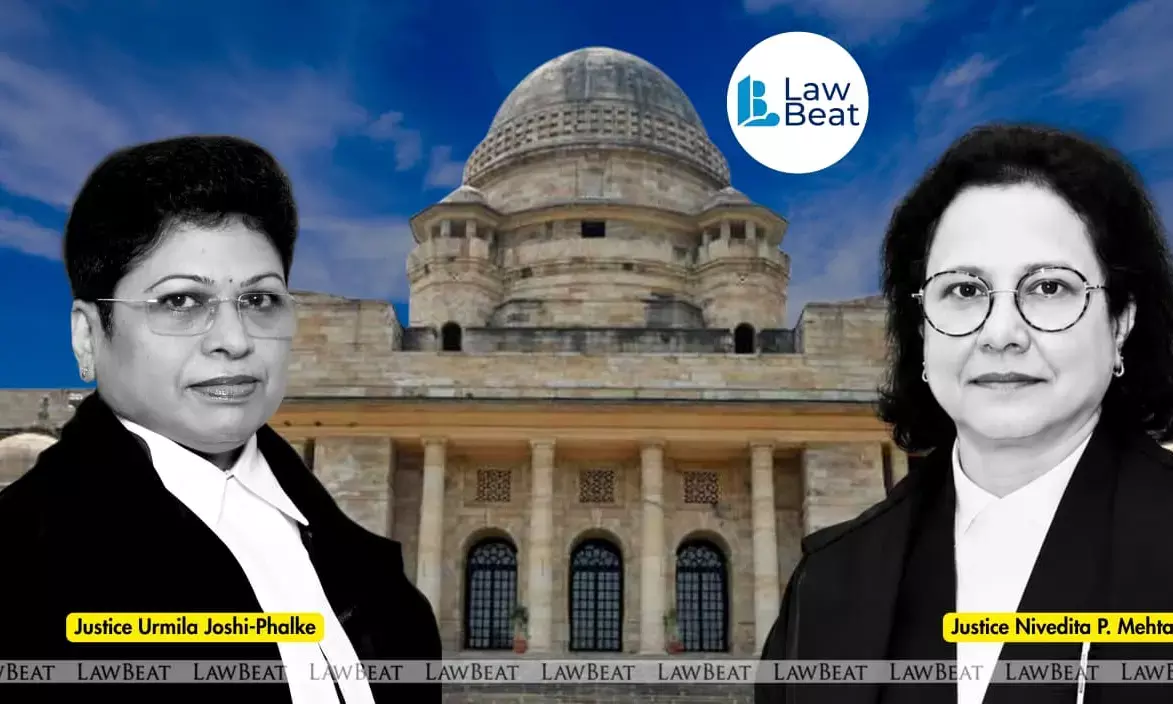
Bombay High Court Rejects Plea Challenging Exclusion of Muslims from Scheduled Caste Status
The Nagpur Bench of the Bombay High Court has rejected a 1999 writ petition challenging the constitutional validity of the provision barring persons professing Islam from claiming Scheduled Caste (SC) status, holding that it is bound by the Supreme Court's precedent upholding Paragraph 3 of the Constitution (Scheduled Castes) Order, 1950 until the apex court takes a contrary view.
A Division Bench of Justice Urmila Joshi-Phalke and Justice Nivedita P. Mehta dismissed a writ petition filed by Mohd. Faheem, who had challenged a 1998 order of the Caste Certificate Scrutiny Committee invalidating his claim to belong to the Bahna Scheduled Caste.
He had also sought a declaration that Paragraph 3 of the Constitution (Scheduled Castes) Order, 1950, which restricts Scheduled Caste status to persons professing Hinduism, Sikhism or Buddhism, is unconstitutional as it excludes Muslims.
The petitioner strongly argued that the exclusion of Muslims from Scheduled Caste status violated Articles 14, 15, 16 and 25 of the Constitution.
However, the High Court noted that the constitutional validity of Paragraph 3 had already been upheld by the Supreme Court in Soosai v. Union of India (1985) and that, under Article 141 of the Constitution, the declaration of law is binding on all courts.
The Bench observed that the principal issue before it was whether a High Court could independently examine the constitutional validity of Paragraph 3 despite the existing Supreme Court precedent and the pendency of similar proceedings before a larger Bench of the apex court.
Answering the question in the negative, the Court emphasised that judicial discipline and Article 141 leave the High Courts with no discretion to disregard binding decisions of the Supreme Court.
"The mere pendency of the aforesaid proceedings does not dilute the binding force of the law presently holding the field. Unless the earlier decision is overruled or a contrary view is taken by a Bench of co-equal or larger strength, this Court is duty-bound to apply the law as it presently stands."
The Court further held that the pendency of a larger Bench matter before the Supreme Court does not eclipse an existing declaration of law. It said: "Unless an earlier decision is stayed, overruled or otherwise ceases to hold the field, every Court in the country remains bound to apply it."
The Bench observed that whether the reasoning in Soosai requires reconsideration or whether subsequent constitutional developments justify a different approach are questions that fall exclusively within the jurisdiction of the Supreme Court. Until then, High Courts are constitutionally bound to apply the law as it stands.
Accordingly, the High Court declined to entertain the constitutional challenge, upheld the Scrutiny Committee's order invalidating the petitioner's caste claim and dismissed the writ petition.
However, the Court clarified that if the Supreme Court, in the pending proceedings concerning the constitutional validity of Paragraph 3 of the Constitution (Scheduled Castes) Order, 1950, ultimately takes a different view, it would be open to the petitioner to seek appropriate relief and consequential benefits in accordance with law.
Filed in 1999, this petition had remained pending for over 25 years because the petitioner had sought transfer of the matter to the Supreme Court, where similar issues are pending before a larger Bench.
However, after the Supreme Court declined the transfer request and directed the High Court to decide the petition expeditiously, the matter was taken up for final hearing.
Case Title: Mohd. Faheem s/o Sk. Ibrahim Quraishi v. Caste Certificate Scrutiny Committee & Ors.
Date of Judgment: July 24, 2026
Bench: Justice Urmila Joshi-Phalke and Justice Nivedita P. Mehta