
Business Running After Death Doesn't Erase Family's Loss: MP High Court Upholds Insurer's Liability
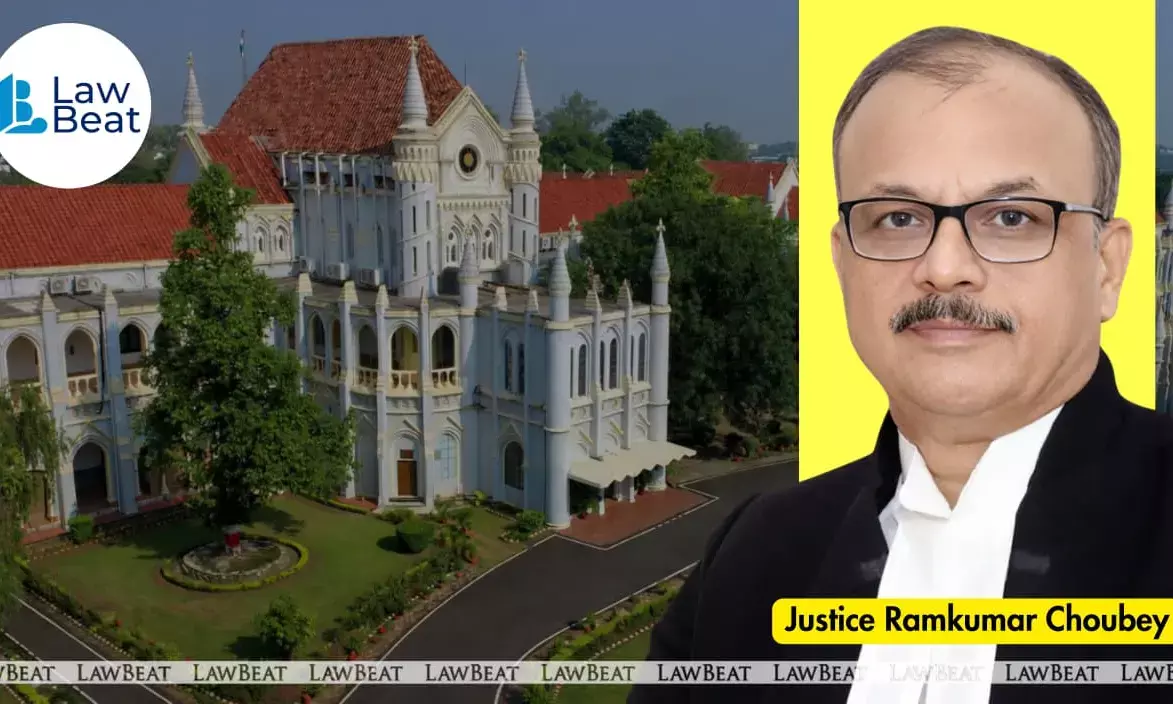
Insurer Can't Cut Compensation Without Evidence of Negligence, Says MP High Court
The Madhya Pradesh High Court has refused to disturb a Rs 12.90 lakh compensation award in a fatal road accident case, holding that an insurer cannot escape liability merely because the deceased's business kept running after his death or because his vehicle hit another from behind.
Justice Ramkumar Choubey, sitting at the Jabalpur bench, dismissed a miscellaneous appeal filed by Reliance General Insurance Company Ltd under Section 173(1) of the Motor Vehicles Act, 1988, and affirmed the award passed by the Additional Motor Accident Claims Tribunal, Hoshangabad, on March 30, 2011.
The case arose from an accident on January 2, 2009, at about 9 pm on the Hoshangabad-Babai Main Road. Vaibhav Jain was driving a van when it hit a dumper moving ahead of it from behind. He died of the injuries. His wife, children and mother approached the Tribunal in Claim Case No. 34/2010.
The Tribunal found that Jain was about 40 years old and assessed his monthly income at Rs 10,000. It treated his wife and children as dependants, but not his mother. Taking annual dependency at Rs 84,000 and applying a multiplier of 15, it awarded Rs 12.90 lakh with 6 per cent interest from the date of the claim petition till realisation. The insurer was held jointly liable with other non-applicants.
Before the High Court, the insurer, represented by advocate T.S. Lamba, raised three objections. It argued that the Tribunal had no sufficient basis to fix the income at Rs 10,000 a month, that Guru Pathology, the establishment linked to the deceased, continued to function after his death, and that Jain was guilty of contributory negligence because his van rammed the dumper from behind. None appeared for the claimants before the Court.
Rejecting the first contention, the Court said the Tribunal had not assessed the income "merely on the basis of an assumption or conjecture". It noted that an income-tax advisor had deposed before the Tribunal about the income-tax acknowledgment (Ex.P/16) relating to Guru Pathology, which the Tribunal weighed along with the oral evidence.
The Court was equally unconvinced by the second argument. "Merely because the pathology establishment continued to function after the death of Vaibhav Jain, it cannot be concluded that the deceased had no personal income from the said establishment during his lifetime," it observed. The establishment was now managed by Jain's brother, and his income could not "automatically be treated as income available to the widow and children of the deceased", the Court added.
Explaining the legal position, the bench said that in a death claim, what matters is "the pecuniary loss suffered by the dependants on account of the death of that particular earning member". Continuation of a business by another family member, it said, "cannot, by itself, wipe out the loss of the personal earning capacity of the deceased".
On contributory negligence, the Court acknowledged the rear-end collision but held that it cannot "in every case and in isolation, be treated as conclusive proof of contributory negligence" on the part of the driver of the following vehicle.
Justice Choubey pointed out that there was no material to show that Jain failed to keep a safe distance from the dumper or committed any specific negligent act. The mere fact that the van struck the dumper from behind cannot, the Court said, "without supporting evidence regarding the manner in which the accident occurred, be made the sole basis for reducing the compensation".
On the calculation of compensation, the Court found that the Tribunal had considered the deceased's age, income, number of dependants and the applicable multiplier. No patent error had been shown, it held, adding that the Tribunal had not mechanically treated every claimant as a dependant.
Finding no perversity or material illegality, the Court said it saw "no ground to interfere with the well-considered findings recorded by the learned Tribunal". The appeal was accordingly dismissed, and the Tribunal's 2011 award was affirmed.
Case Title: Reliance General Insurance Co. Ltd. vs. Ku. Maitri Jain and Others
Judgment Date: September 29, 2026
Bench: Justice Ramkumar Choubey