
Can A Child Victim Saying 'Thank You' To Accused After Sexual Assault Discredit Her Testimony? Sikkim HC Says No
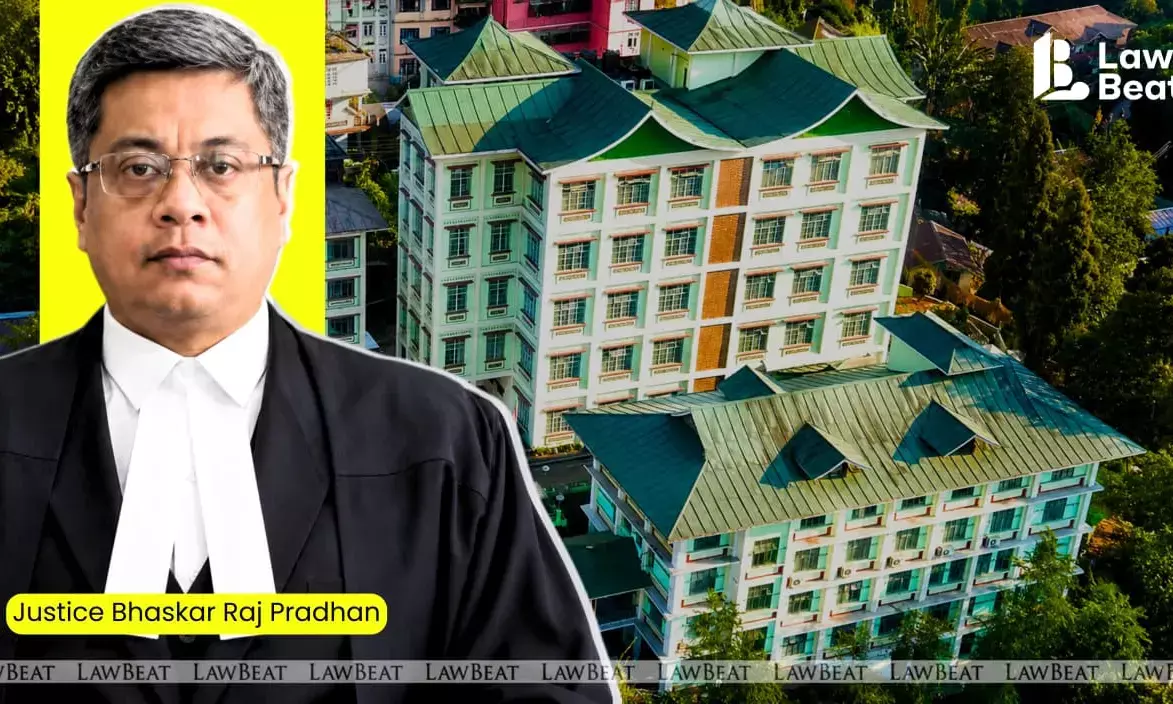
Child Victim Saying 'Thank You' After Sexual Assault Doesn't Make Testimony Unreliable: Sikkim HC
The Sikkim High Court recently upheld the conviction of a taxi driver under the POCSO Act, holding that a 13-year-old victim saying "thank you" to the accused after the sexual assault could not, by itself, discredit her testimony or cast doubt on the prosecution's case.
Justice Bhaskar Raj Pradhan dismissed the convict's appeal against his conviction for aggravated sexual assault under Section 9(l) of the POCSO Act. The single judge affirmed the sentence of five years' rigorous imprisonment imposed by the Special Court.
Before the High Court, the appellant argued that the prosecution's story was inherently doubtful. Among other grounds, the defence stressed that the victim had thanked the appellant as the victim got out of the taxi after the alleged incident.
It also relied on a voluntary statement made by the child during cross-examination that "until that time, nothing had happened", contending that these circumstances had upset the prosecution’s case.
Rejecting the contention, the High Court held that the victim's voluntary statement had been taken out of context.
The Court explained that the statement merely referred to why the child had not called her mother through her smartwatch earlier during the journey and could not be interpreted as an admission that no assault had taken place.
As regards the child saying "thank you" to the accused, the Court cautioned against judging a victim's credibility based on preconceived notions of how a child should react after a traumatic incident.
"How a child of 13 years would react to such an incident may differ from child to child. One child may make a hue and cry about it and yet another may choose to remain silent stunned by the incident. Another child in the same circumstances may act in a manner which in our perception, because of our circumstances, may not feel appropriate" the Court observed.
The Court held that the victim saying "thank you" while alighting from the taxi should not be given undue emphasis to question the veracity of an otherwise truthful account.
"There is no reason why a child of 13 years should blame the appellant for an act which he had not committed" it added.
The Bench further found the victim's testimony to be detailed, consistent and unshaken despite extensive cross-examination. The single bench judge described her as a "sterling witness" whose version remained "of a very high quality".
The High Court also found her account corroborated by her parents, other prosecution witnesses, CCTV evidence placing the appellant's taxi on the relevant route, and the recovery from the taxi of the packet of Bhujia that the victim said the appellant had purchased during the journey.
The Court also rejected the defence theory that the complaint resulted from a conspiracy involving another taxi driver allegedly inimical to the appellant, holding that the allegation remained a mere suggestion unsupported by evidence.
Reiterating the statutory presumption under Section 29 of the POCSO Act, the Court observed that once the prosecution establishes the foundational facts, the burden shifts to the accused to prove the contrary.
Merely creating doubt is insufficient to rebut the presumption, the Single Judge bench said.
Since the appellant failed to discharge that burden, the Court upheld the conviction, sentence and the award of ₹50,000 compensation to the victim.
Case Title: Buddha Raj Rai v. State of Sikkim
Date of Judgment: June 23, 2026
Bench: Justice Bhaskar Raj Pradhan