
Can A Transgender Woman Seek Protection Under The Sexual Harassment Law? Bombay High Court Says Yes
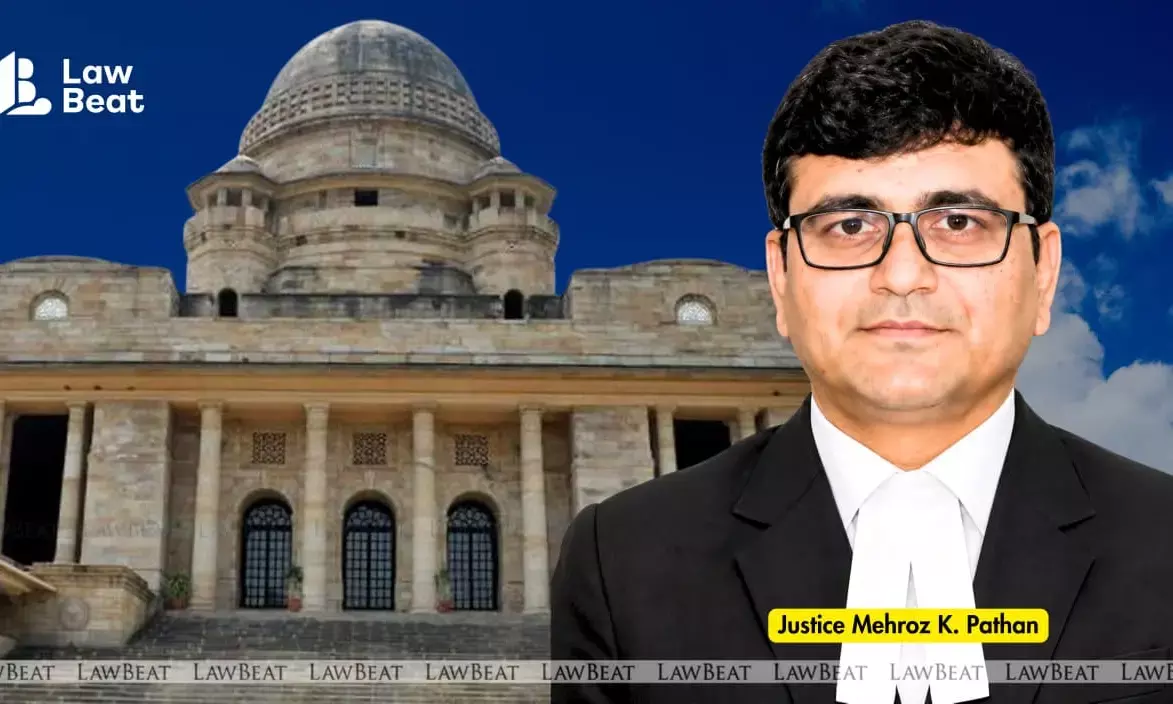
Bombay High Court Refuses to Discharge Accused in Transgender Woman’s Sexual Harassment Case
The Bombay High Court at Nagpur has held that a transgender person who identifies as a woman can seek protection under the law on sexual harassment of a woman, refusing to discharge a man accused of harassing a transgender woman.
Justice Mehroz K. Pathan dismissed a criminal revision filed by Vishal Sunil Ingle, a 24-year-old, who challenged the Additional Sessions Judge, Akot’s order of July 6, 2026, rejecting his discharge plea under Section 250 of the Bharatiya Nagarik Suraksha Sanhita, 2023 (BNSS) (corresponding to Section 227 of CrPC).
A report lodged on November 1, 2025 at Akot (Rural) police station led to Crime No. 493/2025 under Sections 75, 296 and 351(2) of the Bharatiya Nyaya Sanhita, 2023 (BNS) (corresponding to Sections 354-A, 294 and 506 of IPC), read with Section 18(d) of the Transgender Persons (Protection of Rights) Act, 2019.
The complainant, a transgender person, said she began taking hormone medicines in 2015 and started wearing women’s clothes in 2021. She alleged that the applicant, an Army Agniveer, proposed marriage and, under that pretext, committed forcible sexual intercourse on October 28, 2025. Two days later, she claimed, he took her to a flat and again committed sexual intercourse while abusing her in filthy language.
Advocate Anil Thakkar, for the applicant, argued that Section 75 of the BNS (Section 354-A of IPC) applies only when the victim is a woman, and the BNS defines “woman” as a female human being of any age. He added that the complainant obtained her transgender certificate only on February 12, 2026, after the alleged incidents, and that the relationship, if any, was consensual. He noted the BNS has no provision matching Section 377 of the Indian Penal Code, which was struck down in Navtej Singh Johar.
Opposing the plea, Assistant Public Prosecutor Swati V. Kolhe submitted that the offences were prima facie made out from the FIR. She argued that Section 75(1) of the BNS (Section 354-A of IPC) does not expressly say the victim must be a woman, and that transgender persons are entitled to self-identify their gender.
Missing certificate no bar to prosecution
The High Court noted that Section 2(k) of the 2019 Act expressly includes transgender women, and that a person may identify as transgender even without a certificate of identity. The court held that the absence of a certificate when the alleged offence took place “would not, by itself, preclude the invocation of the penal provisions” of the Act.
On the argument that the complainant was not a woman, the court relied on the Supreme Court’s ruling in National Legal Services Authority v. Union of India (2014), which recognised that a transgender person’s self-identified gender cannot be questioned by others. The bench observed that the FIR shows the complainant has identified herself as a woman and that “the aforesaid self determination cannot be questioned at least at the present stage while accused is seeking discharge.”
The court also examined the Transgender Persons (Protection of Rights) Amendment Act, 2026, which received Presidential assent on March 30, 2026 and omitted Section 4(2), the provision recognising the right to self-perceived gender identity. That provision was in force on the dates of the alleged incidents and when the FIR was registered. “The acts attributed to the Applicant constituted an offence under the law as it stood at the relevant point of time,” it said.
Finding direct allegations of outraging the modesty of the complainant, the court held that an offence under Section 75 of the BNS (Section 354-A of IPC) appeared prima facie made out, as was the offence under Section 18(d) of the 2019 Act. It added that the charge-sheet showed sufficient evidence to proceed.
The plea that the relationship was consensual, the bench said, “is a matter to be evaluated during the course of trial.”
“The allegations of assault and outraging the modesty of a woman can be sustained even where the victim is a transgender person who identifies herself as a woman,” the court concluded, dismissing the revision and upholding the “well-reasoned order” refusing discharge.
Case Title: Vishal S/o Sunil Ingle vs. The State of Maharashtra through Police Station Officer, P.S. Akot (Rural)
Judgment Date: November 3, 2026
Bench: Justice Mehroz K. Pathan