
Can Failed Hair Regrowth Treatment Be Medical Negligence? NCDRC Says No, Quashes Compensation Orders
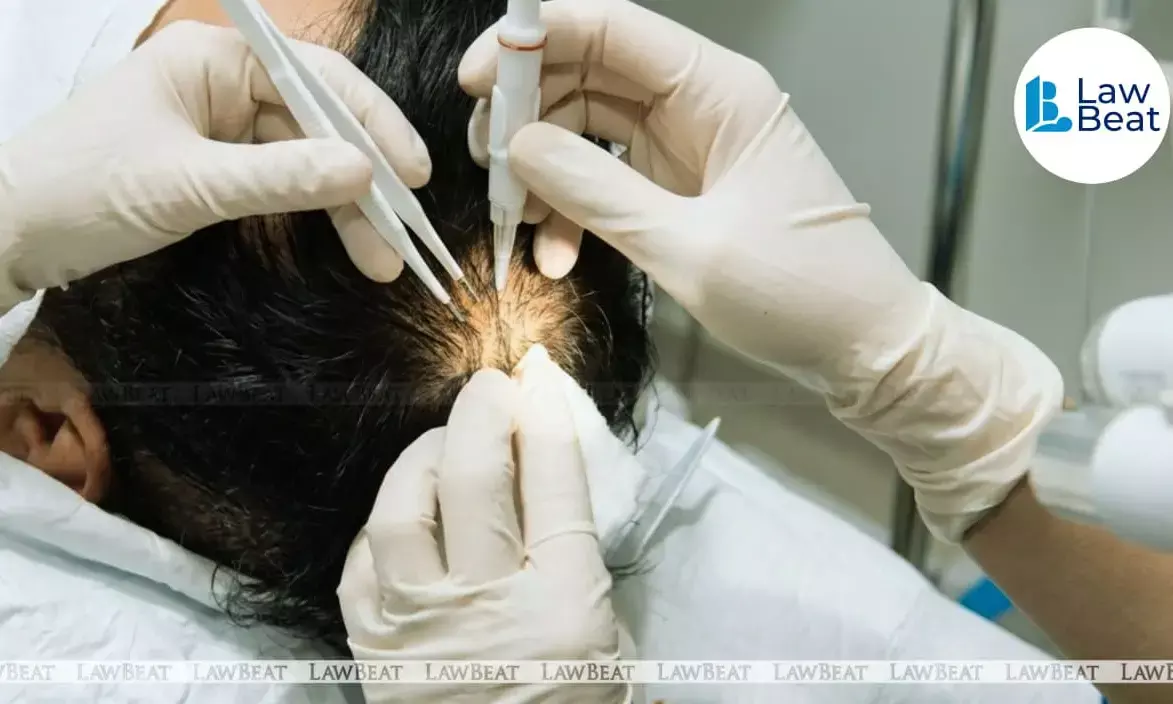
NCDRC holds that unsuccessful PRP hair treatment alone cannot establish medical negligence without expert evidence.
A failed hair regrowth treatment does not amount to medical negligence, the National Consumer Disputes Redressal Commission (NCDRC) recently held, setting aside compensation awarded against Lifecell International Pvt. Ltd. and two doctors in a case where an advocate alleged he was misled into undergoing Platelet Rich Plasma (PRP) therapy.
The bench comprising Presiding Member AVM J. Rajendra (Retd.) and Member Justice Anoop Kumar Mendiratta ruled that mere absence of desired results from a medical procedure, particularly one like PRP therapy where outcomes vary from person to person, cannot by itself establish deficiency in service or unfair trade practice. It found that the earlier findings of the district forum and the state commission were based on a misunderstanding of the nature of the treatment and lacked supporting evidence.
The case arose from a complaint filed by Mumbai-based advocate Sushil Mukesh Gaglani, who underwent PRP therapy in 2013 after being introduced to the procedure by a Lifecell executive while availing umbilical cord preservation services. He claimed that he was assured of “100% positive results” and agreed to undergo three sessions of treatment costing around Rs. 60,000.
The first session was conducted by dermatologist Dr. Madhuri Agarwal, followed by two sessions by plastic surgeon Dr. Satish Arolkar. Gaglani alleged that the procedure was painful, improperly performed, and failed to produce any hair regrowth. He also contended that the treatment deviated from what had been promised and that no proper follow-up care was provided.
He further alleged that the opposite parties misrepresented PRP therapy as a stem cell procedure, lacked requisite licences, and engaged in unfair medical practices. On these grounds, he sought substantial compensation and also initiated criminal proceedings alleging cheating and conspiracy.
The district forum accepted his claims, holding all opposite parties jointly liable for deficiency in service and unfair trade practice, and awarded Rs. 10 lakh as compensation along with refund of the treatment cost. The state commission upheld the finding of liability but reduced the compensation to Rs. 6 lakh, observing that the original award was excessive.
However, the National Commission found that the complainant had failed to discharge the burden of proving medical negligence. It noted that no expert evidence was led to show that the doctors deviated from accepted medical standards or lacked the competence to perform the procedure.
Clarifying the nature of PRP therapy, the Commission observed that it involves injecting a patient’s own processed blood plasma into the scalp to stimulate hair growth and is distinct from stem cell therapy. It emphasised that the treatment is widely recognised and that its success depends on individual biological response, meaning lack of results cannot be equated with negligence.
The Commission also rejected the allegation that the procedure required specific licences under the Drugs and Cosmetics Act, 1940 noting that PRP therapy does not fall within the regulatory framework applicable to stem cell treatments. It further held that Lifecell’s role was limited to supplying PRP kits and referring the complainant to qualified practitioners.
Importantly, the Commission observed that the complainant, being an educated professional, had access to detailed information through brochures and the company’s website and had voluntarily consented to the treatment. It also noted that the complaint was filed more than two years after completion of the procedure, primarily on account of dissatisfaction with the outcome.
Finding no material to establish negligence or unfair trade practice, the Commission set aside the orders of both the district forum and the state commission. It allowed the revision petitions filed by the doctors and the company, and dismissed those filed by the complainant, bringing the matter to a close without any compensation being awarded.
Case Title: Dr Sattish Kishoranadn Arolkar vs. Shushil Mukesh Dadlani and connected matters
Order Date: April 23, 2026
Bench: AVM J Rajendra (Retd), presiding member, and Justice Anoop Kumar Mendiratta, member