
Can't Have Different Retirement Age For Class III, IV Employees On Same Policy: MP High Court Dismisses State's Plea
Review Not A Rehearing In Disguise: MP High Court Dismisses State's Plea Against Retirement Age Order
The Madhya Pradesh High Court has dismissed a review petition filed by the State government against its earlier order that had refused to disturb a ruling in favour of a daily-wage employee seeking retirement at 62 years instead of 60, holding once again that the State could not justify a difference in the retirement age of Class III and Class IV employees who had been granted permanent status under the same policy.
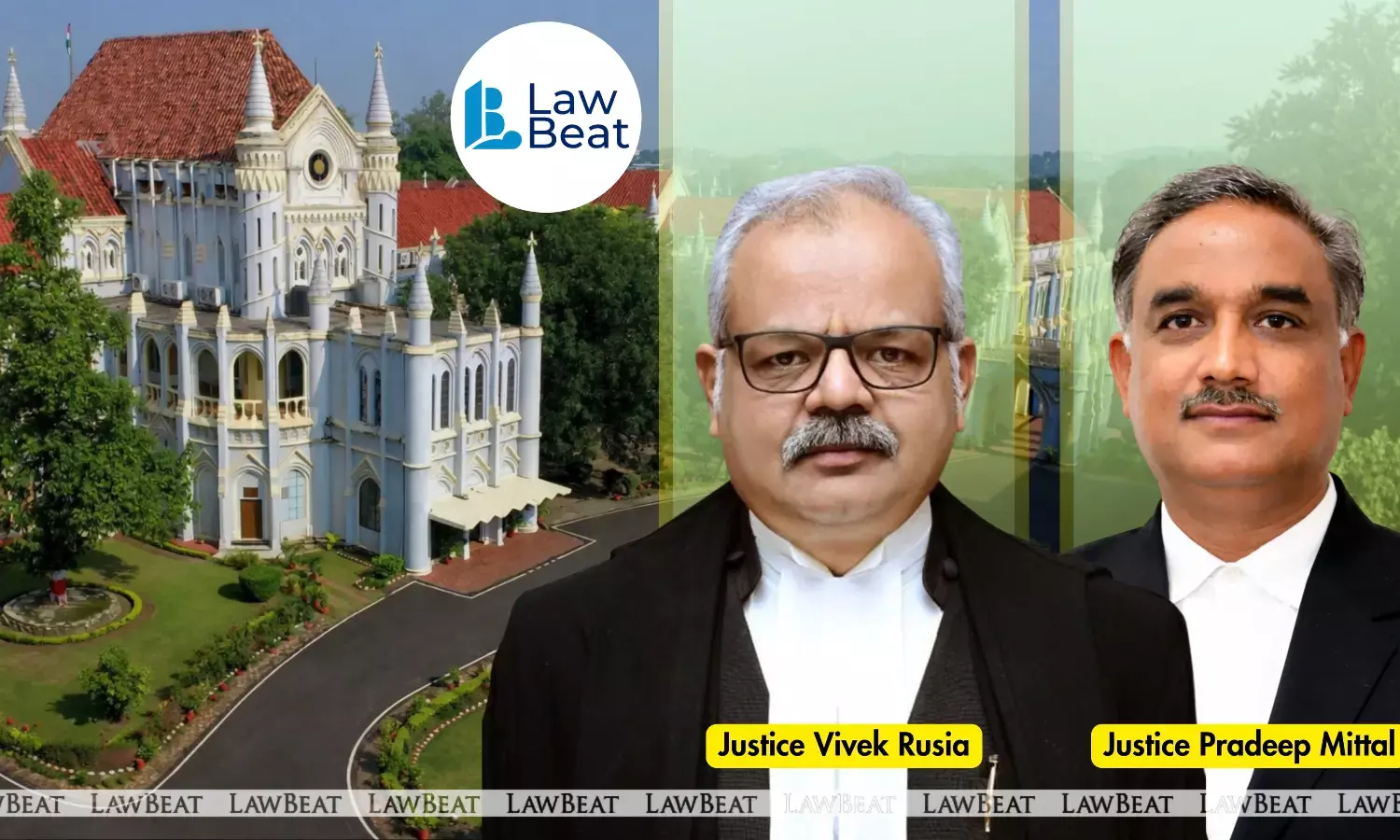
A division bench of Acting Chief Justice Vivek Rusia and Justice Pradeep Mittal was hearing Review Petition, filed by the State under Order 47 Rule 1 of the Civil Procedure Code, 1908, seeking review of the order dated May 15, 2026, passed in Writ Appeal, by which its appeal had already been dismissed by the High Court.
The underlying dispute traces back to a writ petition filed by respondent Preetam Prasad Dubey, seeking to continue in service till 62 instead of retiring at 60. Dubey had been engaged as a daily wage Time Keeper/Sthal Sahayak and was later given permanent status as a skilled worker. He relied on a notification amending Rule 56 of the M.P. Shaskiya Sevak Adhivarshiki Ayu Adhiniyam, which enhanced the superannuation age of government servants to 62 years, to seek parity in retirement age.
The State, in its review petition, raised grounds that it had already argued in its reply to the original writ petition. The bench was unwilling to entertain this approach, observing that "this review petition is filed on various grounds which had already been taken in the reply filed in the writ petition; hence, rehearing of Writ Appeal is not permissible under the garb of review."
Recalling its own reasoning in the May 15 order, the bench noted that it had duly considered the effect of a circular dated May 3, 2017, and had held that there was no difference in pay and other service conditions between the two categories of employees. It reiterated that "there cannot be a different age of retirement for Class III and Class IV employees who got the status of Sthai Karmi from the status of daily wager under the policy dated 07.10.2016," adding that the State had offered no reasonable justification for treating the two categories differently on this count.
The State had also relied on the Division Bench's earlier ruling in State of M.P. vs. Ramjilal Prajapati, decided in Review Petition No. 587/2017, where a Class III supervisor was held entitled to retire at 60. The bench, however, distinguished that precedent, noting that the policy dated October 7, 2016 was not under consideration in that matter, and that Ramjilal Prajapati did not enjoy the status of Sthai Karmi under it. It held that "the aforesaid judgment is not applicable in the present case."
The bench further noted that in 2019, the State itself enhanced the age of superannuation up to 62 years for daily wagers on Class III posts, superseding the 2017 circular that created the very distinction the State was now defending, allowing service till 60 and 62 years for Class III and IV posts respectively.
Ultimately holding that no case for review was made out, the bench dismissed the review petition along with all pending applications connected to it, at the stage of I.A. No. 14900 of 2026 and admission itself.
The order closes another round of a long-running litigation over parity in retirement age between employees who began service as daily wagers and were later absorbed into permanent, or Sthai Karmi, status. With the review plea rejected, the earlier finding allowing such employees to continue in service till 62 years, on par with their counterparts, stands undisturbed, a ruling likely to bear on similarly placed daily-wage-turned-permanent employees across the State.
Shri Anubhav Jain, Government Advocate, appeared for the appellant/State of Madhya Pradesh at the hearing.
Case Title: The State of Madhya Pradesh and Others vs Preetam Prasad Dubey
Date of Order: August 14, 2026
Bench: Acting Chief Justice Vivek Rusia and Justice Pradeep Mittal